




If you’ve been searching “Isotonix lawsuit,” here’s the short version: there’s no single case by that name. What’s actually going on is a 2020 FDA warning letter, a pyramid scheme lawsuit against Isotonix’s parent company that’s stuck in private arbitration, and a watchdog investigation into misleading income promises. Three different things, often lumped together as one.
- Quick Answer: Is There an Active Isotonix Class Action Right Now?
- Who Is Market America, and What Is Isotonix?
- The FDA Warning Letter, Explained Plainly
- The Pyramid Scheme Lawsuit — Yang v. Market America
- The TINA.org Income Claims Investigation
- Does the “90% Faster Absorption” Claim Hold Up?
- Isotonix Side Effects — What’s Actually Documented
- Isotonix Lawsuit Eligibility
- Is There an Isotonix Lawsuit Settlement?
- Can I Just Get a Refund Directly From Market America?
- Steps to Take If You Believe You Were Affected
- Should You Talk to a Lawyer?
- How This Compares to Other MLM and Supplement Cases
- Isotonix Lawsuit Timeline (2004–2026)
- Myth vs. Fact
- FAQ of Isotonix Lawsuit
- Where This Leaves You
Quick Answer: Is There an Active Isotonix Class Action Right Now?
No. As of this update, there’s no certified class action lawsuit specifically for Isotonix products with an open settlement fund. Three separate matters get lumped under the phrase “Isotonix lawsuit”: an FDA warning letter, a pyramid scheme case now sitting in private arbitration, and a TINA.org investigation into income claims. None of these is something you can sign up for today.
Picture this: you saw a Facebook post saying “join the Isotonix lawsuit before it’s too late” and you started digging. That urgency is doing a lot of work it hasn’t earned. There’s no deadline ticking down on a case that doesn’t publicly exist yet. Take a breath, and let’s go through what’s real.
Who Is Market America, and What Is Isotonix?
Market America Inc. is a multi-level marketing company based in Greensboro, North Carolina, founded in 1992. It sells supplements, skincare, and household products through independent distributors called UnFranchise Business Owners, or UBOs. Distributors can sell to customers and also recruit other distributors underneath them, earning a cut of what their recruits sell.
Isotonix is Market America’s flagship supplement line, introduced in 2004. It’s powdered vitamins and minerals you mix with water, built around one big marketing idea: that this “isotonic” format gets absorbed faster than a regular pill. The line includes OPC-3 (an antioxidant blend), a Multivitamin, a Multivitamin with Iron, an Activated B-Complex, and a Heart Health formula, among others.
Say your aunt joined Market America in 2019 because a friend showed her a spreadsheet of “what a top distributor earns.” She bought a starter kit of Isotonix products to sell and to use herself. Two years later, she’d spent more on inventory and monthly fees than she’d made back. That gap between the pitch and the reality is exactly what the lawsuit below is about.
The FDA Warning Letter, Explained Plainly
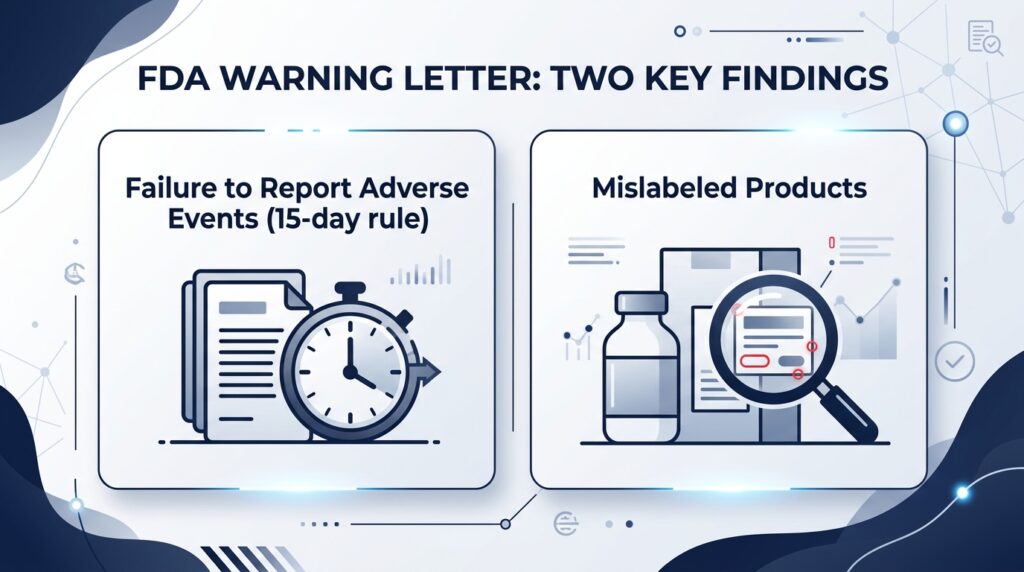
This is the one part of the story with a document you can actually read yourself. On February 12, 2020, the FDA sent a warning letter to Market America’s COO, following an inspection of its Greensboro facility conducted May 21–28, 2019. It covers two things and it’s worth being precise, because a lot of what’s online about it isn’t.
1. Failure to report serious adverse events. Federal law (21 U.S.C. § 379aa-1) requires supplement makers to report serious health incidents to the FDA within 15 business days. The letter says Market America missed that deadline twice:
- A March 2018 complaint involving the TLS Nutrition Shake. The customer needed prolonged hospitalization, had vertigo, and needed six weeks of physical therapy afterward.
- A January 2019 complaint involving the TLS 21-Day Challenge Kit, which included Isotonix OPC-3 alongside other products. That customer needed inpatient hospitalization after abdominal pain, vomiting, dizziness, itching, weakness, shaking, insomnia, chills, and numbness.
2. Mislabeled products. Isotonix OPC-3, Heart Health Essential Omega III, Isotonix Multivitamin, Isotonix Multivitamin with Iron, and Isotonix Activated B-Complex all had labeling problems, wrong serving sizes, nutrition facts formatted incorrectly, and a failure to identify which part of a plant a botanical ingredient came from.
| Product | What the FDA Flagged |
| Isotonix OPC-3 | Directions said 2 capfuls, but the label’s nutrition info was calculated for 1 |
| Isotonix Multivitamin | Improper nutrient naming and value declarations |
| Isotonix Multivitamin with Iron | Same naming and declaration issues |
| Isotonix Activated B-Complex | Nutrient declaration errors |
| Heart Health Essential Omega III | Serving size and nutrient declaration errors |
| TLS 21-Day Challenge Kit | Contains OPC-3; tied to the January 2019 hospitalization |
What the letter does not say: it doesn’t mention liver damage. It doesn’t say Isotonix causes disease. It’s not a lawsuit, it’s a regulatory notice demanding correction, and it doesn’t decide who’s at fault for anything. If you’ve read a version of this story that includes a judge’s ruling or a specific disease claim tied to this letter, it isn’t in the actual document.
The Pyramid Scheme Lawsuit — Yang v. Market America
This is what most people mean by “Market America pyramid scheme.”
In 2017, former distributors Chuanjie Yang and Ollie Lan filed a federal lawsuit in California against Market America, Market America Worldwide, and three top executives. The complaint leans on federal racketeering law and argues Market America runs as a pyramid scheme, not a real product business.
According to the filing:
- Distributors pay a $399 start-up fee, then $129 a month, plus a required minimum of $130 a month in purchases through SHOP.com just to stay active.
- The suit claims more than 90% of distributors lose money, with real income concentrated at the top of the recruiting chain.
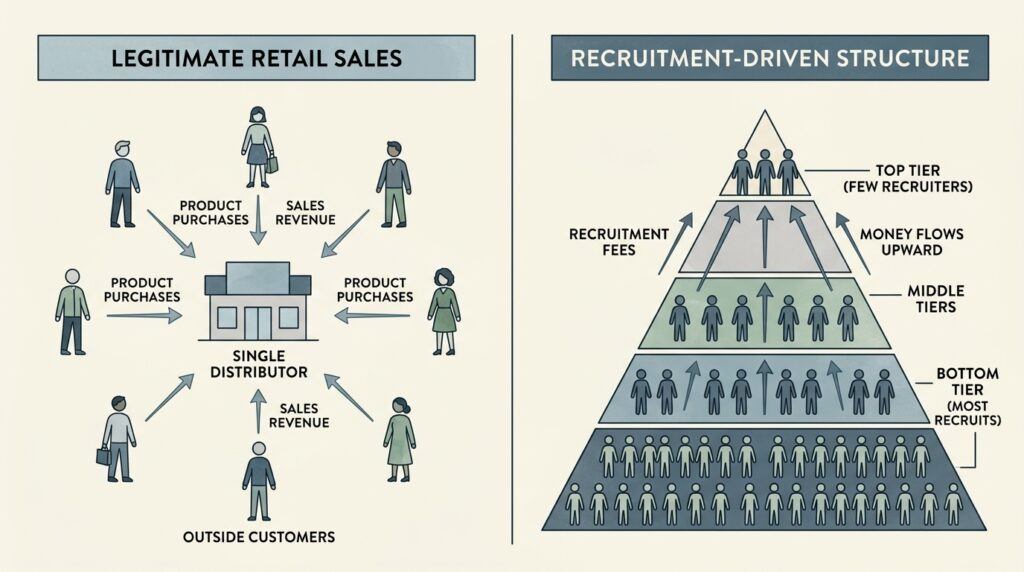
- The complaint states plainly that the company has very little production cost since it doesn’t manufacture its own products, meaning most of its revenue, the suit argues, comes from what distributors pay in, not from outside retail customers.
- The named plaintiffs reported personal losses of $35,000, $7,000, and $10,000.
Market America has denied running an illegal pyramid scheme. The case was transferred to North Carolina and, because of an arbitration clause buried in the distributor agreement, moved into private arbitration rather than a public trial. That’s a common move for MLM companies; it keeps the dispute (and any outcome) out of the news. Based on the public federal docket, there’s no confirmed public resolution as of this writing. If you want the primary source instead of secondhand summaries, ClassAction.org’s coverage of the filing is the clearest one available.
Is Market America Actually a Pyramid Scheme?
Nobody outside a court or the FTC can answer that for you with certainty it hasn’t been publicly decided. But the test regulators use is worth knowing. The FTC’s own guidance on multi-level marketing explains that a compensation plan crosses into illegal pyramid territory when rewards depend mainly on recruiting new members rather than on real sales to actual customers outside the business. That’s the exact question sitting inside the Yang case.
Think of it this way: if your neighbor sells you candles because she genuinely likes candles and you genuinely wanted one, that’s retail. If she needs you to buy candles every month just so she stays “active” and gets credit toward her bonus regardless of whether you use them, that starts looking like the second thing.
See also: What class action lawsuits without hard proof still need to succeed
The TINA.org Income Claims Investigation
This part rarely gets real coverage anywhere else, and it’s some of the most concrete evidence available.
The nonprofit watchdog Truth in Advertising (TINA.org) investigated Market America twice. In 2020, it found more than 750 “atypical” and exaggerated income claims posts and videos implying distributors could expect to earn far more than what’s typical made directly by the company or its founder across its website, YouTube, Instagram, Facebook, and Twitter. More than 450 of those claims were published in 2020 alone.
TINA.org’s executive director, Bonnie Patten, called Market America “one of the most egregious cases we’ve seen” among the 140+ MLMs the group had investigated. Market America responded by removing the vast majority of the flagged claims and said it was committed to keeping distributor marketing truthful.
In 2023, TINA.org revisited Market America as part of a broader review of 100 MLM companies and again found the company using atypical income claims.
This isn’t a lawsuit and it isn’t the FTC filing a case TINA.org is a private watchdog, not a regulator. But if you joined as a distributor because you saw an income example that felt too good to be true, this is the closest thing to independent confirmation that you weren’t imagining it.
Does the “90% Faster Absorption” Claim Hold Up?
Isotonix’s core pitch is that its powder format gets absorbed faster and more completely than a pill. We looked for independent, peer-reviewed research backing the specific “90%” figure used in marketing and didn’t find any published publicly. That doesn’t automatically make it false advertising in a legal sense proving a health claim is misleading in court takes expert testimony and real evidence, not just pointing out the company hasn’t shown its own studies.
If you bought Isotonix specifically because of that number, not just general “vitamins are good for you” marketing, but that specific claim that’s a detail worth writing down. It’s exactly the kind of thing a consumer protection attorney would want to hear.
Isotonix Side Effects — What’s Actually Documented
Let’s separate what’s confirmed from what’s floating around online.
What’s documented: the two hospitalizations in the FDA letter above one tied to the TLS Nutrition Shake, one to a multi-product kit that included Isotonix OPC-3. Symptoms included abdominal pain, vomiting, dizziness, itching, weakness, shaking, insomnia, chills, and numbness.
What’s not documented anywhere we could verify: liver damage specifically tied to Isotonix. Some sites state this as settled fact. We couldn’t find a court record, FDA record, or credible news report confirming it. That doesn’t mean nobody has ever experienced it, it means treat that specific claim with real skepticism until you see a source, not just a blog repeating another blog.
A common mistake people make here: assuming that because a symptom showed up after starting a supplement, the supplement caused it. That’s called a temporal association, not proof of cause. If you had a serious reaction, the thing that actually helps your case (medically and legally) is a doctor connecting the dots, not just a timeline in your head.
See also:Depo-Provera lawsuit a useful comparison for how product-safety litigation against a health product typically develops from complaint to case.
Isotonix Lawsuit Eligibility
There’s no class action to check a box and join, so “eligibility” depends on which type of claim actually fits you.
You might have a consumer protection claim if you bought Isotonix because of a specific claim you can point to not vague marketing, but something concrete like the absorption number and you lost real money because of it. Receipts, screenshots, and packaging all help.
You might have a product safety claim if you had a serious, documented reaction, sought medical treatment, and a doctor connected the timing to the product. A gut feeling that “it must have been the supplement” is a weak foundation on its own.
You might have a distributor claim if you paid start-up fees and ongoing costs as a UBO and were shown income examples that didn’t reflect what a typical distributor actually earns.
None of this guarantees a case succeeds. It just tells you which door to knock on.
Is There an Isotonix Lawsuit Settlement?
No confirmed settlement exists as of this writing. If a site names a specific dollar figure or claims a settlement is “underway,” ask where that number came from. Real settlements are always public, a court filing, a settlement administrator’s website, or coverage from a recognized outlet. There’s no version of a legitimate class action settlement that only exists as a rumor on a blog.
If a real settlement is reached down the road, class members are usually notified directly through mail or email tied to their purchase or distributor account. You generally don’t need to go hunting for it.
Can I Just Get a Refund Directly From Market America?
Worth trying before anything else. Like most direct-sales companies, Market America has its own return and buyback policies for retail purchases and unused distributor inventory. If your issue is simply “this didn’t work like the ad said” and you’re within a return window, contacting customer service or your enrolling distributor is usually faster than any legal route. Legal action makes more sense when a direct fix isn’t available or doesn’t cover what you actually lost.
Steps to Take If You Believe You Were Affected
If a direct refund isn’t enough, here’s a practical order to work through not a script, just a sensible starting point.
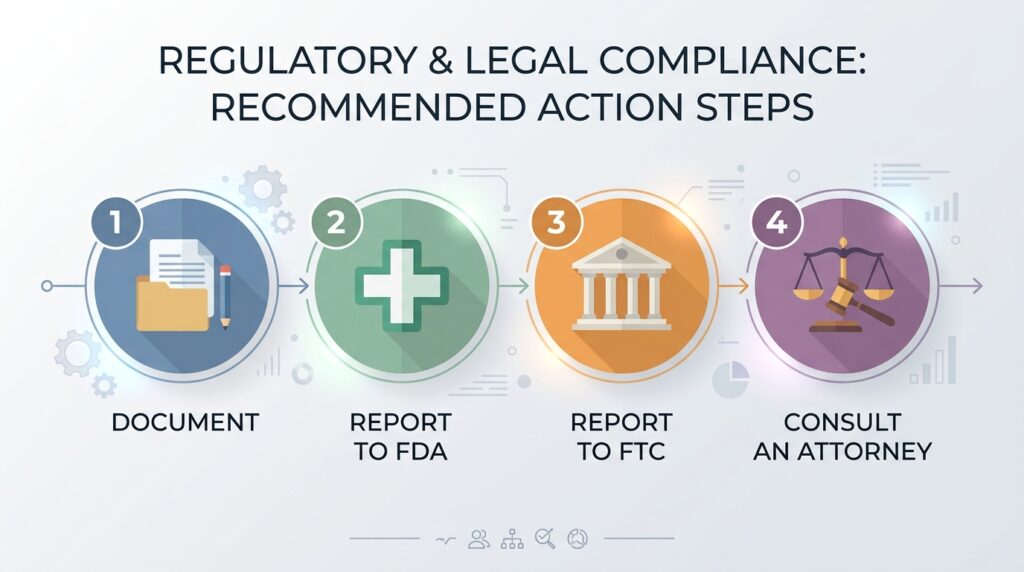
- Document everything first. Receipts, order confirmations, product packaging, screenshots of the marketing claims you relied on, and if you’re a distributor your enrollment paperwork and any income examples you were shown.
- If you have a health reaction, report it to the FDA. The FDA’s MedWatch program takes voluntary consumer reports and feeds into the same system that flags patterns to investigators. It takes about fifteen minutes.
- If you were misled about income potential, file with the FTC. ReportFraud.ftc.gov is the government’s actual complaint intake, not a law firm’s lead form dressed up to look like one.
- Talk to a consumer protection attorney about your specific documentation before deciding whether to pursue anything further.
Should You Talk to a Lawyer?
If your loss is significant, thousands in distributor fees, a real medical bill, or a pattern you think affected other people too, it’s worth having a consumer protection attorney look at your specific facts.
A few honest things to know first: most consumer protection attorneys offer a free consultation and work on contingency for cases like this, meaning you don’t pay unless they win something. Not every disappointed buyer has a viable claim “I didn’t love the product” is different from “I lost money because of a specific false claim.” And if you signed a distributor agreement, it likely has an arbitration clause, the same one that pushed the Yang case out of open court which affects whether you can sue at all versus being routed into private arbitration.
See also: Signs of a bad attorney and the difference between an attorney and a lawyer both worth a read before you sign anything.
How This Compares to Other MLM and Supplement Cases
Isotonix isn’t the first health and wellness brand to face this exact combination of regulatory letters plus consumer litigation plus watchdog attention. It’s a fairly common shape for this kind of company. We’re not going to quote specific settlement dollar figures from other MLM cases here, because several competing articles cite numbers for other companies that we couldn’t independently verify against a primary source, and we’d rather leave a gap than pass along a number we can’t stand behind.
What we can say with confidence: cases like this typically move slowly, from complaint to regulatory letter to individual lawsuits, and only sometimes years later to a resolved class action. If you’re comparing brands, our coverage of the Crepe Erase lawsuit walks through a similar false-advertising timeline against a consumer health brand and is a reasonable preview of the pace this kind of thing tends to move at.
Isotonix Lawsuit Timeline (2004–2026)
| Year | What Happened |
| 2004 | Market America launches the Isotonix product line |
| 2017 | Yang and Lan file the pyramid scheme lawsuit in California federal court |
| 2018 | Case transferred to North Carolina and sent to private arbitration |
| 2019 | FDA inspects Market America’s Greensboro facility (May 21–28) |
| Feb 2020 | FDA issues its warning letter over adverse event reporting and labeling |
| Nov 2020 | TINA.org publishes findings of 750+ deceptive income claims |
| 2023 | TINA.org’s follow-up review again flags Market America’s income claims |
| 2026 | No public resolution of the arbitration case; no class action settlement confirmed |
Where public information goes quiet is mainly the arbitration case after 2018 that’s not us being lazy. Arbitration is confidential by design, so there’s genuinely nothing more to report unless one side chooses to disclose it.
Myth vs. Fact
Myth: “A federal judge already ruled that Isotonix’s false advertising claims can proceed.”
Fact: We could not find any court record supporting this. It appears on other sites without a source attached.
Myth: “The FDA said Isotonix causes liver damage.”
Fact: Not in the actual 2020 warning letter. That letter covers adverse event reporting failures and labeling not liver damage specifically.
Myth: “Over 400 plaintiffs have joined an active Isotonix class action.”
Fact: No public docket we could find confirms this number or an active certified class action by that description.
Myth: “You can join the Isotonix lawsuit right now.”
Fact: There’s no open class action to join. If one is ever certified, affected people are typically notified directly.
FAQ of Isotonix Lawsuit
1. Is Market America a pyramid scheme?
That’s the central question in the still-unresolved Yang v. Market America case. The company denies it, and the case is in private arbitration, so there’s no public court ruling either way.
2. Is there an active class action lawsuit against Isotonix right now?
No certified class action exists with an open settlement as of this update. What’s real is a regulatory letter, a pending arbitration case, and a watchdog investigation not one joinable lawsuit.
3. Is Isotonix FDA approved?
No. Dietary supplements aren’t FDA-approved before they hit the market. Companies just can’t make disease-treatment claims without approval, which is part of why the FDA’s reporting concerns mattered.
4. How do I join the Isotonix class action?
You currently can’t, because there isn’t one open to join. If that changes, affected people are usually notified directly through mail or email.
5. How much compensation could I receive?
No one can honestly give you a number right now since there’s no resolved case or settlement. Outcomes in similar cases have ranged widely depending on what’s actually proven.
6. What happened to the original 2017 lawsuit?
It was moved out of open court and into private arbitration in 2018, based on an arbitration clause in the distributor agreement. There’s no public resolution on record.
7. Is Isotonix a scam?
“Scam” is a strong word with no single legal finding attached to it. What’s verified: an FDA warning letter, a pending pyramid scheme case, and a watchdog-documented pattern of exaggerated income claims. Whether that adds up to “scam” for your situation is worth discussing with an attorney.
8. What is Isotonix OPC-3, and why is it specifically named?
OPC-3 is Isotonix’s flagship antioxidant supplement. It’s named in the FDA letter because it was part of the kit connected to the unreported January 2019 hospitalization.
9. Can I still use Isotonix products while this is unresolved?
The products haven’t been recalled and remain for sale. No cause-and-effect has been proven in court. If you have health concerns, especially with other medications, check with your doctor.
Where This Leaves You
There’s no single “Isotonix lawsuit” waiting for you to sign up. What’s real is a documented FDA letter, a distributor lawsuit stuck in private arbitration, and a watchdog record of misleading income claims. If you lost money or had a real health incident, your best move isn’t refreshing a class action tracker, it’s gathering your documentation and talking to a licensed consumer protection attorney about your specific facts.
This article is for general information only and isn’t legal advice. If you believe you’ve been financially or physically harmed by Isotonix products or Market America’s business practices, talk to a licensed consumer protection attorney in your state.

Dirk Wasserthal is the Founder and Lead Writer of LegalDiaries.com, an independent legal information platform. He specializes in Mass Torts, Women’s Rights, and emerging legal issues, delivering clear, well-researched, and trustworthy content across Criminal Law, Family Law, Personal Injury, and more. Dirk’s mission is simple — make the law understandable for everyone.