


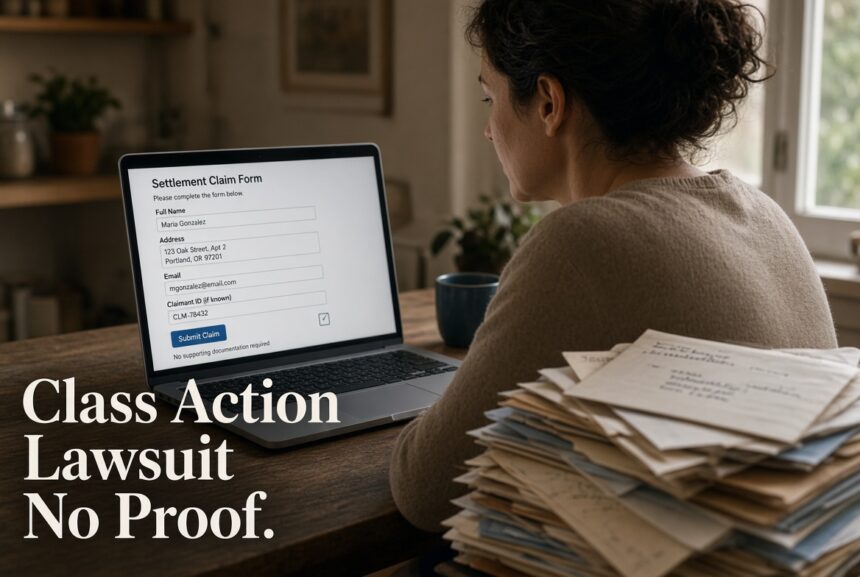
A class action lawsuit no proof claim sounds too easy to be real. You just check a box saying you bought something, and a check shows up? That’s the question behind almost every email that starts with “You may be owed money.”
- The Quick Answer
- Why Courts Allow “No Proof” Claims in the First Place
- “No Proof” vs. “No Verification” — They’re Not the Same Thing
- The Tiered Payout Structure Almost Every Settlement Uses
- Real Examples of No-Proof Class Action Settlements
- Can You File or Win a Lawsuit With Literally No Evidence?
- How Much Does It Cost to Join?
- How to Tell a Real No-Proof Settlement From a Scam
- What Happens If You Falsely Claim You Qualify
- Myth vs. Fact: No-Proof Class Action Claims
- Frequently Asked Questions
- The Bottom Line
If you’ve ever deleted one of those emails because you didn’t have a receipt, this article is for you. We’ll walk through exactly when “no proof” is real, what you might still need to provide, how to spot a fake version of it, and what happens if you’re not totally sure you qualify.
The Quick Answer
Yes. Many class action settlements let you file a claim without a receipt, invoice, or any other paperwork. You just confirm, in writing, that you bought the product or were affected during the right time window. Lawyers call this self-certification, and courts approve it on purpose.
It’s not a trick or a loophole. It’s a deliberate choice judges make so that ordinary people, the ones who threw away a $6 receipt three years ago can still get paid. But “no proof” doesn’t mean “no rules.” Lie on the form, and you can lose the money and face real consequences.
Why Courts Allow “No Proof” Claims in the First Place
This might seem backwards. Shouldn’t you have to prove you bought something before someone hands you money for it?
Here’s the thing: class action settlements exist to get money back to as many harmed people as possible. If a court demanded a decade-old CVS receipt from every single claimant, almost nobody would bother. The company would basically win by making the process too annoying.
The legal reasoning behind it
The rule that governs class actions in federal court is Rule 23 of the Federal Rules of Civil Procedure. It lets a case move forward as one class action when the people affected share the same basic facts and legal questions, instead of forcing thousands of nearly identical lawsuits. That same logic carries into how settlements get paid out if everyone’s situation is basically the same, requiring individual paperwork from each person doesn’t make much sense.
Courts also look at how the settlement money got identified in the first place. The FTC explains that when a company already has a reliable customer list, refunds can go out directly, no claim form needed at all. When there’s no such list, a claims process sometimes with a no-proof option fills the gap.
When “no proof” tends to show up
You’ll see self-certification most often when:
- The purchase was cheap a snack, a subscription fee, a small add-on charge
- The company already has records of who was affected, like a data breach or a spam text campaign
- Nearly everyone who used the product or service was affected the same way
That last point explains why so many text-message settlements skip proof entirely. If a company blasted out unwanted marketing texts, its own phone records already show exactly who received them. You don’t need to dig anything up; the “proof” is sitting in their database, not yours.
“No Proof” vs. “No Verification” — They’re Not the Same Thing
Here’s where people get tripped up.
No proof of purchase means you don’t attach a receipt, screenshot, or bank statement.
No verification at all is a completely different, much rarer thing. Most legitimate no-proof settlements still ask for something to confirm you’re a real, eligible person just not a receipt.
You’ll typically still need:
- A notice ID or claim number from the email or letter you received
- Your name and address matching the company’s records
- The general time period you say you were affected
- A signature physical or digital confirming what you’re saying is true
Behind the scenes, most claims get quietly checked against the company’s own customer or breach-notification list. If your submission doesn’t line up with anything on file, it can get flagged or denied. So “no proof” really means “no paperwork from you” not “nobody’s checking.”
The Tiered Payout Structure Almost Every Settlement Uses
Once you notice this pattern, you’ll see it everywhere. Most settlements don’t offer just one flat payout. They offer two tiers:
| Tier | What it needs | What it pays |
| No documentation | Self-certify only | Lower, often a flat amount |
| Documented loss | Receipts, bank statements, medical records, etc. | Higher, sometimes reimbursing the full amount you lost |
A settlement over a defective product might pay you $40 flat with no receipt, or 10% of what you actually paid if you can prove the purchase. A data breach settlement might offer $50 with no documentation, or up to $5,000 if you can show actual financial losses tied to the breach.
The takeaway: the no-proof option is almost always the smaller number. If you’ve got any documentation lying around, even a bank statement showing the charge, it’s worth five minutes of digging before you settle for the base payout.
Real Examples of No-Proof Class Action Settlements
Seeing this play out in real cases makes it click faster than any explanation.
Take unwanted text messages. When a company gets sued for spamming people, like in the Cash App spam text lawsuit settlement, the company’s own phone records already prove who got the texts. You don’t need a screenshot, you just confirm you received them, and the claim gets checked against records the company already has.
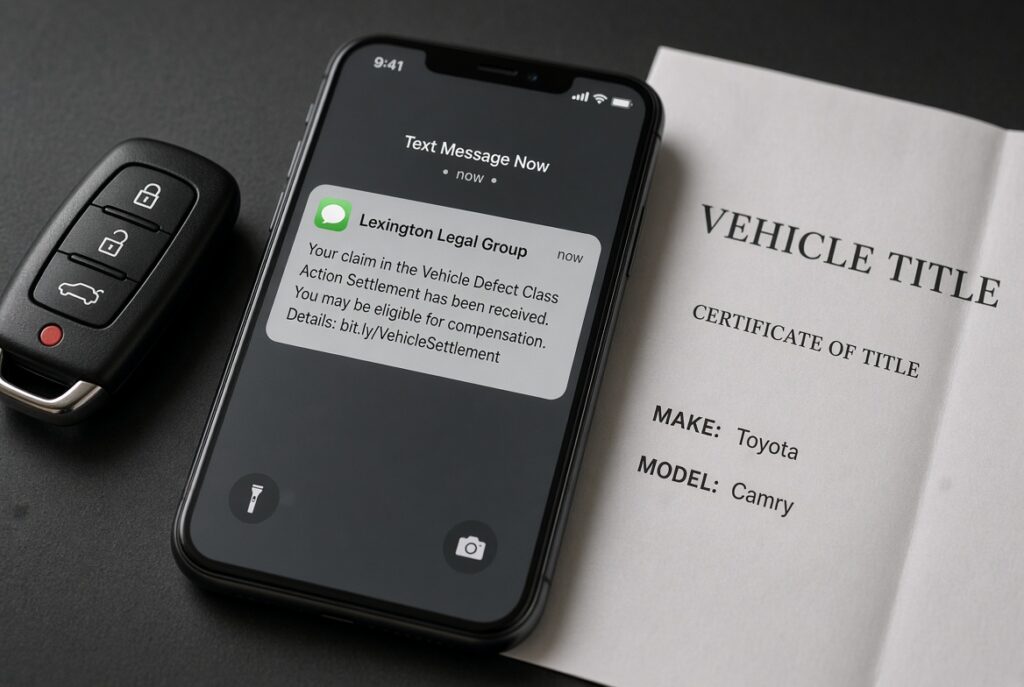
Vehicle defect cases work a little differently but land in the same place. In something like the Ford F-150 oil consumption lawsuit or theGM CP4 pump class action lawsuit, your eligibility usually gets confirmed through a VIN lookup, not a folder of repair receipts. The manufacturer already knows every vehicle it sold with the defective part. Your ownership record is the proof, and you don’t have to go find anything.
Notice the theme? In every real “no proof” case, the proof still exists; it just lives with the company, not with you.
Can You File or Win a Lawsuit With Literally No Evidence?
There’s a second question hiding inside this topic, and it deserves a straight answer: can someone actually file, or win, a class action with zero evidence?
No. That’s a totally different situation from claiming money from a settlement that already exists.
Joining a class vs. starting one
Joining a class as a claimant what most people mean when they say “no proof” just means saying you’re part of the affected group. The hard work of proving the company did something wrong already happened before the case ever settled. Lawyers, experts, and courts did that heavy lifting long before you filled out a claim form.
Being the lead plaintiff, or filing your own lawsuit, is a completely different bar. Attorneys need real evidence to get a class certified in the first place: internal company documents, expert analysis, sales records, patterns of complaints. There’s no “no proof” version of that process. If someone tells you otherwise, that’s a red flag on its own.
If you’re thinking about filing your own case
If your real question is whether you have grounds to sue on your own, “no proof” isn’t a realistic starting point — you’ll need actual evidence to get anywhere. It helps to understand your general odds before you spend time or money chasing a case; our guide on the chances of winning a personal injury lawsuit walks through what actually moves a case forward. And before you sign anything, it’s worth knowing the difference between a lawyer and an attorney the terms get used loosely, but they matter when you’re picking who represents you.
How Much Does It Cost to Join?
Nothing. Zero dollars.
Joining a class action settlement no-proof or otherwise never costs you anything. The attorneys who built the case get paid out of the settlement fund itself, and that fee has to be approved by a judge before anyone sees it. If a “settlement” ever asks you to pay a fee to receive your payout, that’s not a real settlement. It’s a scam, and we’ll get into exactly how to spot one next.
How to Tell a Real No-Proof Settlement From a Scam
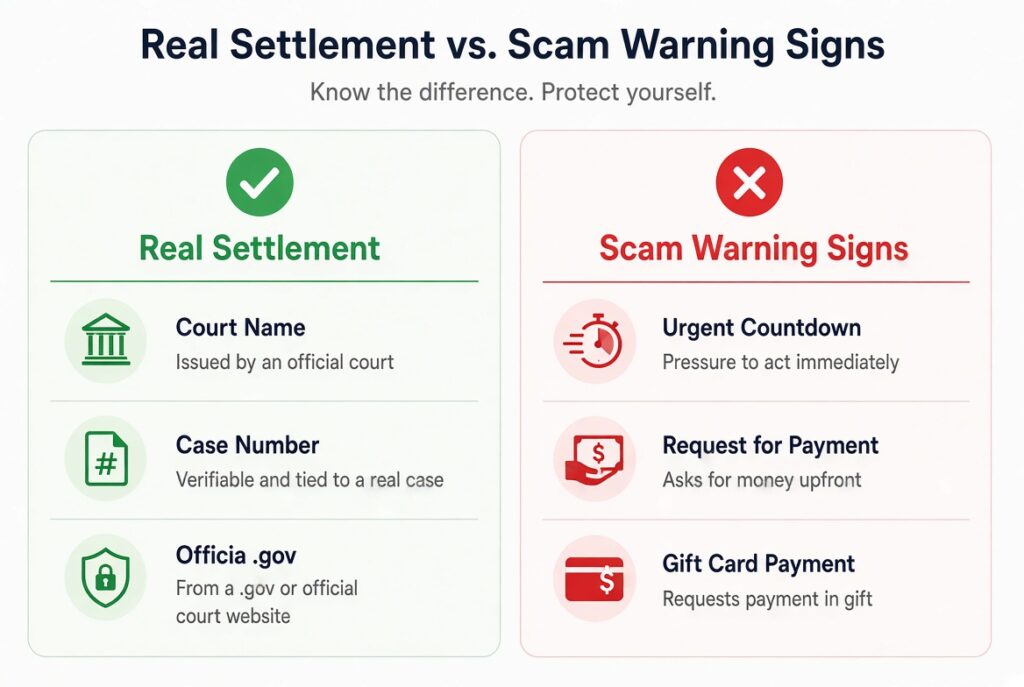
This is the part that actually matters most. Since no-proof claims don’t require documentation, they’re also easy for scammers to fake; there’s no paperwork step where a fraud attempt would normally trip up.
Red flags that mean stop immediately
- You’re asked to pay anything a “processing fee,” a “release fee,” or a gift card purchase
- The message pressures you to act within hours or lose everything
- You’re asked for your Social Security number, bank login, or full card number to “verify” a claim
- There’s no case number, no court name, no settlement administrator you can look up independently
- The link doesn’t match an official settlement site real administrator sites usually end in something like “settlementadministrator.com,” not a random shortened URL
How to verify it yourself
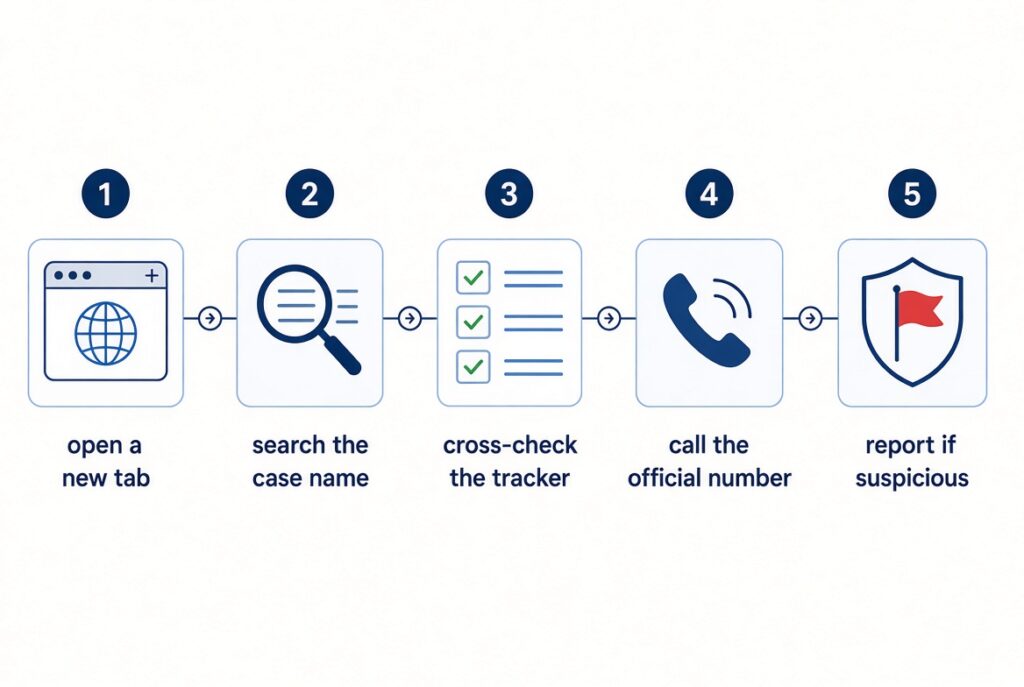
- Don’t click the link in the email or text. Open a new browser tab instead.
- Search the exact case name or company name plus “class action settlement.”
- Cross-check it against a known settlement tracker or court docket.
- Call the number listed on the official settlement website, never the number from the message itself.
- Report anything suspicious at ReportFraud.ftc.gov, the FTC’s official fraud-reporting site.
If you’re unsure whether a company was ever part of a real case, it helps to see what genuine, documented litigation actually looks like with named parties, court filings, and specific allegations. Coverage like our piece on the Crepe Erase lawsuit shows the kind of detail a legitimate case carries, which a vague “you’re owed money” text almost never has.
What Happens If You Falsely Claim You Qualify
Because self-certification skips the paperwork step, it can feel like nothing’s stopping someone from checking the box even when they’re not sure they qualify. Don’t do that.
Claim forms are usually signed under penalty of perjury. That’s a legal statement, and it can be checked against company records. Knowingly false claims can lead to:
- Your claim getting rejected and any payment clawed back
- Being barred from future claims tied to the same fund
- In serious or repeated cases, a referral for fraud
If you’re genuinely unsure whether you qualify maybe you can’t remember the exact dates you used a service that’s fine. File honestly with your best recollection. The administrator’s records will confirm or deny it. That’s very different from claiming a product you never touched.
Myth vs. Fact: No-Proof Class Action Claims
Myth: “No proof” means the settlement is probably fake.
Fact: It’s the opposite. Courts approve self-certification on purpose for low-dollar, high-volume claims. The presence of a no-proof option is normal, not suspicious.
Myth: Filing without a receipt is “gaming the system.”
Fact: Self-certification under penalty of perjury is the documentation the court asked for. You’re not sneaking past a requirement, you’re meeting it.
Myth: No proof means no one checks your claim.
Fact: Administrators regularly cross-reference claims against company records and can flag or deny anything that doesn’t line up.
Myth: If you don’t have proof, you’re stuck with the lowest payout forever.
Fact: Many settlements offer higher payouts for documented losses. It’s worth checking old statements or emails before settling for the base amount.
Myth: Since you can join a settlement with no proof, you could also win your own lawsuit with no evidence.
Fact: Not even close. Getting a class certified or winning any lawsuit takes real evidence, gathered long before any claim form exists.
Frequently Asked Questions
1. Do I need a receipt to join a class action lawsuit?
Not always. Plenty of settlements let you self-certify that you bought the product or used the service, especially for smaller claims. Bigger reimbursement tiers usually still want some documentation.
2. Is a class action settlement with no proof of purchase legit?
It can absolutely be legit self-certification is a normal, court-approved practice. The real scam risk isn’t the “no proof” part; it’s any message that asks you to pay something or hand over sensitive financial details.
3. Can I get more money if I have proof of purchase?
Often, yes. When a settlement offers both a no-proof tier and a documented-loss tier, the documented tier usually pays more. Check old bank statements or emails before settling for the base payout.
4. How long do I have to file a no-proof claim?
It varies by case, but most windows run somewhere between 90 and 180 days after the settlement gets approved. The deadline is always listed on the official settlement notice.
5. Can you join a class action lawsuit after it has already settled?
Once a settlement is final and the claims deadline passes, you generally can’t join it anymore. That’s why acting on the notice as soon as you get it matters.
6. What’s the difference between opting in and opting out of a class action?
Most class actions are “opt-out” — you’re automatically included unless you specifically ask to be excluded. A smaller number, mostly wage-and-hour cases, are “opt-in,” meaning you have to actively join to be part of it.
The Bottom Line
A class action lawsuit no proof claim isn’t a workaround or a gray area; it’s a normal part of how modern settlements pay people fairly and quickly. If you get a notice and the company’s records already show you’re eligible, there’s rarely a reason not to file.
Just remember the two things that actually matter here: be honest on the form, and dig around for any old documentation before you accept the smallest payout on offer. That combination gets you the most money with the least hassle.
This article is for general information only and isn’t legal advice. If you’re dealing with a specific settlement, or considering filing your own lawsuit, talk to a licensed attorney about the details of your situation.

Dirk Wasserthal is the Founder and Lead Writer of LegalDiaries.com, an independent legal information platform. He specializes in Mass Torts, Women’s Rights, and emerging legal issues, delivering clear, well-researched, and trustworthy content across Criminal Law, Family Law, Personal Injury, and more. Dirk’s mission is simple — make the law understandable for everyone.