

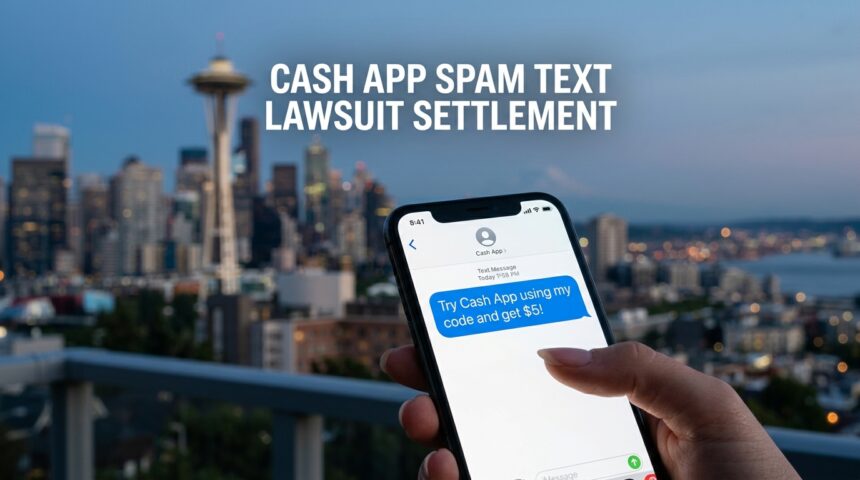
The Cash App spam text lawsuit settlement pays $394.36 to Washington residents who received unwanted “Invite Friends” referral texts from Cash App between 2019 and 2025. If you got a text that looked like it came from a friend but was actually generated by Cash App itself, you may already have money coming to you, and a second round of payments started in the summer of 2026.
- What Was the Cash App Spam Text Lawsuit About?
- Key Settlement Details: The $12.5 Million Fund
- Who Qualifies for the Cash App Spam Text Settlement?
- How Much Will You Get? The $394.36 Payout Explained
- Current Status: Payments, Reissues, and the New Second Round
- Block’s Wider Legal Trouble: The CFPB Fund and the 2026 State Settlement
- Is This a Real Settlement or a Scam?
- How This Differs from Cash App’s Other Settlements
- Myth vs. Fact
- How to Protect Yourself from Future Cash App Spam Texts
- Frequently Asked Questions
- Wrapping It Up
This guide explains exactly who qualified, how the payout grew far larger than first predicted, and what has changed since the case’s final approval.
What Was the Cash App Spam Text Lawsuit About?
The case is officially called Bottoms v. Block, Inc., case number 2:23-cv-01969-MJP, filed in the U.S. District Court for the Western District of Washington. Lead plaintiff Kimberly Bottoms sued after receiving repeated referral texts through Cash App’s “Invite Friends” feature.
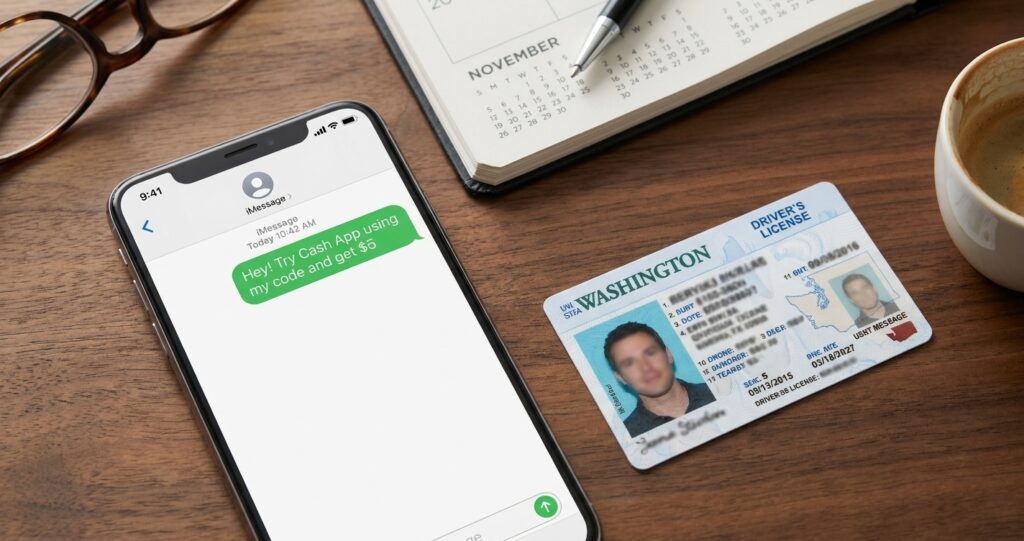
Here is how the feature worked. A Cash App user would tap a button, select a contact from their phone, and Cash App would automatically build and send a pre-written promotional text from that user’s number. The message usually read something close to: “Hey! I’ve been using Cash App to send money and spend using the Cash Card. Try it using my code and you’ll get $5.” The recipient never agreed in advance to receive it.
Imagine you get a text from your cousin’s phone number. It reads exactly like something a friend would type. You reply, only to realize your cousin never actually wrote it. That is the exact scenario this lawsuit was built around, and it is why the case argued Cash App, not the sender, bore legal responsibility.
The complaint alleged Cash App violated Washington’s Commercial Electronic Mail Act (CEMA), a state law originally passed in 1998 to fight spam email and expanded in 2003 to also cover commercial text messages. Under CEMA, a company can be held liable if it “initiates or assists” in sending an unsolicited commercial text, even if it never technically pressed send itself, and you can read the full statute yourself on Washington’s official legislature site at RCW 19.190. The complaint also cited the Washington Consumer Protection Act (CPA). Plaintiff’s counsel came from Terrell Marshall Law Group PLLC and Berger Montague PC, while Block’s defense was handled by Perkins Coie LLP.
Washington Attorney General Nick Brown intervened in December 2024 specifically to defend CEMA’s constitutionality after Block challenged the law. Block denied any wrongdoing throughout the case but ultimately agreed to settle rather than continue litigating.
Key Settlement Details: The $12.5 Million Fund
Block agreed to pay $12.5 million into a settlement fund. Before any money reached class members, the court approved $3.1 million in attorney fees plus $28,171.16 in litigation expenses, and a $10,000 service award to Kimberly Bottoms for representing the class. After those deductions, roughly $8.7 million remained for people who filed valid claims.
Preliminary approval came from Judge Marsha J. Pechman on July 29, 2025. Final approval came from U.S. District Judge John Chun in Seattle on December 2, 2025, and as Payments Dive reported at the time, Chun called the settlement “fair, reasonable, and adequate and in the best interests of the Settlement Class.”
If you are trying to make sense of the different professionals involved in a case like this, our guide on the difference between an attorney and a lawyer explains the terms class members often see in settlement notices, from class counsel to defense counsel to the presiding judge.
Who Qualifies for the Cash App Spam Text Settlement?
Eligibility came down to three simple facts, and you did not need a Cash App account yourself to qualify.
| Requirement | What It Means |
|---|---|
| Location | You were a Washington state resident, or had a Washington-area phone number, when the text arrived |
| Timing | The text arrived between November 14, 2019, and August 7, 2025 |
| Message type | It was a Cash App “Invite Friends” referral text offering a bonus like $5 |
| Consent | You never clearly and affirmatively agreed in advance to receive it |
Simply receiving the text was enough. You did not need a receipt, a screenshot, or any documentation of harm, much like some class action lawsuits that require no proof of individual loss beyond meeting the basic class definition.
Approximately 1,975,187 Washington residents fell within the class period, according to court filings. Only about 5% of them, roughly 100,000 people, actually filed a valid claim by the October 27, 2025 deadline. That gap between eligible people and actual claimants is the single biggest reason the payout ended up far larger than anyone expected.
How Much Will You Get? The $394.36 Payout Explained
Early court filings estimated each claimant would receive somewhere between $88 and $147. The real number came in dramatically higher.
| Estimate Type | Amount |
|---|---|
| Original low estimate | $88 |
| Original high estimate | $147 |
| Actual 2026 payout | $394.36 |
The math behind this is straightforward. The net fund of $8.7 million gets divided evenly among everyone who filed a valid claim. Because far fewer than the projected 5% of the class actually filed, each approved claimant’s slice grew substantially. If you filed a valid claim before the deadline, $394.36 is the confirmed, final number, not an estimate.
Current Status: Payments, Reissues, and the New Second Round
Payments to approved claimants started February 2, 2026. Most electronic payments through PayPal, Venmo, or direct deposit went out first, followed by paper checks. By April 1, 2026, the settlement administrator had reissued all failed digital payments and returned mail as new paper checks, with most arriving by April 8, 2026.
Here is the update most other coverage of this case has missed: the settlement administrator began issuing a second round of payments from remaining settlement funds starting in July 2026, going out to claimants who had already cashed their first check. If you already received your $394.36 and have not checked since June, it is worth logging back in to see whether a second payment has landed. You can check your own claim status anytime through the official settlement portal, and if your check never arrived, the administrator can be reached directly at info@BottomsTextSettlement.com or 1-877-540-7545.
No new claims are being accepted. The claim window closed permanently on October 27, 2025.
Block’s Wider Legal Trouble: The CFPB Fund and the 2026 State Settlement
The spam text case is not the only legal exposure facing Block, Cash App’s parent company, and understanding the bigger picture matters if you are trying to figure out what other money might be owed to you.
On January 16, 2025, the Consumer Financial Protection Bureau issued a consent order against Block over its handling of fraud disputes and customer service failures on Cash App, which you can read in full on the CFPB’s official enforcement page. The order required Block to pay up to $120 million in consumer redress plus a separate $55 million civil penalty. Crucially, this fund requires no claim form at all. Block itself must identify eligible users from its own records and send checks automatically, a process that finally became visible to consumers when checks started mailing on June 8, 2026.
Then, in a development so recent that most legal-news coverage of this case has not yet caught up to it, Block reached a 46-state attorney general settlement around August 19, 2026, agreeing to pay $45 million to those states while formally guaranteeing that the $120 million CFPB restitution obligation stays enforceable at the state level, a detail confirmed in Tech Times’ reporting from August 19, 2026. None of this changes your eligibility for the spam text settlement covered in this guide, but if you also had a mishandled fraud dispute with Cash App, it is worth checking whether you separately qualify for the CFPB fund, since that money arrives automatically with zero paperwork on your end.
Is This a Real Settlement or a Scam?
Yes, this settlement is real and court-approved. A legitimate settlement administrator will never ask you for your Cash App PIN, your full bank account number, or an upfront processing fee to release your payment.
Corporate settlements of this scale happen more often than most people realize, and not just in consumer class actions. The Edward Jones Kingsview Advisors lawsuit, for example, resulted in a $1.5 million settlement over an entirely different kind of dispute between a firm and former advisors, which shows courts take large-scale legal disputes seriously across very different industries, not only in cases involving everyday consumers.
A related rumor worth addressing directly: some social media posts describe a “$5,300 Cash App settlement.” No such figure exists in any real court filing tied to Block or Cash App. If you see that number attached to a claim link, treat it as a scam attempt, not a real payment opportunity.
How This Differs from Cash App’s Other Settlements
Cash App users have been part of more than one legal action in the last two years, and it is easy to confuse them.
| Aspect | Spam Text Settlement (Bottoms) | Data Breach Settlement (Salinas) | CFPB Redress Fund |
|---|---|---|---|
| Core issue | Unwanted referral texts | Data breaches, unauthorized account access | Mishandled fraud disputes |
| Fund size | $12.5 million | $15 million | Up to $120 million |
| Who qualifies | Washington residents only | Nationwide account holders affected by two specific breaches | Users identified automatically by Block |
| Claim needed | Yes, deadline already passed | Yes, deadline already passed | No, automatic |
| 2026 payout confirmed | $394.36 | Up to $2,500, documented losses | Checks mailing since June 2026 |
This kind of overlapping legal exposure against one large company is not unusual. The recent Crepe Erase lawsuit followed a similar pattern, where one company faced separate consumer complaints resolved through separate settlements rather than one combined case.
Myth vs. Fact
Myth 1: You had to own a Cash App account to qualify for this settlement.
(Fact:) You did not need a Cash App account at all. Only receiving the unwanted referral text while living in Washington state mattered.
Myth 2: The $394.36 payout was the amount promised from the very start.
(Fact:) Early court estimates put the payout between $88 and $147 per person. The final number rose to $394.36 only after the claims window closed and far fewer people than expected had filed.
Myth 3: This settlement applies to anyone in the United States who got one of these texts.
(Fact:) Eligibility was limited strictly to Washington state residents. Someone in Oregon or California who received the identical text had no claim under this particular settlement.
How to Protect Yourself from Future Cash App Spam Texts
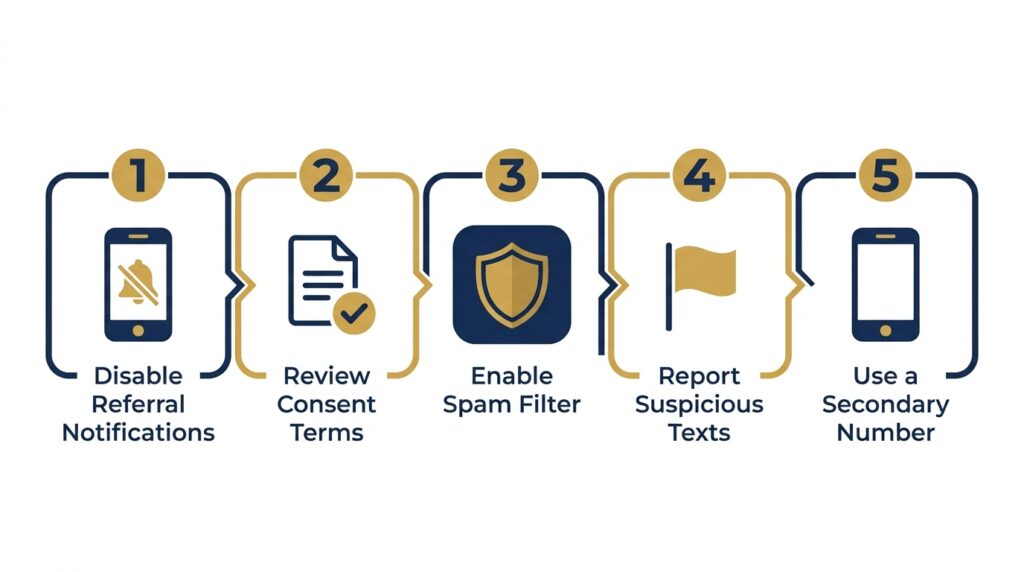
Even with this case resolved, referral-style spam texts are common across many apps, not just Cash App. Consider these steps:
- Turn off referral notifications inside the Cash App settings menu.
- Read consent terms carefully before sharing your phone number with any app.
- Turn on your phone’s built-in spam filter for promotional texts.
- Report suspicious referral messages directly inside the app that sent them.
- Consider giving out a secondary phone number for app sign-ups you are unsure about.
Frequently Asked Questions
1. How much does the Cash App spam text lawsuit settlement pay?
(Ans:) Approved claimants received $394.36 per claim starting in February 2026, with a second round of payments from remaining funds beginning in July 2026 for those who already cashed their first check.
2. Who qualifies for the Cash App spam text settlement?
(Ans:) Washington state residents who received an unsolicited Cash App “Invite Friends” referral text between November 14, 2019, and August 7, 2025, and never gave clear consent to receive it.
3. Can I still file a claim in 2026?
(Ans:) No. The claim deadline was October 27, 2025, and it has passed. No new claims are being accepted for this settlement.
4. Is there a second payment coming after the first $394.36 check?
(Ans:) Yes. The settlement administrator began issuing a second round of payments from remaining settlement funds in July 2026 to claimants who already cashed their first check.
5. Is the Cash App spam text lawsuit settlement a scam?
(Ans:) No. It is a real, court-approved settlement. Anyone asking for your PIN or a processing fee to release your payment is running a scam, not this settlement.
6. How is this different from the Cash App data breach settlement?
(Ans:) The spam text case (Bottoms v. Block) covers unwanted referral texts and is limited to Washington residents. The separate data breach case (Salinas v. Block) covers unauthorized account access nationwide and pays up to $2,500 for documented losses.
7. What is the CFPB Cash App fund, and is it the same case?
(Ans:) No, it is a separate federal enforcement action. The CFPB ordered Block to pay up to $120 million in automatic refunds to users with mishandled fraud disputes, with no claim form required, and checks began mailing in June 2026.
8. Did Block admit any wrongdoing in this settlement?
(Ans:) No. Block denied wrongdoing throughout the case and continues to deny the allegations, even after agreeing to pay the $12.5 million settlement fund.
9. Is the “$5,300 Cash App settlement” real?
(Ans:) No. That figure does not appear in any court document connected to Block or Cash App and should be treated as misinformation or a scam attempt.
Wrapping It Up
The Cash App spam text lawsuit settlement turned an everyday annoyance into a genuine $394.36 payout for approved Washington claimants, and the story is still moving. A second round of payments started in July 2026, and Block’s broader legal exposure grew further with a 46-state settlement in August 2026 tied to its separate CFPB obligations. If you filed a valid claim before the October 2025 deadline, your best next step is checking your payment status directly with the settlement administrator using the contact details above.
Disclaimer: This article is for informational purposes only and does not constitute legal, financial, or tax advice. Settlement terms, eligibility, and payment timelines can change. Confirm your specific situation directly with the official settlement administrator or a licensed attorney before making decisions based on this guide.

Dirk Wasserthal is the Founder and Lead Writer of LegalDiaries.com, an independent legal information platform. He specializes in Mass Torts, Women’s Rights, and emerging legal issues, delivering clear, well-researched, and trustworthy content across Criminal Law, Family Law, Personal Injury, and more. Dirk’s mission is simple — make the law understandable for everyone.