




The Depo Provera lawsuit covers thousands of women who say the injectable birth control shot gave them a brain tumor called a meningioma. Pfizer, the maker of the drug, now faces a signed nationwide settlement framework. Below, you will find the full story: what caused the lawsuits, who can still file, and exactly what the 2026 settlement means for you.
- What Is Depo Provera and Why Is It in the News
- The Science Behind the Meningioma Risk
- Why Women Are Filing a Depo Provera Lawsuit
- Lawsuit Timeline and 2026 Settlement Update
- Meningioma Symptoms to Watch For
- Who Qualifies to File
- What Compensation Might Look Like
- Other Long Term Side Effects
- Depo Provera Compared to Other Birth Control
- International Warnings Versus the US Response
- Myth Versus Fact
- How to File a Depo Provera Lawsuit
- Frequently Asked Questions
- What to Do Next
What Is Depo Provera and Why Is It in the News
Depo Provera is the brand name for medroxyprogesterone acetate, a birth control shot given once every three months. Doctors have prescribed it for decades because it is convenient. You do not need a daily pill, and you do not need a device placed inside your body.
Recent research changed the picture. Studies now link long term use of Depo Provera to meningioma, a tumor that grows on the tissue covering the brain and spinal cord. That link is the reason behind the wave of Depo Provera lawsuits filed against Pfizer.
The central legal question in every case is simple. Did Pfizer properly warn patients and doctors about this risk? Thousands of women, and the attorneys representing them, say the answer is no.
What if you only used the generic version? You are not left out. Many claims involve generic medroxyprogesterone acetate injections rather than brand name Depo Provera. The drug itself, not the label on the box, is what matters for eligibility.
The Science Behind the Meningioma Risk

A meningioma usually grows slowly, and many are not cancerous. That does not mean it is harmless. Even a slow growing tumor can press on the brain and cause lasting damage, and removing it often requires brain surgery.
A landmark study published in The BMJ in 2024 looked at data from more than 100,000 women. Researchers found that women who used injectable medroxyprogesterone acetate for a long period had roughly a 5.6 times higher chance of developing an intracranial meningioma compared with women who used other hormonal birth control methods. The risk rose the longer a woman used the shot, with the clearest signal after one year or more of use, meaning four or more injections.
You do not need to still be using Depo Provera for this to apply to you. Tumors can take years to show symptoms. A woman who stopped the shot in 2015 could be diagnosed with a meningioma in 2026 and still have a valid claim.
Key point: The risk is measurable, it grows with the number of shots you received, and it does not disappear after you stop using the drug.
Why Women Are Filing a Depo Provera Lawsuit
Plaintiffs are not arguing that Depo Provera never works as birth control. They are arguing that Pfizer knew, or should have known, about the brain tumor risk and chose not to tell patients. The main legal claims include:
- Failure to warn. For years, the drug label said nothing about meningioma risk, even after regulators in other countries added warnings.
- Inadequate safety monitoring. Lawsuits claim Pfizer did not properly track long term risks once the drug was already on the market.
- Misleading marketing. Materials promoted convenience and safety while leaving out the tumor data that was already emerging overseas.
- Design defect. Some complaints argue the drug itself is unreasonably dangerous without a clear warning attached.
This pattern is common in mass tort cases where a company is accused of hiding a known risk. It mirrors claims in other product cases, including the Crepe Erase Lawsuit, where consumers said a skincare company left out important health warnings.
Real world example: Picture a woman who received Depo Provera shots every three months from 2010 through 2016. In 2024, she started getting headaches that would not go away. An MRI found a meningioma. Under the current legal theory, if Pfizer had warned her doctor about the risk years earlier, she may have chosen a different birth control method, or at least caught the tumor sooner through monitoring.
Lawsuit Timeline and 2026 Settlement Update
The case moved fast for a mass tort. Here is the full timeline, corrected and updated through August 2026.
| Date | Event |
|---|---|
| March 2024 | The BMJ study links long term Depo Provera use to a 5.6 fold higher meningioma risk. |
| October 2024 | The first Depo shot lawsuit is filed in California state court. |
| February 2025 | The Judicial Panel on Multidistrict Litigation centralizes the federal cases into MDL No. 3140, assigned to Judge M. Casey Rodgers in the Northern District of Florida. |
| December 2025 | The FDA approves a new Depo Provera label warning about meningioma risk and issues a Drug Safety Communication. |
| June 2026 | Pfizer and plaintiffs’ leadership announce an agreement in principle to resolve claims in the MDL. The court removes the first bellwether trial from its calendar. |
| July 21, 2026 | Pfizer and plaintiffs’ leadership sign a Master Settlement Agreement. Roughly 80 percent of the plaintiffs currently in the federal MDL are expected to be eligible to take part. |
| September 18, 2026 | The court is set to hear Pfizer’s general causation and Rule 702 challenges, which test whether the scientific evidence linking the drug to meningioma is strong enough to go to a jury. |
| August 2026 | More than 6,294 lawsuits are pending in the MDL, making it one of the ten largest active mass torts in the country today. |
Two details matter that many summaries leave out. First, the settlement terms, including payment tiers and exact eligibility rules, have not been made public yet. Second, the deal only covers the federal MDL. Women with cases filed in state courts, including Delaware and New York, are not automatically included and may need a separate process.
Registration for the settlement program is expected to be complete by November 2026. The first payments are projected for the first quarter of 2027.
How This MDL Compares to Other Product Liability Cases
| Aspect | Depo Provera MDL | GM CP4 Pump Lawsuit (example) |
|---|---|---|
| Status | Settlement agreement signed, terms being finalized | Resolved through settlements |
| Case volume | 6,294 plus | Thousands |
| Core allegation | Failure to warn of brain tumor risk | Defective fuel pump design |
| Outcome so far | Master Settlement Agreement signed July 2026 | Multi million dollar payouts issued |
Vehicle defect cases like the GM CP4 Pump Class Action Lawsuit forced accountability for a hidden mechanical flaw. The Depo Provera litigation is forcing the same kind of accountability for a hidden pharmaceutical risk.
Meningioma Symptoms to Watch For
Meningioma symptoms often start small, and many women mistake them for stress, migraines, or normal aging. If you used the depo shot for a year or more, pay attention to these signs.
Seek medical evaluation if you notice:
- Headaches that feel worse than usual or will not go away
- Blurred vision, double vision, loss of side vision, or seeing flashes of light
- New seizures, even mild ones
- Memory trouble, confusion, or difficulty concentrating
- Ringing in the ears or hearing loss on one side
- Ongoing nausea, dizziness, or balance problems
- Weakness or numbness in an arm or leg
- Personality changes noticed by people close to you
- Loss of smell with no other clear cause
Important: Symptoms can appear years after your last shot. Some women diagnosed in 2025 and 2026 stopped using Depo Provera five or ten years earlier. Catching the tumor early improves your treatment odds and helps establish a clear timeline for your legal claim.
Who Qualifies to File
Not every woman who used the shot has a case. Attorneys generally look for these facts before accepting a claim:
- You used Depo Provera, or generic medroxyprogesterone acetate, for at least one year or received at least four injections
- You have been diagnosed with a meningioma, confirmed by MRI, CT scan, or biopsy
- Your diagnosis came after you started using the drug, with no other clear cause such as a genetic condition
- You suffered real damages, such as surgery, radiation, ongoing scans, lost income, or pain and suffering
If your loved one died from a meningioma linked to Depo Provera, you may be able to file a wrongful death claim on their behalf.
Statute of limitations: Each state sets its own deadline, usually one to three years from the date of diagnosis or from when you reasonably connected the tumor to the drug. Because the FDA warning did not arrive until December 2025, many women are only now making that connection. Do not assume you missed your window. Ask an attorney before you rule yourself out.
Important: This is not a class action. You will not get an automatic check just because your name matches a filter. The MDL evaluates each case on its own medical records, use history, and injury severity, so you have to actively file through an attorney to take part.
If you are unsure whether your specific facts add up to a strong case, this guide on chances of winning a personal injury lawsuit walks through the factors that generally strengthen a claim.

What Compensation Might Look Like
With the Master Settlement Agreement signed on July 21, 2026, the conversation has shifted from whether Pfizer will pay to how much and when. The final payment tiers have not been released, but legal analysts expect compensation to depend on:
- How severe the meningioma is, including size, location, and whether it is benign or a more aggressive type
- The treatment required, such as surgery, radiation, gamma knife treatment, or ongoing observation
- Lasting effects, such as vision loss, memory problems, or seizure disorders
- Economic losses, including medical bills and lost wages
- Non economic losses, including pain, suffering, and loss of enjoyment of life
In similar mass torts, payouts for serious, life changing injuries have reached six and seven figures. Cases involving surgery with permanent effects tend to land at the higher end. Strong documentation matters. Similar to lessons from the Ford F-150 Oil Consumption Lawsuit, the plaintiffs who act early and keep thorough records tend to have the strongest position when a settlement fund opens.
What if the settlement fund runs out before you file? This is a real risk. If you wait until deadlines pass or a fund is exhausted, you may recover nothing, even with a valid claim.
Other Long Term Side Effects
The meningioma link dominates headlines, but Depo Provera carries a history of other documented risks.
- Bone density loss. The FDA has required a black box warning since 2004 stating that long term use may cause significant bone loss and raise fracture risk. Guidance generally advises against using the shot for more than two years unless other methods will not work.
- Weight and metabolic changes. Many users report weight gain that does not fully reverse after stopping the shot.
- Mood changes. Depression and anxiety are recognized possible side effects.
- Delayed return of fertility. Ovulation can take ten months or longer to return after your last injection.
Combined with the new tumor warning, these risks are a good reason for any current or past user to talk with a doctor about the full picture.
Depo Provera Compared to Other Birth Control
| Method | Meningioma Risk | Key Considerations |
|---|---|---|
| Depo Provera injection | 5.6 times higher risk with prolonged use | Highest known meningioma risk among hormonal methods; also carries a bone loss warning |
| Combined oral contraceptive pill | Slightly elevated in some studies, far lower than the injection | Risk may rise with duration and dose |
| Levonorgestrel IUD | Very low, no consistent signal in large studies | Different hormone class than medroxyprogesterone |
| Copper IUD | No hormonal exposure, no meningioma risk | Side effects limited mainly to bleeding pattern changes |
| Nexplanon implant | Low risk, uses a different progestin | No clear meningioma link in current evidence |
| Barrier methods | No hormonal risk | No systemic side effects, higher user dependent failure rate |
The point is not that all birth control is dangerous. The point is that women deserve the information needed to weigh these risks for themselves.
International Warnings Versus the US Response
One of the more troubling parts of this story is the timeline gap between what other countries knew and what US women were told.
- Europe, 2019 to 2021: The European Medicines Agency required updated safety information for high dose medroxyprogesterone acetate products after French studies flagged a meningioma association.
- Canada, 2022: Health Canada added a meningioma warning to the Depo Provera label, stating that risk increases with how long a woman uses the drug.
- United States, December 2025: The FDA finally acted, nearly three years after Canada and roughly a year after the BMJ study made the risk hard to ignore.
Plaintiffs’ attorneys argue this gap is not just a bureaucratic delay. They point to FDA rules that let drug companies use a process called Changes Being Effected, or CBE, to add a safety warning as soon as new risk evidence appears, without waiting for formal FDA approval. That means Pfizer may have had both the ability and the responsibility to warn US women years before it did.
Myth Versus Fact
Myth 1: The settlement is finalized, so the case is basically over.
(Fact:) The Master Settlement Agreement was signed on July 21, 2026, but that is not the finish line. Registration is expected to run through November 2026, and the first payments are not projected until the first quarter of 2027. Attorneys are still accepting new claims right now.
Myth 2: This is a class action, so I will get an automatic check.
(Fact:) This is a multidistrict litigation, not a class action. Every plaintiff must file an individual claim through an attorney, and payment amounts depend on each woman’s specific medical history and injury.
Myth 3: I do not see my name mentioned anywhere, so I must have missed my chance.
(Fact:) New cases are being filed every week, and the case count is still climbing. Many statutes of limitations are tied to when you discovered the link between your tumor and the drug, not just the date of your original diagnosis. Talk with an attorney before assuming you are out of time.
If you want a broader look at how mass tort filings without individual named plaintiffs sometimes get misunderstood, see this explainer on a class action lawsuit with no proof.
How to File a Depo Provera Lawsuit
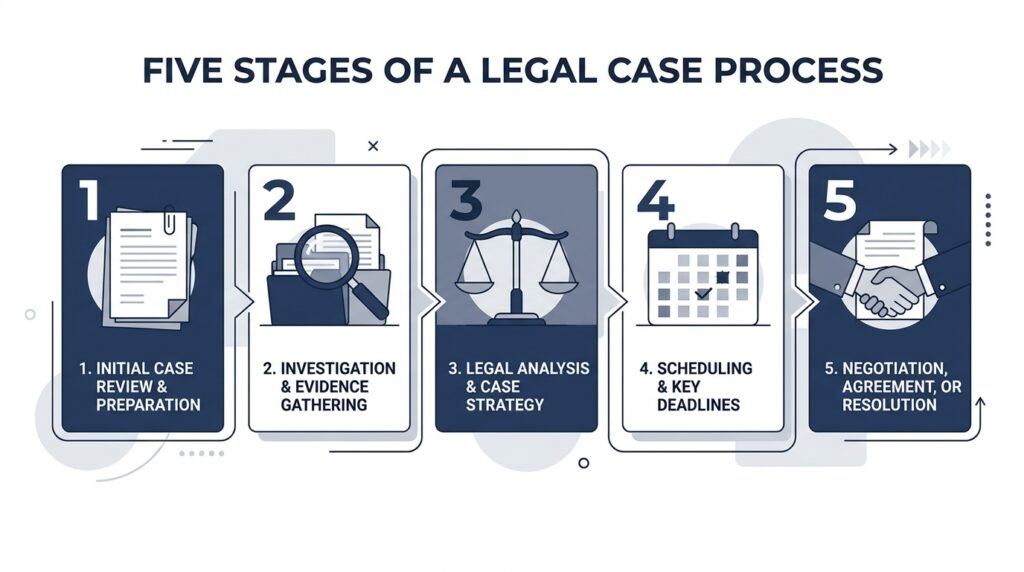
Step 1: Gather your Depo Provera history. Collect medical records showing your injection dates, clinic names, and pharmacy receipts. If you do not remember the exact number of shots, request records from every provider you saw.
Step 2: Collect your meningioma diagnosis evidence. Get your MRI or CT scan reports, pathology reports, surgical notes, and a letter from your treating neurosurgeon if one is available.
Step 3: Consult an attorney who handles this MDL. Most firms offer a free case review. They will look at your medical history, your injection timeline, and your state’s statute of limitations at no cost. If you are not sure how to evaluate a firm, this guide on signs of a bad attorney is worth reading before you sign anything.
Step 4: Your attorney files your case. A short form complaint gets filed and transferred into the MDL for coordinated discovery. Most of this process happens remotely, so you generally will not need to travel.
Step 5: You take part in the settlement process. With the Master Settlement Agreement now signed, most qualifying cases will move into a claims process where a claims administrator reviews your injury profile and assigns an award tier.
Important: Reputable firms handling this litigation work on contingency. You pay nothing upfront, and the firm only gets paid if you recover compensation.
If you or someone in your family is also dealing with a separate injury claim, such as a motorcycle accident lawsuit, the intake and documentation steps follow a similar pattern.
Frequently Asked Questions
1. Is there a Depo Provera class action?
(Ans:) No. The federal cases are consolidated as MDL No. 3140, not a class action. Each plaintiff’s case is evaluated on its own facts, and payment amounts differ based on individual injury and history.
2. Can I file if I used the generic version?
(Ans:) Yes. Generic medroxyprogesterone acetate is chemically identical to brand name Depo Provera, and many claims involve the generic injection.
3. How long will it take to get paid?
(Ans:) Registration is expected to run through November 2026, with the first payments projected for the first quarter of 2027 for cases that meet the settlement criteria and have complete documentation. More complex cases may take longer.
4. Is Depo Provera still prescribed in 2026?
(Ans:) Yes. It remains on the market with the updated FDA meningioma warning. Anyone using it or considering it should talk with a doctor about the risk before making a decision. Do not stop any medication without medical guidance.
5. What if I stopped using Depo Provera years ago?
(Ans:) You may still qualify. Meningiomas can grow slowly and show up years after your last shot. As long as your diagnosis came after your use began and falls within your state’s statute of limitations, you may have a valid claim.
6. What evidence do I need?
(Ans:) You generally need medical records showing at least four Depo Provera injections, an MRI or CT report confirming a meningioma, surgical records if you had one, and proof of related medical costs. Your attorney will help you gather all of it.
7. Can I sue if a family member died from a Depo Provera related brain tumor?
(Ans:) Yes. Surviving spouses, children, or parents may be able to file a wrongful death claim covering funeral costs, lost financial support, and loss of companionship.
8. Do I have to go to court?
(Ans:) Most MDL cases resolve without a trial. If your case does not settle within the established framework, a trial remains possible, but only a small share of mass tort cases ever reach a courtroom.
9. Will filing a claim affect my current medical care?
(Ans:) No. A personal injury claim is separate from your medical treatment. Your doctors will keep treating you, and you remain free to choose any provider. The lawsuit only seeks compensation for harm already suffered.
What to Do Next
The Depo Provera lawsuit is more than a headline. It is a case about whether women got the information they needed to make an informed choice about their own health. For years, millions of women trusted a convenient birth control method without knowing about a risk that regulators in other countries had already flagged.
If you currently use Depo Provera, talk with your doctor about the meningioma warning and whether it changes your plan. If you used it in the past, stay alert for any of the neurological symptoms listed above and do not brush them off. If you have already been diagnosed with a meningioma, the clock on your state’s statute of limitations may already be running, so do not wait to speak with an attorney.
If you or a loved one took Depo Provera and were later diagnosed with a meningioma, a free case review can tell you where you stand. There is no cost unless you recover compensation.
This article is for informational purposes only and does not constitute legal or medical advice. Laws and settlement status change quickly. Always talk with a licensed attorney about your legal options and a licensed physician about your medical care. No attorney client relationship is created by reading this content.

Dirk Wasserthal is the Founder and Lead Writer of LegalDiaries.com, an independent legal information platform. He specializes in Mass Torts, Women’s Rights, and emerging legal issues, delivering clear, well-researched, and trustworthy content across Criminal Law, Family Law, Personal Injury, and more. Dirk’s mission is simple — make the law understandable for everyone.