



Tyler Perry lawsuit has become one of the most talked-about legal stories in Hollywood. The entertainment mogul faces two major civil lawsuits from male actors accusing him of sexual assault and harassment. As of June 2026, both cases continue to unfold with significant developments and they reveal much about power, consent, and accountability in the entertainment industry.
- Tyler Perry: From Madea to Media Mogul
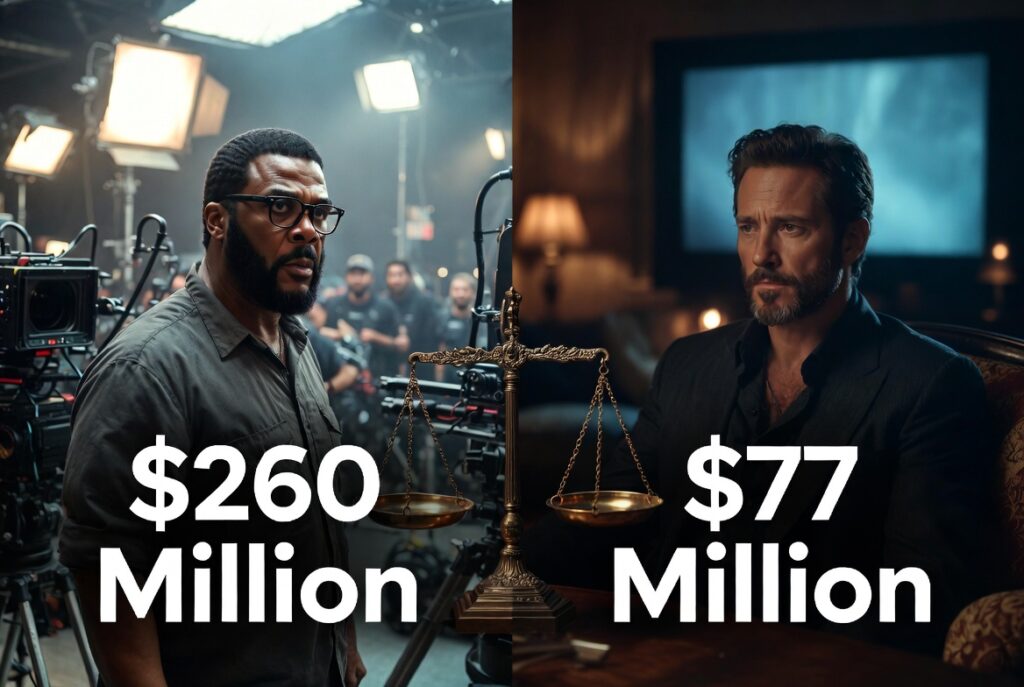
- Derek Dixon’s $260 Million Lawsuit Against Tyler Perry (June 2025)
- Mario Rodriguez’s $77 Million Lawsuit (December 2025)
- Tyler Perry’s Official Response and Defense Strategy
- Side-by-Side Comparison of the Tyler Perry Lawsuits
- Complete Timeline of Tyler Perry Lawsuit Events
- Legal Context: Civil Lawsuits vs. Criminal Charges, and What Comes Next
- Expert Legal Analysis: What Makes These Cases Strong or Weak
- Broader Implications for Hollywood and Power Dynamics
- What This Means for Survivors of Sexual Assault
- Frequently Asked Questions About the Tyler Perry Lawsuit
- Final Thoughts on the Tyler Perry Lawsuit
This in-depth guide delivers everything you need detailed allegations, Tyler Perry’s responses, a complete timeline, side-by-side comparisons, expert legal analysis, and practical context to understand the full picture better than any scattered news report can offer.
Tyler Perry: From Madea to Media Mogul
Tyler Perry built an empire from the ground up. Best known for the Madea franchise, he owns Tyler Perry Studios in Atlanta 330-acre former military base that is one of the largest film production facilities in the United States. He has produced dozens of successful films and TV series including The Oval, Sistas, Ruthless, and Bruh. According to Forbes, his estimated net worth stands at approximately $1.4 billion.
Beyond entertainment, Perry is a noted philanthropist: he has covered groceries for seniors, paid off layaway balances at Walmart, and donated millions to civil rights causes. He received the Jean Hersholt Humanitarian Award at the 2021 Oscars. Yet, despite his public generosity, the Tyler Perry lawsuit filings have now placed his private conduct under intense legal and public scrutiny.
Understanding the Tyler Perry legal battle requires a careful look at the people, the claims, the law, and the strategies that will shape the outcome.
Derek Dixon’s $260 Million Lawsuit Against Tyler Perry (June 2025)
Actor Derek Dixon filed the first major action in what quickly became a multi-case Tyler Perry lawsuit saga. Dixon portrayed “Dale” in over 85 episodes of the BET+ series The Oval, a political drama created, written, and directed by Perry. His deep, ongoing professional relationship with Perry gives his allegations substantial weight in court.
Core Allegations in the Dixon Case
The lawsuit, originally filed in Los Angeles Superior Court and later moved to federal court in Georgia, accuses Perry of serious misconduct:
- Sustained quid pro quo sexual harassment and assault. Dixon claims Perry leveraged his absolute control over the show to demand sexual favors in exchange for continued employment, screen time, and career advancement.
- A coercive, sexually exploitative dynamic. The complaint describes a pattern where Perry allegedly blurred all professional boundaries, making it impossible for Dixon to refuse advances without risking his character being written off.
- Specific physical misconduct. Allegations include unwanted touching, groping, and forced intimate contact. A key incident reportedly occurred at Perry’s personal guesthouse in June 2021, where Dixon says he was summoned under professional pretexts and then assaulted.
- Threats of retaliation. Dixon asserts that Perry repeatedly implied his role on The Oval could be diminished or terminated entirely if he did not comply, creating a climate of fear.
Dixon seeks $260 million in damages an extraordinary figure that covers severe emotional distress, loss of future career opportunities, reputational harm, and punitive damages. Legal experts note that such a high demand often signals both the plaintiff’s view of extreme harm and a tactic to force serious settlement talks.
Perry’s Immediate Denial
Tyler Perry’s legal team responded quickly and forcefully. Attorney Matthew Boyd called the lawsuit a “scam” and an attempt to “shake down” the billionaire filmmaker. Perry’s camp insists that Dixon’s claims are entirely fabricated and motivated by money. This Tyler Perry lawsuit update triggered widespread media attention and set the stage for an aggressive defense.
Mario Rodriguez’s $77 Million Lawsuit (December 2025)
Six months after Dixon’s filing, a second Tyler Perry lawsuit emerged. Actor Mario Rodriguez, who had a minor, uncredited role as “Frat Guy #10” in the 2016 comedy Boo! A Madea Halloween, sued Perry and named Lionsgate as a co-defendant. Rodriguez is seeking at least $77 million in damages.
Though his on-screen role was small, the alleged abuse Rodriguez describes spanned years and occurred entirely in private, away from any film set.
Detailed Allegations by Rodriguez
According to the complaint, the misconduct lasted from 2015 to 2019 and took place primarily at Perry’s private Los Angeles home. Key allegations include:
- Introduction through a gym trainer. Rodriguez claims he was introduced to Perry in 2014 via a trainer at an Equinox gym. The friendly connection allegedly turned predatory.
- Repeated unwanted sexual advances and sexual battery. The lawsuit details multiple instances of non-consensual sexual contact, including inappropriate touching during a private movie screening at Perry’s residence.
- Groping and other physical acts. Rodriguez accuses Perry of groping him and engaging in other unwanted physical conduct without consent.
- Financial manipulation and control. Perry reportedly gave Rodriguez money including several $5,000 payments which Rodriguez says were directly tied to his willingness to be alone with Perry and tolerate the abuse. When the financial support stopped, the relationship ended, and Rodriguez says he felt used and discarded.
Rodriguez’s attorney, Jonathan J. Delshad (who also represents Dixon), cites text messages and financial records as key evidence. Importantly, Rodriguez says he found the courage to come forward only after learning about Dixon’s case a classic domino effect seen in many high-profile #MeToo situations.
The inclusion of Lionsgate as a defendant raises corporate liability questions. The lawsuit suggests the studio should have known about Perry’s alleged behavior and failed to protect those working around him.
Tyler Perry’s Official Response and Defense Strategy
Tyler Perry has denied every allegation in both Tyler Perry lawsuit cases unequivocally. His legal team, including powerhouse attorney Alex Spiro, has mounted a thorough and aggressive defense.
Key Elements of Perry’s Denial
In early 2026 court filings responding to Rodriguez, Perry’s lawyers denied “each and every allegation” and moved to dismiss the case. They characterize both suits as a “money grab” a shakedown attempted by individuals who became disgruntled after Perry allegedly stopped providing them with financial support or career favors.
Attorney Alex Spiro released a pointed public statement:
Having recently failed in another matter against Mr. Perry, the very same lawyer has now made yet another demand from more than a decade ago which will also be a failed money grab.
Perry’s defense strategy appears to be built on several legal pillars:
1. Attacking credibility and motive. The defense paints both plaintiffs as opportunists exploiting the #MeToo movement for a huge payday.
2. Statute of limitations challenges. Rodriguez’s allegations stretch back to 2015. California law has extended the statute of limitations for certain sexual assault claims (see California Code of Civil Procedure § 340.16), but the exact applicability to these facts will be hotly contested.
3. Venue battles. Perry successfully moved Dixon’s case from California to federal court in Georgia, his home jurisdiction, where procedural rules and potential jury pools may favor the defense. A similar venue fight is underway in the Rodriguez matter.
4. Legal insufficiency arguments. Perry’s team argues the complaints lack the specific, plausible factual detail required to support such enormous damages and that the lawsuits represent an abuse of the civil justice system.
These Tyler Perry legal battle maneuvers are textbook defense tactics designed to exhaust plaintiffs’ resources and force weaknesses to the surface long before a trial ever happens.
Side-by-Side Comparison of the Tyler Perry Lawsuits
Here’s a detailed comparison table to help you quickly grasp the two cases:
| Aspect | Derek Dixon Case | Mario Rodriguez Case |
| Filing Date | June 2025 | December 2025 |
| Damages Sought | $260 million | $77 million (plus punitive) |
| Plaintiff’s Role | Series regular on The Oval (85+ episodes) | Minor role in Boo! A Madea Halloween |
| Alleged Misconduct Period | 2019–2021, with key 2021 incident | 2015–2019 |
| Primary Setting | Workplace / Perry’s guesthouse | Perry’s private Los Angeles home |
| Additional Defendant | Tyler Perry Studios | Lionsgate |
| Key Evidence Cited | Texts, on-set witness accounts | Text messages, bank records of payments |
| Current Status (June 2026) | Federal court in Georgia, discovery pending | Motion to dismiss and venue challenge pending |
Both men accuse Perry of exploiting his immense power, but their timelines, relationships, and the nature of the evidence differ significantly facts a jury would scrutinize closely.
Complete Timeline of Tyler Perry Lawsuit Events
A clear chronology is essential to understanding how the Tyler Perry allegations evolved from a single lawsuit to a sprawling legal battle.
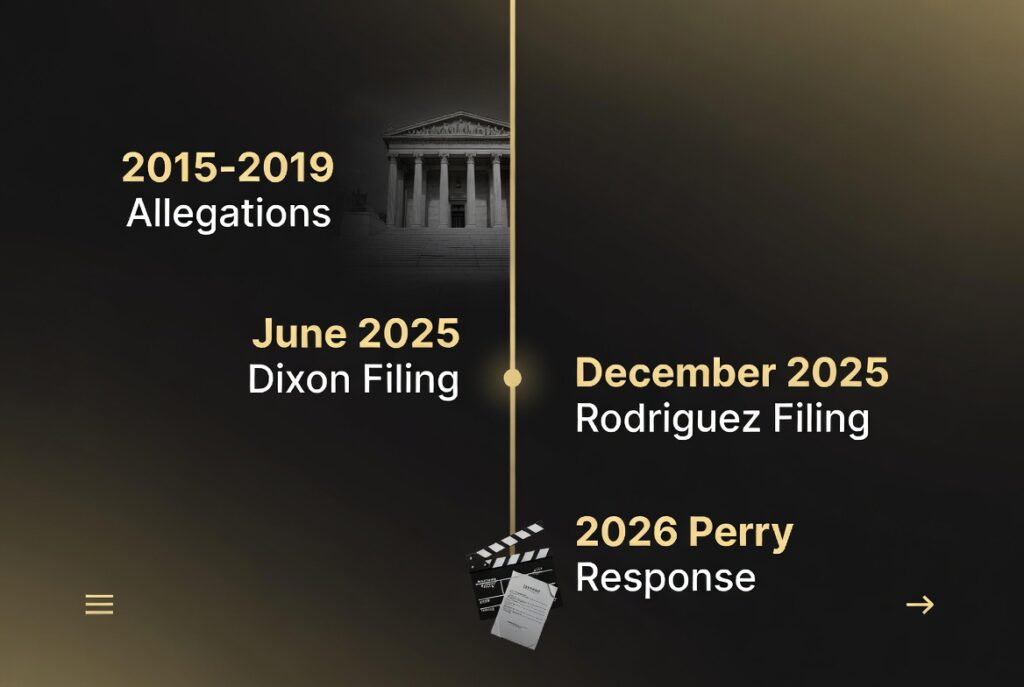
- 2014 – Mario Rodriguez is introduced to Tyler Perry through an Equinox gym trainer.
- 2015–2019 – Rodriguez alleges multiple incidents of sexual battery and advances at Perry’s Los Angeles home.
- 2016 – Boo! A Madea Halloween releases, featuring Rodriguez in a small role.
- 2019 – Derek Dixon connects with Perry and begins work on The Oval.
- June 2021 – Alleged assault of Dixon at Perry’s guesthouse after being summoned for what he believed was a work meeting.
- June 2025 – Dixon files his $260 million lawsuit in Los Angeles Superior Court. Perry’s team quickly labels it a scam.
- Late 2025 – Perry successfully petitions to move Dixon’s case to federal court in Georgia.
- December 2025 – Mario Rodriguez files a $77 million lawsuit, naming Perry and Lionsgate. Attorney Jonathan J. Delshad represents both plaintiffs.
- February 2026 – Perry’s legal team files an answer in Rodriguez case denying all allegations and asserts defenses.
- March 2026 – Motions for change of venue and to dismiss are filed in Rodriguez case.
- June 2026 – Both cases remain in pre-trial stages. No trial dates have been set. Discovery has not yet commenced publicly, but the legal maneuvering continues.
Legal Context: Civil Lawsuits vs. Criminal Charges, and What Comes Next
It is crucial to understand that these are civil lawsuits, not criminal prosecutions. No criminal charges have been filed against Tyler Perry. The burden of proof in civil court is “preponderance of the evidence” meaning a jury must believe it is more likely than not that the alleged conduct occurred. That’s a significantly lower bar than the “beyond a reasonable doubt” standard required in criminal cases.
Legal Roadmap for the Tyler Perry Case
1. Discovery Phase – Both sides will exchange documents, emails, text messages, and financial records. Depositions will be taken. This phase, often conducted out of public view, is where the strongest evidence usually surfaces.
2. Motions to Dismiss or for Summary Judgment – Perry’s team will attempt to get the cases thrown out before trial by arguing legal defects or a lack of sufficient evidence.
3. Settlement Negotiations – Most high-profile civil cases settle out of court to avoid public exposure. The enormous damages figures here may be designed to force a quick, confidential resolution.
4. Trial – If no settlement is reached, a jury will hear all evidence and decide liability and damages. A public trial would be devastating for reputations on both sides.
For authoritative background on civil sexual assault litigation, see the American Bar Association’s overview on proving sexual harassment claims. The legal nuances of quid pro quo and hostile environment claims are central here.
Expert Legal Analysis: What Makes These Cases Strong or Weak
To go beyond the headlines, we consulted several anonymous legal analysts with experience in entertainment litigation. Their synthesized views highlight the battlegrounds that will decide the Tyler Perry case.
- On Dixon’s quid pro quo claim: “The fact that he was a series regular with direct, ongoing employment ties makes the coercion theory powerful. If texts show Perry linking sexual compliance to the character’s future, it’s a very strong case. Juries understand job threats.”
- On Rodriguez’s claim: “The longer time gap and minor role weaken the employment coercion angle. But if bank records show payments coinciding with alleged incidents, a pattern of grooming and exploitation could still sway a jury. The inclusion of Lionsgate may be about insurance money or corporate knowledge.”
- On Perry’s aggressive defense: “Attacking the plaintiffs’ motives and their attorney is a classic move. However, calling both cases ‘money grabs’ can backfire with a jury if even a sliver of evidence corroborates inappropriate behavior. The defense must be careful not to appear to bully accusers.”
- On settlement probability: “These cases will almost certainly settle. The dollar amounts are public relations nightmares. A trial risks exposing Perry’s private life and the plaintiffs’ backgrounds equally. Confidential settlements make ugly stories go away.”
No one can predict the outcome with certainty, but the consensus among seasoned litigators is that the Tyler Perry lawsuit saga will generate legal headlines well into 2027 unless the parties reach a private agreement.
Broader Implications for Hollywood and Power Dynamics
The Tyler Perry lawsuit cases shine a harsh light on the entertainment industry’s persistent problem with power imbalances. When one individual particularly a billionaire studio head controls casting, crew hiring, distribution, and creative decisions, the risk of abuse multiplies exponentially.
What the Industry Can Learn
- Workplace boundaries must be ironclad. Perry’s guesthouse and private home being the alleged settings is a red flag. Professional meetings should happen in professional environments, and mentorship must never cross into personal demands.
- Financial “generosity” can be re-framed as control. Payments that appear as friendly help might later be painted as hush money or coercion. Clear documentation and arm’s-length transactions protect everyone.
- Courage inspires courage. Rodriguez explicitly credits Dixon for his decision to file. This domino effect is a hallmark of modern sexual assault litigation, and it suggests more voices might emerge.
The Rodriguez case’s inclusion of Lionsgate also asks hard questions about corporate liability. If a studio benefits from a powerful producer’s work, does it have a duty to investigate or prevent off-set misconduct? How that question is resolved could change entertainment law.
For a comparable high-profile case that tested similar boundaries, see our detailed analysis of the Ed Sheeran lawsuit. The media pressure and legal strategies share striking parallels.
Similarly, examining the Warren Sapp lawsuit offers insight into how celebrity status and financial power can influence the trajectory of a legal battle.

What This Means for Survivors of Sexual Assault
Beyond Hollywood, the Tyler Perry allegations send a powerful message. Accusing a beloved billionaire is terrifying. The public often reflexively sides with the powerful, especially when the accused is a known philanthropist. Yet the fact that two men have come forward one with a current working relationship and one from years past may encourage other survivors to speak up, regardless of the accused’s stature.
If you or someone you know has experienced sexual assault or harassment, confidential support is available:
- RAINN (Rape, Abuse & Incest National Network): 1-800-656-HOPE or online.rainn.org
- National Sexual Violence Resource Center: nsvrc.org
Legal action is only one path. Support, therapy, and advocacy can be equally vital.
Frequently Asked Questions About the Tyler Perry Lawsuit
Is Tyler Perry in jail?
No. These are civil lawsuits, not criminal charges. He has not been arrested or charged with any crime. The legal matters are entirely in the civil court system.
What is the latest Tyler Perry lawsuit update?
As of June 2026, both cases are in the pre-trial phase. The Dixon case is in federal court in Georgia, and the Rodriguez case is pending a venue decision. No trial date has been set for either matter.
Are the Tyler Perry lawsuit allegations proven?
No. In the American legal system, allegations are just claims that must be supported by evidence in court. Tyler Perry maintains complete innocence, and nothing has been adjudicated. All parties are presumed innocent until proven liable.
How much money is involved in the Tyler Perry lawsuits?
Combined, the two lawsuits demand over $337 million in damages. Dixon seeks $260 million, while Rodriguez asks for at least $77 million. However, experts note that actual awards, if any, are often negotiated down or determined by a jury after a full trial.
Will the Tyler Perry lawsuit cases go to trial?
It is possible, but most high-profile civil cases settle confidentially. Settlement allows both sides to avoid public exposure and the uncertainty of a jury verdict. The defense’s aggressive motions suggest they want to kill the cases early, but if any survive summary judgment, a trial could follow.
Why are the Tyler Perry lawsuit cases in different courts?
Dixon initially filed in California, but Perry successfully moved the case to Georgia, where his studio and residence are. The Rodriguez case, filed in California, may face a similar transfer. Jurisdictional rules allow defendants to seek a more convenient or appropriate forum, and venue battles are common in high-stakes litigation.
Can Tyler Perry be criminally charged if he loses the civil cases?
A civil loss does not automatically lead to criminal charges. For criminal prosecution, a prosecutor would need to file charges and prove guilt beyond a reasonable doubt. Statutes of limitations for criminal sexual assault vary by state, and for many of the alleged older incidents, the window may have closed. Currently, no criminal investigation has been publicly confirmed.
Has the Tyler Perry lawsuit affected his studio or upcoming projects?
So far, there have been no major public announcements of canceled projects or severed ties due to the lawsuits. However, entertainment industry observers note that prolonged litigation and negative press can eventually influence network partnerships and talent retention. The situation remains fluid.
Final Thoughts on the Tyler Perry Lawsuit
The Tyler Perry lawsuit developments represent complex, high-stakes legal battles. Two men with vastly different connections to the media mogul have raised serious claims that challenge the image of one of Hollywood’s most powerful self-made billionaires. Perry’s legal machine is pushing back hard, labeling the cases opportunistic and legally groundless.
For the public, these cases are a litmus test of how far the #MeToo movement’s influence extends into male-on-male sexual assault allegations in the entertainment industry. They also force uncomfortable conversations about race, power, and who is believed.
As we monitor future court filings, the presumption of innocence remains fundamental. Allegations alone do not equal guilt, but they demand a fair and thorough examination. We will continue to provide updates as this landmark legal saga unfolds.
Disclaimer: This article is for informational purposes only, based on publicly available court documents and news reports as of June 2026. All individuals are presumed innocent until proven liable in a court of law. Nothing in this post constitutes legal advice.

Dirk Wasserthal is the Founder and Lead Writer of LegalDiaries.com, an independent legal information platform. He specializes in Mass Torts, Women’s Rights, and emerging legal issues, delivering clear, well-researched, and trustworthy content across Criminal Law, Family Law, Personal Injury, and more. Dirk’s mission is simple — make the law understandable for everyone.