


The Ed Sheeran lawsuit stands as one of the most significant music copyright cases of the modern era. It pitted global superstar Ed Sheeran against claims tied to Marvin Gaye’s “Let’s Get It On,” raising profound questions about creativity, common musical elements, and the limits of copyright protection that continue to resonate with artists in 2026.
- Origins and Background of the Songs at the Center of the Ed Sheeran Lawsuit
- Timeline of the Ed Sheeran Lawsuit: A Decade-Long Battle
- Deep Dive into the Legal Arguments in the Ed Sheeran Lawsuit
- Inside the 2023 Trial: Drama, Testimony, and Jury Decision
- Appeals and the Historic Supreme Court Conclusion to the Ed Sheeran Lawsuit
- Comparative Analysis: The Ed Sheeran Lawsuit vs. Other Landmark Music Copyright Cases
- The Human and Emotional Toll of the Ed Sheeran Lawsuit
- Music Theory Breakdown: Why Chord Progressions Matter in the Ed Sheeran Lawsuit
- Broader Industry Context and Other Sheeran Cases
- Lessons for Songwriters and Independent Artists in 2026
- The Role of Technology, AI, and Streaming in Post-Ed Sheeran Lawsuit Copyright
- Case Studies: Similar Disputes and Their Resolutions
- Expert Opinions and Analyses
- What the Ed Sheeran Lawsuit Means for the Future of Music
- Expanded FAQ on the Ed Sheeran Lawsuit
- Final Thoughts: Why the Ed Sheeran Lawsuit Matters in 2026
This in-depth guide covers every aspect of the Ed Sheeran lawsuit from its origins in 2017 through the dramatic 2023 trial, appeals, and final US Supreme Court rejection in June 2025. We’ll explore the legal arguments, personal toll, industry implications, expert analyses, and practical advice for creators navigating similar challenges today.
Origins and Background of the Songs at the Center of the Ed Sheeran Lawsuit
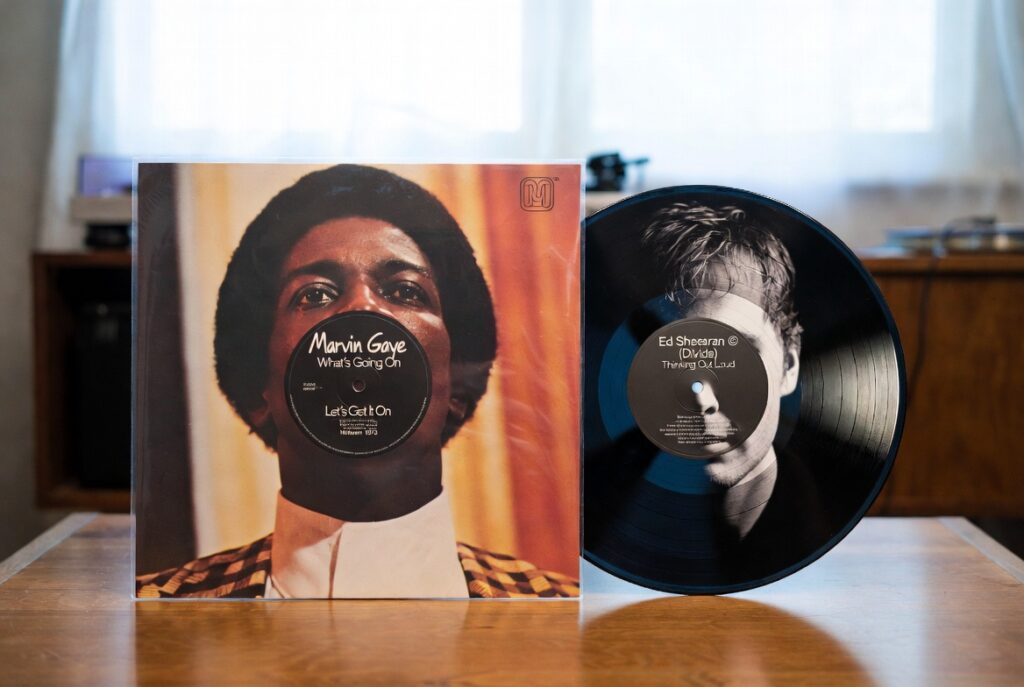
Marvin Gaye’s “Let’s Get It On,” released in 1973 and co-written with Ed Townsend, remains a timeless soul classic. It topped the Billboard charts, sold millions, and captured a sensual, emotional essence that defined an era. The song’s groove, lyrics, and production helped cement Gaye’s status as the Prince of Soul.
Fast forward to 2014: Ed Sheeran released “Thinking Out Loud” on his multi platinum album x (pronounced “multiply”). Co-written with longtime friend and collaborator Amy Wadge during an intimate kitchen session, the ballad became a global phenomenon. It achieved massive commercial success, won Song of the Year at the 2016 Grammy Awards, racked up billions of streams, and solidified Sheeran’s reputation as a master storyteller of love and vulnerability.
Despite stylistic differences one a sultry R&B track, the other a folk-infused acoustic ballad plaintiffs in the Ed Sheeran lawsuit alleged substantial similarities in chord progressions and harmonic rhythm.
Timeline of the Ed Sheeran Lawsuit: A Decade-Long Battle
The Ed Sheeran lawsuit unfolded over nearly ten years:
- 2016–2017: Heirs of Ed Townsend, along with Structured Asset Sales (SAS), which held partial rights, filed claims alleging infringement. One suit sought up to $100 million in damages.
- 2018–2022: Legal maneuvering, including motions for summary judgment. Courts grappled with the “deposit copy” rule for pre-1978 works, limiting protection to the original sheet music filed with the Copyright Office.
- April–May 2023: The high-profile trial in Manhattan federal court. Sheeran and Wadge testified about their independent creative process.
- May 4, 2023: Jury verdict in Sheeran’s favor after less than three hours of deliberation. A related SAS case was dismissed shortly after.
- 2024: Appeals court upheld the rulings, emphasizing that the contested elements were unprotectable “musical building blocks.”
- June 2025: The US Supreme Court declined to hear SAS’s final appeal, conclusively ending the Ed Sheeran lawsuit.
This timeline highlights the persistence required from both sides and the evolving interpretation of copyright law in the streaming age.
Deep Dive into the Legal Arguments in the Ed Sheeran Lawsuit
At its core, the Ed Sheeran lawsuit revolved around several key doctrines:
1. The Deposit Copy Rule
For works like “Let’s Get It On,” copyright protection is based on the 1973 sheet music deposit, not the full commercial recording. This excluded arguments about the iconic bassline or production elements, narrowing the focus to chords, harmony, and basic structure.
2. Chord Progressions and Protectability
Both songs employ a similar four-chord sequence (often I–iii–IV–V or variations) with syncopated harmonic rhythm. Defense experts demonstrated dozens of earlier songs using comparable progressions, arguing these are fundamental tools in the musical “public domain” rather than original expressions.
3. Substantial Similarity Test
Plaintiffs needed to prove access plus copying of protectable elements. Sheeran’s team countered with evidence of independent creation.
4. Independent Creation Defense
Sheeran and Wadge detailed writing “Thinking Out Loud” in 2014, drawing from personal experiences Sheeran’s grandparents’ long marriage inspired the lyrics about enduring love. This defense proved pivotal.
Musicologists provided competing analyses. One side highlighted overlaps; the other cited precedents showing such elements appear across genres and eras. Sheeran famously demonstrated on guitar in court how the chords naturally mesh with many songs, including his own and classics predating Gaye’s hit.
Quote from the Trial: “I refuse to be a piggy bank for anyone to shake.” Ed Sheeran, addressing the media after the 2023 victory.

Inside the 2023 Trial: Drama, Testimony, and Jury Decision
The courtroom became a stage for musical history. Plaintiffs presented a video of Sheeran seamlessly transitioning between the two songs live intended as evidence of similarity. The defense flipped it, showing the chords’ universal compatibility.
Sheeran performed live on the stand, playing guitar to illustrate points. Amy Wadge shared emotional testimony about the song’s creation amid personal challenges.
After six days, the jury sided decisively with Sheeran. The swift deliberation suggested strong conviction in the independent creation argument. Judge Louis Stanton later dismissed the parallel SAS case, reinforcing that commonplace elements aren’t copyrightable.
Appeals and the Historic Supreme Court Conclusion to the Ed Sheeran Lawsuit
Post-trial appeals focused on legal interpretations rather than facts. The Second Circuit Court of Appeals affirmed the lower court’s decisions in 2024. SAS’s petition to the Supreme Court in early 2025 was ultimately denied in June 2025, providing finality.
This outcome sent a strong signal: Courts are wary of expansive claims over basic musical components, especially in an industry built on shared influences.
Amy Wadge’s Reaction: She described feeling “incredibly relieved” and called the resolution a “huge relief” after years of uncertainty. Both she and Sheeran commemorated the win with matching tattoos bearing the phrase “Independently Created.”
Comparative Analysis: The Ed Sheeran Lawsuit vs. Other Landmark Music Copyright Cases
The Ed Sheeran lawsuit fits into a broader pattern of high-profile disputes. For readers interested in other notable legal battles, see our coverage of the Warren Sapp lawsuit and theCash App spam text lawsuit settlement.
| Case | Year | Key Issue | Outcome | Long-term Industry Impact |
| Blurred Lines (Gaye) | 2015 | Groove, feel, overall “sound” | Plaintiffs won | Sparked “chilling effect” and more lawsuits |
| Stairway to Heaven (Led Zep) | 2020 | Common descending scales | Defendants won | Protected basic musical building blocks |
| Ed Sheeran Lawsuit | 2023-2025 | Chord progression & rhythm | Sheeran won decisively | Balanced protection with creative freedom |
| Shape of You (Sheeran, UK) | 2022 | Short melodic phrase | Sheeran won | Reinforced independent creation defense |
| Photograph (Sheeran) | Earlier | Melodic similarities | Settled with credits | Showed alternative resolution paths |
This table underscores how the Ed Sheeran lawsuit helped calibrate the balance, moving away from the fear induced by Blurred Lines.
The Human and Emotional Toll of the Ed Sheeran Lawsuit
Beyond legal technicalities, the case profoundly affected those involved. Amy Wadge, who co-wrote the song as a favor from Sheeran when she faced financial difficulties, spoke candidly about feeling overwhelmed: “wolves surrounding” her during the process. The decade-long ordeal was emotionally draining despite the song’s life-changing success.
Sheeran has discussed the stress, including times he avoided carrying a phone to escape constant updates. The matching “Independently Created” tattoos symbolize resilience, artistic integrity, and victory over what they viewed as opportunistic litigation.
These personal stories humanize the Ed Sheeran lawsuit, reminding us that behind every high-stakes case are real people whose livelihoods and mental health are at stake. Similar personal impacts appear in many other disputes we’ve covered, such as the Todd Creek Farms Homeowners Association lawsuit.
Music Theory Breakdown: Why Chord Progressions Matter in the Ed Sheeran Lawsuit
To understand the controversy, consider basic music theory. The I–V–vi–IV progression (or close variants) appears in thousands of songs across decades from “Let It Be” by The Beatles to modern pop hits. In the Ed Sheeran lawsuit, experts noted at least 13 pre-1973 examples with similar structures.
Harmonic rhythm the pace at which chords change added another layer. Plaintiffs argued specific syncopation was copied; defendants showed it as a common technique enhancing emotional delivery in ballads and soul tracks.
This debate highlights a tension: Copyright should protect original expression, not stifle the shared vocabulary of music that allows genres to evolve.
Broader Industry Context and Other Sheeran Cases
The Ed Sheeran lawsuit wasn’t isolated. Sheeran has faced multiple claims, including “Shape of You” (resolved favorably in the UK) and “Photograph” (settled with writing credits). These cases illustrate the pressures of success in the streaming era, where hits generate massive revenue and attract scrutiny.
Analysts note a post-Blurred Lines surge in filings, sometimes criticized as “copyright trolling.” The Sheeran victories may deter meritless claims while encouraging thorough documentation. Artists facing legal questions may also benefit from understanding general legal practice explore our guide on how to start a law firm for insights into building proper legal support.
Lessons for Songwriters and Independent Artists in 2026
Here are five practical steps every creator should follow:
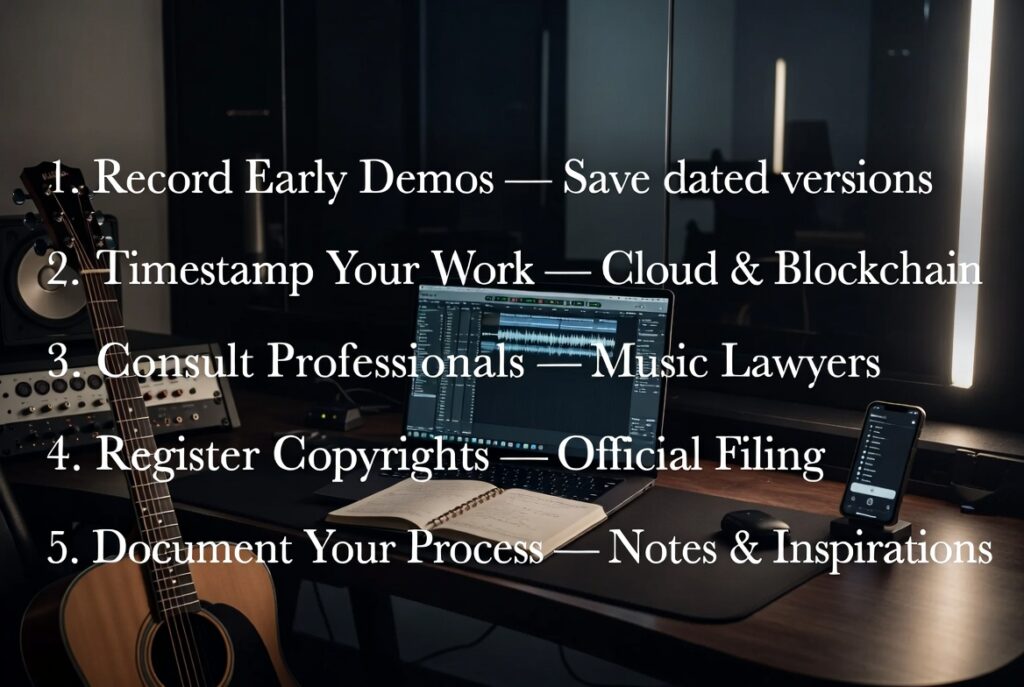
- Record Early Demos — Save dated versions of every idea.
- Timestamp Your Work — Use cloud services or blockchain tools.
- Consult Professionals — Speak with music lawyers early if issues arise.
- Register Copyrights — Properly file your works with the Copyright Office.
- Document Your Process — Keep notes about inspirations and writing sessions.
The Role of Technology, AI, and Streaming in Post-Ed Sheeran Lawsuit Copyright
As generative AI tools proliferate in 2026, the Ed Sheeran lawsuit precedent gains new relevance. Courts have signaled that basic elements can’t be monopolized, which may shield creators using common progressions even in AI-assisted works. However, questions around training data, derivative outputs, and international harmonization persist.
Streaming platforms’ algorithms reward familiarity, potentially increasing accidental similarities. Artists should combine data-driven insights with authentic storytelling.
Case Studies: Similar Disputes and Their Resolutions
- Robin Thicke & Pharrell Williams vs. Marvin Gaye Estate (Blurred Lines): Resulted in a multimillion-dollar payout and appeals. Critics argued it blurred lines between style and expression.
- Led Zeppelin (“Stairway to Heaven”): Victory protected iconic riffs as common tropes.
- Ed Sheeran’s UK “Shape of You” Case: Quick resolution reinforced melody-specific vs. generic claims.
These examples reinforce the Ed Sheeran lawsuit’s importance in drawing clearer boundaries. For more examples of complex litigation, see our analysis of the GM CP4 Pump class action lawsuit.
Expert Opinions and Analyses
Legal scholars praised the outcome for preserving creativity. One WIPO analysis noted the emphasis on independent creation as a complete defense. Music industry veterans argue it reduces the “chilling effect,” encouraging bolder songwriting.
Critics of expansive copyright worry about cultural stagnation; supporters emphasise incentives for original work. The balance struck here favours evolution through inspiration.
What the Ed Sheeran Lawsuit Means for the Future of Music
Key Benefits:
- Greater Creative Freedom: Artists can draw from shared traditions without constant fear.
- Stronger Independent Creation Defense: Testimony about process carries significant weight.
- Clarity on Protectable Elements: Chords, basic rhythms, and common structures are generally safe.
- Discouragement of Frivolous Suits: High costs and low success rates for weak claims.
- Industry-Wide Precedent: Influences global discussions on copyright reform.
As Ed Townsend’s contributions endure, the Ed Sheeran lawsuit ensures they inspire rather than restrict new generations. Explore Marvin Gaye’s legacy on Wikipedia.
For official insights, visit the US Copyright Office.
Expanded FAQ on the Ed Sheeran Lawsuit
Q: Did Ed Sheeran pay any damages?
A: No. He prevailed completely.
Q: Are chord progressions now fully unprotected?
A: Generally yes, if commonplace. Original arrangements may still qualify.
Q: How does this affect indie artists?
A: Positively — more confidence in releasing music, provided proper documentation.
Q: Will there be more such cases?
A: Likely fewer meritless ones, but high-profile hits will always face scrutiny.
Q: What about international implications?
A: US precedent influences but varies by jurisdiction (e.g., UK moral rights differ).
Final Thoughts: Why the Ed Sheeran Lawsuit Matters in 2026
The Ed Sheeran lawsuit ultimately affirmed that inspiration is not infringement. By defending his work vigorously, Sheeran and Wadge protected not just their song but the creative ecosystem for all musicians.
In an era of infinite playlists and AI co-creation, this case provides breathing room. Artists should create boldly, document diligently, and celebrate the rich tapestry of musical history that fuels innovation.
What are your thoughts on the Ed Sheeran lawsuit outcome? Have you faced similarity concerns in your music? Share in the comments below.
This comprehensive article is for informational purposes only and is not legal advice. Consult qualified intellectual property attorneys for specific guidance.
Dirk Wasserthal is the Founder and Lead Writer of LegalDiaries.com, an independent legal information platform. He specializes in Mass Torts, Women’s Rights, and emerging legal issues, delivering clear, well-researched, and trustworthy content across Criminal Law, Family Law, Personal Injury, and more. Dirk’s mission is simple — make the law understandable for everyone.