



Signs of a bad attorney often appear gradually, then suddenly put your entire case at risk. Many people only realize they hired the wrong lawyer after money is wasted, deadlines are missed, or trust is completely broken. Recognizing the clearest signs of a bad attorney, understanding bad attorney behavior, and knowing the most reliable signs of an incompetent lawyer can save you time, serious financial loss, and irreversible legal damage.
- What Are the Most Common Signs of a Bad Attorney?
- 12 Alarming Red Flags of an Incompetent Lawyer
- 1. Poor or Nonexistent Communication
- 2. Missed Deadlines and Chronic Disorganization
- 3. Lack of Preparation and Competence
- 4. Unclear, Excessive, or Hidden Fees
- 5. Overpromising Results or Making Guarantees
- 6. Lack of Relevant Experience or Specialization
- 7. Ethical Red Flags and Conflicts of Interest
- 8. No Clear Case Strategy or Refusal to Explain the Road Ahead
- 9. Pressure to Settle Quickly (or Refusal to Explore Reasonable Settlements)
- 10. Unprofessional, Disrespectful, or Dismissive Behavior
- 11. Substance Abuse or Mental Impairment Affecting Performance
- 12. Negative Disciplinary History and a Pattern of Client Distrust
- Good Attorney vs. Bad Attorney: A Side-by-Side Comparison
- Green Flags: Signs of a Competent and Trustworthy Attorney
- How to Avoid Hiring a Bad Attorney in the First Place
- What to Do If You Already Have a Bad Attorney
- Can You Sue a Bad Lawyer for Malpractice?
- Common Myths About Bad Attorneys
- Frequently Asked Questions
- Conclusion
A competent lawyer protects your interests at every turn. A bad one can quietly dismantle your position while you assume everything is under control. In this guide you will find the 12 most urgent incompetent lawyer red flags, practical verification steps, real-world examples, and a clear action plan if you suspect your current representation is failing you. We will also explain how to tell the difference between a lawyer having a bad week and a genuinely harmful pattern of bad lawyer signs. The goal is simple: give you the clarity and confidence to take control before it is too late.
What Are the Most Common Signs of a Bad Attorney?
Before diving into each red flag, here is a quick overview of the warning signs that repeatedly surface in client complaints, state bar disciplinary actions, and legal malpractice cases:
- Persistent silence and poor communication
- Missed deadlines, lost documents, and disorganization
- Unrealistic promises or outright guarantees of success
- Vague, excessive, or hidden billing practices
- Lack of relevant experience or specialization
- Refusal to provide a clear case strategy
- Pressure to accept a quick, low settlement
- Ethical violations or undisclosed conflicts of interest
- Disrespectful, dismissive, or unprofessional behavior
- Negative disciplinary history and a pattern of client mistrust
If several of these signs of a bad attorney appear together, you are almost certainly dealing with an attorney who is compromising your case.
12 Alarming Red Flags of an Incompetent Lawyer
Each of the following warning signs is a proven indicator of bad attorney behavior. Use them as a checklist to evaluate your current legal counsel or to screen potential hires in 2026.
1. Poor or Nonexistent Communication
One of the strongest signs of a bad attorney is silence that stretches from days into weeks. Phone calls go unanswered. Emails receive vague replies or none at all. You only hear from the firm when a court deadline is already looming or when they need documents from you immediately.
According to the ABA Model Rule 1.4 on client communications, attorneys must keep clients reasonably informed about their case status and respond promptly to reasonable requests for information. When that standard is routinely ignored, it is not just frustrating it is classic bad attorney behavior.
Ask yourself: Do you know where your case stands right now? If you cannot answer that question with confidence, communication has already broken down. A good lawyer sets clear expectations about response times (often 24–48 hours for non-emergency matters) and actually meets them.
Real-World Example: A family law client repeatedly called her attorney for an update on a custody modification. After three weeks of silence, she discovered a court-ordered mediation date had been set and missed. The judge nearly sanctioned her for non-appearance. The attorney never informed her of the date.

2. Missed Deadlines and Chronic Disorganization
Courts operate on strict, unforgiving timelines. When a lawyer frequently asks for extensions, files documents at the last possible moment, or admits to losing important paperwork, your case is in real danger. These are signs of an incompetent lawyer that rarely improve on their own.
Disorganization often shows up as high staff turnover, misplaced files, inconsistent case management, and constant “we’re working on it” responses with no demonstrable progress. In 2026, even solo practitioners will have access to robust case management software. There is simply no excuse for chaotic file handling.
How to Spot It Early: During a consultation, ask how the firm tracks deadlines and client documents. A competent attorney will explain their system confidently. A disorganized one will give a vague answer.
3. Lack of Preparation and Competence
An unprepared lawyer confuses the basic facts of your case, seems surprised by documents you have already provided, or cannot clearly explain your legal options and potential outcomes. You may notice they mix up names, dates, key evidence, or opposing parties. In meetings, they appear unfamiliar with recent developments you have already shared. This is one of the most dangerous signs of a bad attorney because it directly weakens your legal position and signals a complete lack of diligence.
Competence also means staying current with the law. A trustworthy practitioner continuously educates themselves on legislative changes for example, staying current with changing laws like new child support guidelines that took effect in some states in 2025. If your lawyer seems unaware of updates that directly impact your matter, treat it as a serious red flag.
What You Can Do: Ask for a written summary of your case’s key facts and the applicable law. If the summary contains errors or generic boilerplate, your attorney may not be doing the deep work required.
4. Unclear, Excessive, or Hidden Fees
Transparent billing is non-negotiable. Signs of a bad attorney in this area include:
- Vague invoice descriptions like “work on file” or “legal services”
- Charges for work you never approved or were never told about
- Sudden large retainers with no clear explanation
- Reluctance to provide a written fee agreement upfront
A competent attorney explains costs clearly before any work begins. They provide itemized bills and can justify every charge. Hidden fees and billing surprises consistently rank among the top complaints filed against bad lawyers.
Key Question to Ask: “Can you walk me through exactly how I will be billed and what each charge means?” A trustworthy lawyer welcomes that conversation.
5. Overpromising Results or Making Guarantees
No ethical attorney can guarantee a win. If you hear phrases like “This case is a slam dunk” or “I promise we’ll get you the maximum amount,” treat them as urgent signs of an incompetent lawyer. In 2026, courts are more unpredictable than ever, and honest lawyers discuss strengths, weaknesses, and a realistic range of outcomes.
Guarantees often signal inexperience, desperation for your business, or outright dishonesty. A responsible lawyer will instead help you understand your realistic chances of winning a personal injury lawsuit or whatever type of case you have and will never sugarcoat the risks. Always walk away from anyone who promises a specific result.
6. Lack of Relevant Experience or Specialization
Law is deeply specialized. An attorney who accepts any case that walks through the door family law, criminal defense, business litigation, estate planning often lacks deep knowledge in your specific area. This is one of the most overlooked signs of a bad attorney.
During the hiring process, ask directly: “How many cases like mine have you handled in the past two years? What were the outcomes?” If the answers are vague or if they try to pivot the conversation, you are likely not dealing with a specialist. It also helps to understand the difference between an attorney and a lawyer so you know exactly what credentials and licensure you are paying for. Not every legal professional is authorized to represent you in court.
7. Ethical Red Flags and Conflicts of Interest
Ethical problems are among the gravest bad attorney behavior patterns. They include:
- Breaching attorney-client confidentiality
- Failing to disclose a conflict of interest (such as representing the other side in a past matter)
- Lying about case status or fabricated progress
- Prioritizing their own fee over your best interests
- Pressuring you to sign documents you do not understand
The ABA Model Rules of Professional Conduct set clear, enforceable standards. When an attorney violates those rules, you are not just dealing with poor service you may be facing professional misconduct. Trust your gut. If something feels ethically wrong, it probably is.
8. No Clear Case Strategy or Refusal to Explain the Road Ahead
You hired a lawyer to navigate a complex legal landscape. If they cannot articulate a coherent strategy, you are drifting without direction. Some attorneys keep clients in the dark on purpose; others simply have no plan. Either way, it is a definite sign of a bad attorney.
A competent lawyer should be able to explain:
- The legal theory of your case
- The likely timeline and key milestones
- Major risks and potential costs
- What success realistically looks like
If you get a dismissive “I’ve got it handled” with no detail, insist on a written case plan. If they refuse or cannot produce one, consider it a flashing warning light.
9. Pressure to Settle Quickly (or Refusal to Explore Reasonable Settlements)
Some lawyers push for fast, low settlements simply to close the file and collect a fee. Others swing to the opposite extreme and refuse to even discuss reasonable settlement offers because they prefer prolonged litigation and higher billable hours. Both extremes are signs of a bad attorney who is not prioritizing your interests.
A trustworthy lawyer evaluates settlement options objectively. They explain the pros and cons including costs, time, and emotional toll so you can make an informed decision. If you feel bullied into a settlement or stonewalled from exploring one, your attorney is no longer your advocate.
10. Unprofessional, Disrespectful, or Dismissive Behavior
You should never feel belittled, talked down to, or treated like an inconvenience. Rude remarks, chronic lateness to meetings, cutting you off mid-sentence, or showing complete lack of empathy are all clear signs of a bad attorney and unmistakable bad attorney behavior.
Professionalism includes how support staff treat you as well. If the front desk is consistently rude or the paralegals are evasive, that culture starts at the top. Your legal matter may be one of many files to the firm, but to you it is your life. Any lawyer who forgets that does not deserve your trust or your money.
11. Substance Abuse or Mental Impairment Affecting Performance
While a sensitive topic, an attorney who appears intoxicated during meetings, regularly slurs speech, or displays erratic behavior may be struggling with untreated substance abuse or mental health issues. When those issues affect case handling, it becomes a serious sign of an incompetent lawyer and a potential ground for discipline. Many state bars have lawyer assistance programs, but your immediate priority must be protecting your case. Do not ignore obvious signs of impairment.
12. Negative Disciplinary History and a Pattern of Client Distrust
Before hiring or while evaluating your current lawyer, check your state bar association’s disciplinary records. A pattern of sustained complaints about communication, billing, or neglect is a powerful warning sign. In 2026, client reviews across multiple platforms also provide a window into what it is actually like to work with that attorney.
Sometimes the most telling sign of a bad attorney is simply that you no longer trust the person handling your case. If your gut says something is wrong, listen to it. Trust is the foundation of the attorney-client relationship, and once it is gone, it rarely returns.
Good Attorney vs. Bad Attorney: A Side-by-Side Comparison
The table below contrasts common signs of a bad attorney with the behaviors you should expect from a competent, ethical professional.
| Good Attorney | Bad Attorney |
| Returns calls and emails within 24–48 hours | Ignores communication for days or weeks |
| Provides clear, itemized billing | Sends vague or inflated invoices |
| Gives honest, realistic assessments | Guarantees outcomes or makes sweeping promises |
| Is prepared, knows your case facts intimately | Confuses basic details, seems surprised by documents |
| Respects deadlines and court timelines | Frequently requests extensions, loses documents |
| Explains strategy in plain language | Offers no plan or dismisses your questions |
| Discusses settlement pros and cons objectively | Pressures quick settlement or blocks all discussion |
| Maintains professional boundaries and respect | Is rude, condescending, or chronically late |
| Discloses conflicts of interest immediately | Hides conflicts or dual representation |
| Has a clean or explainable disciplinary record | Shows a pattern of client complaints and bar actions |
Green Flags: Signs of a Competent and Trustworthy Attorney
While spotting signs of a bad attorney is crucial, it is equally important to know what good representation looks and feels like. A high-quality lawyer runs a practice that reflects how a well-run law firm operates organized, transparent, and client-centered.
Look for these positive indicators:
- Responsiveness: Replies within a reasonable time, even if just to acknowledge receipt and set expectations.
- Clarity: Explains legal concepts in ordinary language without condescension.
- Transparent Billing: Provides detailed invoices and welcomes billing questions.
- Realistic Counsel: Offers honest assessments, including worst-case scenarios.
- Genuine Engagement: Asks thoughtful questions about your goals and concerns.
- Organized Office: Consistent staffing, professional systems, and a calm environment.
- Continuing Education: Stays updated on changes in the law that affect your matter.
- Respectful Demeanor: Treats you as a full partner in your own case.
- These are the opposite of the bad lawyer signs we have covered. When you experience these green flags, you can move forward with far greater confidence.
How to Avoid Hiring a Bad Attorney in the First Place
Prevention is always better than damage control. The best time to screen for signs of a bad attorney is before you sign a fee agreement. Use this practical verification checklist for 2026:
1. Check Disciplinary Records: Visit your state bar association website and search the attorney’s name. Look for public discipline, suspensions, or a pattern of complaints.
2. Read Reviews Carefully: Go beyond the star rating. Look for recurring themes in recent reviews about communication, billing, and outcomes.
3. Ask Hard Questions in the Consultation:
- “Who will actually handle my case day to day, you or an associate?”
- “How often will I receive updates and in what format?”
- “How many cases like mine have you taken to trial or resolution in the last two years?”
4. Request a Written Fee Agreement: Do not accept a handshake deal. The agreement should explain hourly rates, retainer amounts, what costs you are responsible for, and how unused funds are handled.
5. Trust Your Instincts: If something feels off in the first meeting a dismissive tone, a messy office, evasive answers keep looking. The initial consultation is a preview of the relationship.
This upfront work takes very little time compared to the months of stress caused by ignoring early signs of an incompetent lawyer.
What to Do If You Already Have a Bad Attorney
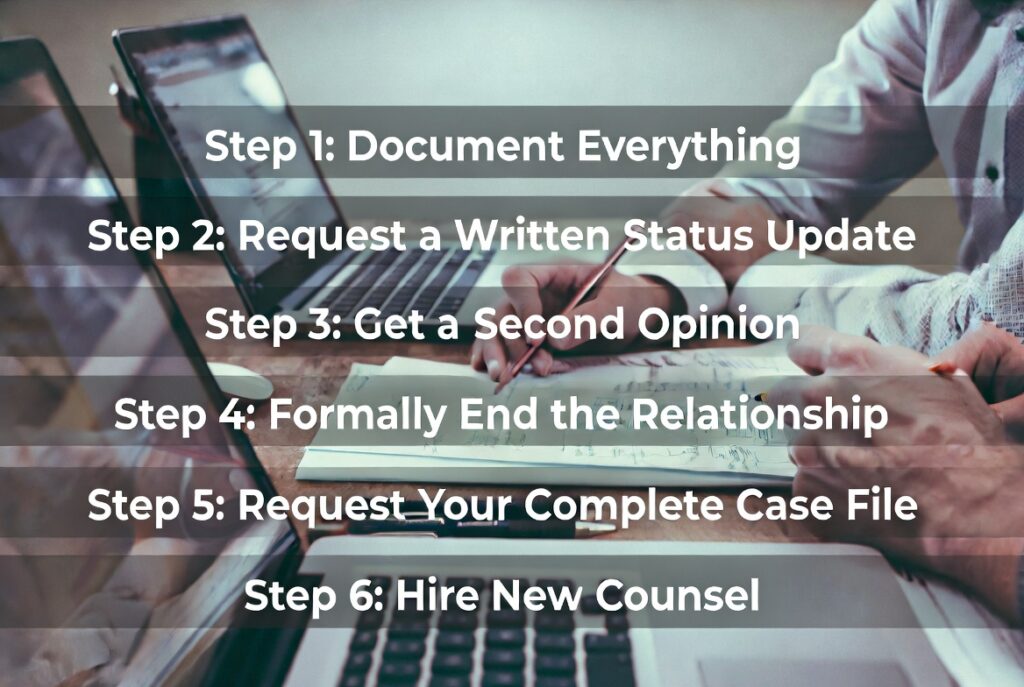
If you recognize several signs of a bad attorney in your current representation, acting quickly often limits the damage. Here is a clear, step-by-step action plan:
1. Document Everything: Save all emails, text messages, and voicemails. Note dates of missed calls, broken promises, and billing irregularities. This record will be invaluable if you later need to file a complaint or transition to new counsel.
2. Request a Written Status Update: Send a formal email or letter asking for a clear outline of your case status, upcoming deadlines, and the planned strategy. A competent lawyer will provide this promptly. A bad one will struggle.
3. Get a Second Opinion: Consult another qualified attorney to review your case independently. They can spot errors you may not see and confirm whether your concerns are valid.
4. Formally End the Relationship: If you decide to switch, send a clear written notice terminating the representation. Keep a copy for your records.
5. Request Your Complete Case File: You have the right to your documents. Ask for the entire file, including correspondence, pleadings, and evidence. Do this in writing.
6. Hire New Counsel and Handle the Transition: Your new attorney will typically manage the process of substituting in, notifying the court and opposing counsel, and obtaining your file. This reduces the risk of gaps in representation.
The American Bar Association offers guidance from the American Bar Association on unhappy clients that covers your rights and options. Most states allow you to change lawyers at any stage, even mid-trial, as long as the switch does not cause unreasonable delay. In more specialized and delicate matters like those involving understanding key legal roles like power of attorney having the correct representation from the beginning is essential. Do not let fear of awkwardness trap you with a lawyer who is actively harming your case.
Can You Sue a Bad Lawyer for Malpractice?
Not every disappointing outcome or frustrating experience rises to the level of legal malpractice. To have a viable claim, you generally must prove that the attorney breached the professional duty of care and that the breach directly caused you measurable harm such as a lost case, financial loss, or a missed statute of limitations that destroyed your claim.
Simple dissatisfaction, personality conflicts, or a case that did not turn out the way you hoped usually do not qualify. Clear negligence such as failing to file a lawsuit before the deadline, misappropriating client funds, or failing to appear in court without explanation may. If you believe you have suffered real harm due to bad attorney behavior, consult an independent attorney who specializes in legal malpractice claims for an honest case evaluation.
Common Myths About Bad Attorneys
Several persistent myths keep people stuck with signs of a bad attorney longer than necessary. Let us clear them up.
Myth 1: “All lawyers are basically the same.”
Reality: Skill, communication, ethics, and specialization vary enormously. Two attorneys handling the same type of case can produce wildly different results.
Myth 2: “It is too expensive or too complicated to switch lawyers.”
Reality: While there may be some cost and adjustment, staying with a bad lawyer usually costs far more in the long run. New counsel can often manage the transition efficiently.
Myth 3: “If my lawyer doesn’t return calls, it just means they are busy and in demand.”
Reality: Consistent silence is a professional failure, not a badge of a busy caseload. Busy competent lawyers still communicate.
Myth 4: “A guarantee means the lawyer is super confident.”
Reality: Guarantees are almost always a warning sign of dishonesty or inexperience. Ethical lawyers talk about probability, not certainty.
Myth 5: “I’m stuck because I signed a contract.”
Reality: You can fire your lawyer at any time. The contract governs fees, not your right to terminate representation.
Frequently Asked Questions
1. How do I know if my lawyer is incompetent?
Look for persistent patterns: missed deadlines, lack of preparation, poor communication, failure to explain strategy, and a general loss of trust. One isolated problem may be a fluke, but multiple signs of a bad attorney together strongly indicate incompetence.
2. What are the most common signs of a bad attorney?
The most common bad lawyer signs include unreturned calls, disorganization, unrealistic promises, hidden fees, lack of relevant experience, and unethical conduct. These appear repeatedly in client complaints.
3. Can I fire my attorney in the middle of a case?
Yes, in almost all situations. You have the right to terminate representation at any time. The court will generally allow a substitution of counsel as long as it does not cause significant delay or prejudice to the other side.
4. What happens to my retainer if I switch lawyers?
Unused portions of your retainer should be returned to you, subject to the terms of your fee agreement and charges for work already performed. Request a detailed, itemized accounting of how the funds were used.
5. How long should a lawyer take to return calls?
A reasonable professional standard is within 24 to 48 hours for non-emergency matters. If you regularly wait a week or more with no response, that is a sign of a bad attorney.
6. Should I report a bad attorney to the state bar?
If you believe ethical rules were violated such as dishonesty, misappropriation of funds, or serious neglect you can and should file a complaint with your state bar disciplinary authority. The process is usually straightforward and starts on the bar’s website.
7. What is the difference between a bad attorney and legal malpractice?
A bad attorney might be rude, disorganized, or a poor communicator, but that alone may not meet the legal threshold for malpractice. Malpractice requires proving a breach of duty that caused concrete harm. Many signs of a bad attorney do not automatically equal a successful malpractice lawsuit.
8. Is there a difference between an attorney and a lawyer?
Yes, while the terms are often used interchangeably, understanding the difference between an attorney and a lawyer can matter. All attorneys are lawyers, but not all lawyers are licensed to practice in court. Ensuring you have a properly licensed attorney is a basic screening step.
9. Can I switch lawyers if I sign a contract?
Absolutely. The contract outlines payment terms, but it cannot force you to continue a professional relationship. You retain the right to terminate and seek other counsel at any time.
10. How do I check an attorney’s disciplinary record?
Visit your state bar association’s website and use their attorney search or disciplinary lookup tool. It is free, public, and reveals any formal disciplinary actions, suspensions, or disbarments.
Conclusion
The signs of a bad attorney are rarely subtle once you know exactly what to look for. Poor communication, missed deadlines, hidden fees, overpromising, lack of preparation, ethical breaches, and a broken sense of trust are all undeniable signs of an incompetent lawyer and clear bad attorney behavior. You do not need to be a legal expert to recognize when you are being failed, you only need to pay attention to the patterns.
Your case and your peace of mind deserve a legal partner who communicates clearly, prepares thoroughly, bills transparently, and treats you with genuine respect. If those standards are not being met, take action. Document the problems, get a second opinion, and change representation if necessary. In 2026, you have more resources than ever to research, verify, and select the right counsel. Protect yourself by acting on the warning signs early before a manageable situation becomes an irreversible loss.
Disclaimer: This article is for informational purposes only and does not constitute legal advice. Every situation is unique. If you have specific legal concerns, consult a qualified attorney directly.

Dirk Wasserthal is the Founder and Lead Writer of LegalDiaries.com, an independent legal information platform. He specializes in Mass Torts, Women’s Rights, and emerging legal issues, delivering clear, well-researched, and trustworthy content across Criminal Law, Family Law, Personal Injury, and more. Dirk’s mission is simple — make the law understandable for everyone.