


The Samsung S22 software update lawsuit is the class action accusing Samsung of pushing out a software update that permanently damaged thousands of Galaxy S22 phones. If your S22, S22+, or S22 Ultra started crashing, freezing, or stuck restarting itself over and over after an update, you are not imagining things. A real federal lawsuit was filed over exactly this problem in January 2026, and it matters because it could decide whether Samsung owes affected owners money or free repairs.
- What Is the Samsung Galaxy S22 Software Update Lawsuit
- The One UI 6.1.1 Update and What It Was Supposed to Do
- What Actually Happened: Boot Loops, Crashes, and Bricked Phones
- Ramnath v. Samsung Electronics America: The Case Behind the Headlines
- Who Filed It, and When
- Who the Plaintiffs Are and What Happened to Their Phones
- What Legal Claims Are in the Complaint
- Why Did the One UI 6.1.1 Update Brick Galaxy S22 Phones
- Which Samsung Phones Are Covered by This Lawsuit
- Did Samsung Know About the Defect Before the Update Rolled Out
- Samsung’s Warranty Denials: Why Repairs Weren’t Covered
- The One-Year Warranty vs. the Four-Year Update Promise
- Real Repair Cost Examples Reported in the Case
- Is There a Samsung S22 Lawsuit Settlement Yet
- Am I Eligible to Join the Samsung S22 Class Action
- What Should Galaxy S22 Owners Do Right Now
- Document Your Device Problem
- Why You Typically Don’t Need to Sign Up Yet
- When to Consider Talking to a Consumer Protection Attorney Directly
- The Computer Fraud and Abuse Act Angle
- How This Case Compares to Other Device Defect Lawsuits
- Myth vs Fact: Samsung S22 Lawsuit
- Frequently Asked Questions
- Bottom Line for Galaxy S22 Owners
This guide walks through what the lawsuit actually says, who it covers, and what you should do right now while the case works its way through court.
What Is the Samsung Galaxy S22 Software Update Lawsuit
Ans: A class action lawsuit called Ramnath v. Samsung Electronics America claims Samsung’s October 2024 One UI 6.1.1 update caused Galaxy S22, S22+, and S22 Ultra phones to enter unrecoverable boot loops. The case says the update caused hardware damage that no software fix could repair, and that Samsung refused to help affected owners.
Samsung released the update as part of its regular software rollout, promising better performance and new AI features. Instead, according to the lawsuit, it triggered a wave of device failures that spread across online forums almost overnight.
The One UI 6.1.1 Update and What It Was Supposed to Do
Samsung marketed One UI 6.1.1 as a meaningful upgrade. It promised smoother performance and new Galaxy AI tools for the S22 lineup, which had already been on the market for more than two years by the time the update rolled out.
Samsung had also made the S22 series a bit of a promise machine when it launched in February 2022. The company told buyers they would get up to four years of major Android upgrades and five years of security updates, a first for Samsung at the time. That promise is a big part of why this update hit so hard. Owners trusted it because Samsung told them to.
What Actually Happened: Boot Loops, Crashes, and Bricked Phones
Within hours of installing the update, many owners say their phones started acting up. Screens froze. Apps crashed without warning. Phones got hot to the touch for no clear reason.
Then came the boot loop. That’s when a phone keeps restarting on its own, over and over, never fully loading past the startup screen. It’s one of the most frustrating things that can happen to a smartphone, because there’s nothing you can tap or reset your way out of. According to the complaint, some Galaxy S22 units never came back at all.
Picture this scenario: you plug in your S22 Ultra one night like normal. The next morning, it’s stuck on the Samsung logo, restarting every 30 seconds. You didn’t drop it. You didn’t get it wet. The only thing that changed was the update you installed a few weeks earlier. That’s the exact pattern described by the plaintiffs in this case.
This wasn’t a problem that appeared overnight and vanished. Tech outlets like SamMobile and Android Police were fielding user complaints about this exact issue as far back as December 2024, months before anyone filed a lawsuit over it. ClassAction.org’s original report on the case documents how the complaint pieces together that early wave of reports as part of its timeline.
Ramnath v. Samsung Electronics America: The Case Behind the Headlines
Ans: Ramnath v. Samsung Electronics America is a proposed class action filed on January 27, 2026, in the U.S. District Court for the Eastern District of New York. The case is numbered 1:26-cv-00462 and names Samsung Electronics America and Samsung Semiconductor as defendants.
The 50-page complaint lays out, in detail, what the plaintiffs say happened to their phones and why they believe Samsung is responsible. You can read the full complaint here, and you can follow the case’s progress on the official federal court docket.
Who Filed It, and When
Two people brought this case: Nadia Ramnath and Michael Guzman, both New York residents. They filed it in New York federal court because that’s where Samsung Electronics America does substantial business and where both plaintiffs live.
This is still an early-stage case. Filing a complaint is just the first step in a long process, and nothing has been decided by a judge yet.
Who the Plaintiffs Are and What Happened to Their Phones
Ramnath installed the update and, within 24 hours, her phone started stuttering, freezing, and randomly restarting, according to the filing. It eventually landed in a boot loop for good. When she brought it to Samsung, she was quoted 500 dollars to replace the motherboard. She couldn’t afford it, took it to a third-party repair shop, got the same answer, and ended up buying a new phone. The complaint says she now keeps her old S22 Ultra “as a paperweight.”
Guzman held off installing the update for months after seeing other people’s complaints online. He finally installed it in May 2025 because he needed a feature that required it. Soon after, his phone failed too. He went to Verizon and used his phone insurance to get a replacement, but he says he still had to pay out of pocket for a temporary device while he waited.
Common mistake to avoid: don’t assume that waiting to install an update protects you forever. Guzman’s story shows that even a delayed install triggered the same failure months later.
What Legal Claims Are in the Complaint
The lawsuit brings several legal theories against Samsung, including breach of warranty, unjust enrichment, and violations of consumer protection law. One specific claim relies on New York’s General Business Law Section 349, which makes deceptive business practices illegal in that state. You can read the official text of that law here.
That particular claim is tied to New York because that’s where the case was filed and where the named plaintiffs live. If you live in a different state, your state almost certainly has its own version of a consumer protection law. The rules and deadlines can vary quite a bit from state to state, so if you’re thinking about pursuing something on your own, it’s worth checking your state’s specific statute or talking to a local attorney about it.
Why Did the One UI 6.1.1 Update Brick Galaxy S22 Phones
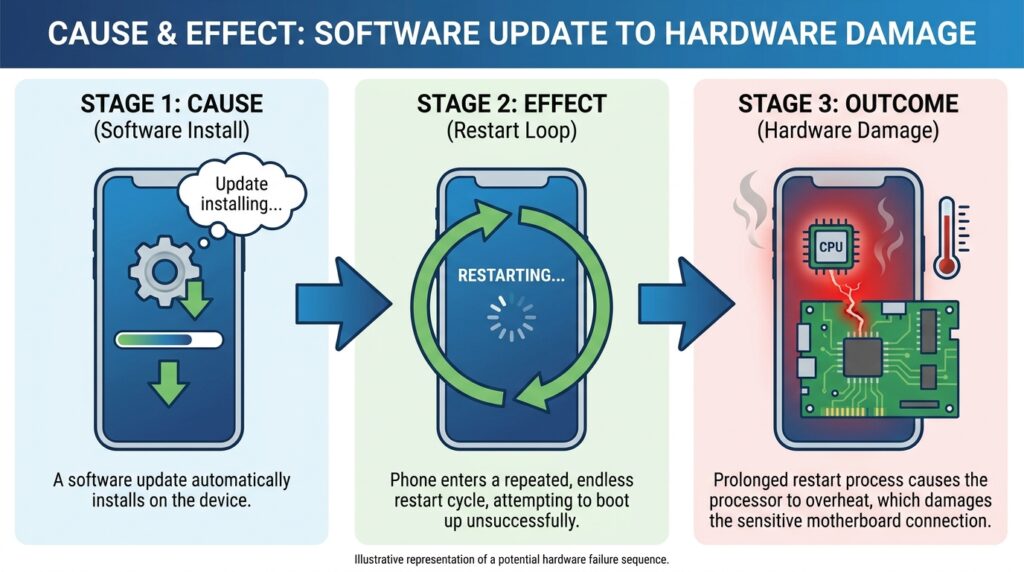
Ans: According to the lawsuit, repeated boot loops caused the phone’s processor to overheat, which physically damaged the connection between the chip and the motherboard. Once that connection is damaged, no software update or factory reset can fix it, because the problem is hardware, not software.
That’s the part that makes this different from a typical buggy update. Most software problems can be patched. A fried motherboard connection can’t be.
The Boot Loop and Overheating Connection
Think of a boot loop like a car engine that keeps trying to start but stalls every single time, over and over, for hours. Each failed attempt generates heat. Do that enough times in a row, and something eventually gives out.
That’s roughly what the lawsuit alleges happened inside these phones. The nonstop restart cycle ran the processor hot enough, often enough, that it damaged the physical solder connecting the chip to the motherboard.
Which S22 Models and Chipsets Were Hit Hardest
Tech outlets that covered this story before the lawsuit was even filed reported that Galaxy S22 units running Samsung’s own Exynos 2200 chipset, sold mostly in Europe and parts of Asia, seemed to suffer worse than the Snapdragon-powered versions sold in the United States. That reporting came from independent tech coverage rather than the court filing itself, so treat it as a helpful clue rather than an established legal fact. If you’re not sure which chip your phone has, check your device’s “About Phone” settings, since it can help you understand why your specific unit may have been more or less affected.
Which Samsung Phones Are Covered by This Lawsuit
Ans: The lawsuit covers the Galaxy S22, Galaxy S22+, and Galaxy S22 Ultra, purchased in the United States within four years of the January 2026 filing date. That means phones bought going back to roughly early 2022 through the filing date fall within the proposed class.
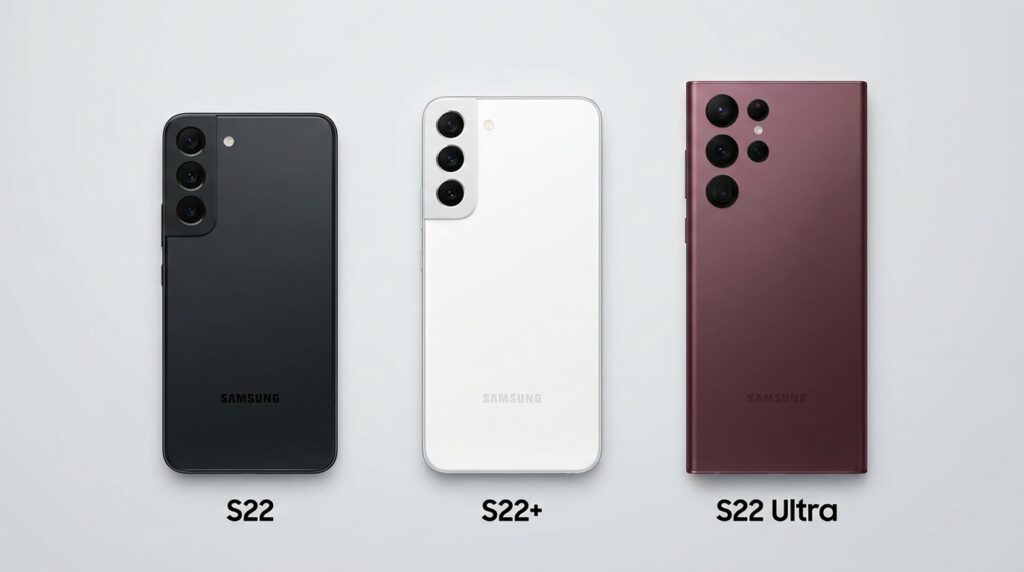
| Device | Model Numbers | Release Date |
|---|---|---|
| Galaxy S22 | SM-S901U, SM-S901U1 | February 2022 |
| Galaxy S22+ | SM-S906U, SM-S906U1 | February 2022 |
| Galaxy S22 Ultra | SM-S908U, SM-S908U1 | February 2022 |
Say your cousin bought a Galaxy S22+ from a carrier store in late 2022 and gifted it to you a year later. You’re still the current owner within the purchase window, so you would likely still qualify, even though you weren’t the original buyer. Ownership at the time of the update matters more than who originally paid for the phone.
How to Check Your Exact Model Number
Go to Settings, then About Phone, then Model Number. If it starts with SM-S90, you have an S22 series device. This works even if you’re not totally sure which exact version you own, since carriers sometimes brand phones differently on the box than what shows up in your settings.
The Galaxy S21 and S23 series are not part of this specific case, even though some owners of those phones have reported similar complaints. If your update problems involve a different Galaxy model, this lawsuit does not currently apply to you.
Did Samsung Know About the Defect Before the Update Rolled Out
Ans: The lawsuit claims Samsung knew, or should have known, about the defect before or shortly after the update went out widely, based on internal bug reports and a phased rollout that would have surfaced early problems. Samsung has not admitted this in court, and the claim has not been proven.
This is one of the more serious allegations in the case, because knowingly pushing out a defective update is a very different legal problem than accidentally shipping a buggy one.
What the Complaint Alleges About Prior Warnings
According to the filing, Samsung rolled the update out in phases rather than all at once, which is common practice for big tech companies. The complaint argues that this phased approach means Samsung was “likely” receiving complaints from the earliest wave of users before the update ever reached everyone else, and pushed forward anyway.
Samsung’s Public Response
Samsung did eventually acknowledge, through its own support channels, that a system service called the SmartThings Framework app was causing some Galaxy devices to reboot. Rather than issuing a recall, the company reportedly pointed users toward self-service troubleshooting steps like safe mode and factory resets, neither of which fixes hardware damage.
What if you already tried a factory reset and it didn’t help? That’s actually useful, not wasted effort. It helps rule out a simple software glitch and supports the idea that your issue is the deeper hardware problem the lawsuit describes. Keep a record of when you tried it and what happened.
Samsung’s Warranty Denials: Why Repairs Weren’t Covered
Ans: Samsung’s standard one-year warranty does not cover software-related issues unless they stem from a defect in materials or workmanship, and the lawsuit says Samsung used that language to deny coverage even when a software update was the clear cause of the damage.
That’s a frustrating spot to be in. Your phone breaks because of something Samsung pushed to your device, and then Samsung’s own warranty terms are used to say it’s not their problem.
The One-Year Warranty vs. the Four-Year Update Promise
Here’s the tension at the center of this case. Samsung promises years of software updates to keep your phone secure and current. But its hardware warranty only lasts one year. So if an update causes hardware damage after your first year of ownership, which is exactly what the plaintiffs describe, you’re often left paying for the fallout of a decision you had no control over.
The lawsuit argues this setup is unfair to consumers, calling the warranty terms “unconscionable” given how widespread the damage reportedly was. Denied warranty claims are a common flashpoint in consumer litigation generally, not just with phones. If you’re dealing with a denied warranty claim on a different product entirely, our breakdown of the CarGuard extended warranty lawsuit covers a similar pattern of coverage disputes and what options consumers had.
Real Repair Cost Examples Reported in the Case
Ramnath was quoted 500 dollars for a motherboard replacement, both from Samsung and from an independent repair shop. That is a serious out-of-pocket cost for a problem she didn’t cause and didn’t consent to.
If you’re facing a similar quote, save it. Repair estimates, even ones you don’t end up paying, are useful documentation later.
Is There a Samsung S22 Lawsuit Settlement Yet
Ans: No. As of this writing, there is no settlement, no approved payout amount, and no claims form for this specific case. It was only filed in January 2026 and is still in the early stages of litigation, which typically takes well over a year before any settlement talks even begin.
This is worth saying clearly, because some other sites publish specific dollar figures and dates for this case that simply don’t exist yet in any court record.
Why You Should Be Skeptical of Specific Dollar Figures Circulating Online
If you see an article promising you will get somewhere between 50 and 500 dollars, or naming a specific month when a settlement fund will open, treat that with real caution. Those numbers are not backed by anything filed in court as of now. Class action cases like this one commonly take one to three years, sometimes longer, to reach a settlement, and the final numbers depend entirely on negotiations and court approval that haven’t happened yet.
For a sense of what a real, finalized settlement process actually looks like once a case gets there, take a look at how the Cash App spam text lawsuit settlement played out, from the initial filing all the way through claim payouts. That timeline gives you a realistic picture of the pace these cases move at, rather than the compressed, speculative timelines some sites are publishing.
Say you saw a headline claiming Samsung set aside a specific settlement fund with an exact dollar amount. Before you plan around that number, check whether it links back to an actual court filing or press release. Top Class Actions, a longtime consumer law news outlet, is one of the more reliable places to track genuine updates on this case as it develops, and it currently confirms the same thing this article does: no settlement yet.
Am I Eligible to Join the Samsung S22 Class Action
Ans: You are likely part of the proposed class if you bought a Galaxy S22, S22+, or S22 Ultra in the United States within the past four years. You generally do not need to have experienced a boot loop yourself to technically fall within the class definition, though your own damages will matter if the case reaches a settlement or trial.
Do You Need to Have Experienced a Boot Loop to Be Covered
The class, as currently defined in the complaint, covers all qualifying purchasers, not only the ones whose phones already failed. That said, if your phone works fine and never had issues, your practical damages would likely be much smaller than someone whose phone is now a paperweight. Courts often sort claims into tiers based on documented harm once a settlement actually gets negotiated.
Example: two neighbors both bought an S22 Ultra in 2022. One installed the update and had zero problems. The other’s phone bricked and cost 500 dollars to fix. Both would likely fall within the class definition, but if money is ever distributed, their outcomes would probably look very different.
What Should Galaxy S22 Owners Do Right Now
Waiting for a settlement doesn’t mean doing nothing. A few simple steps now can make a real difference later.
Document Your Device Problem
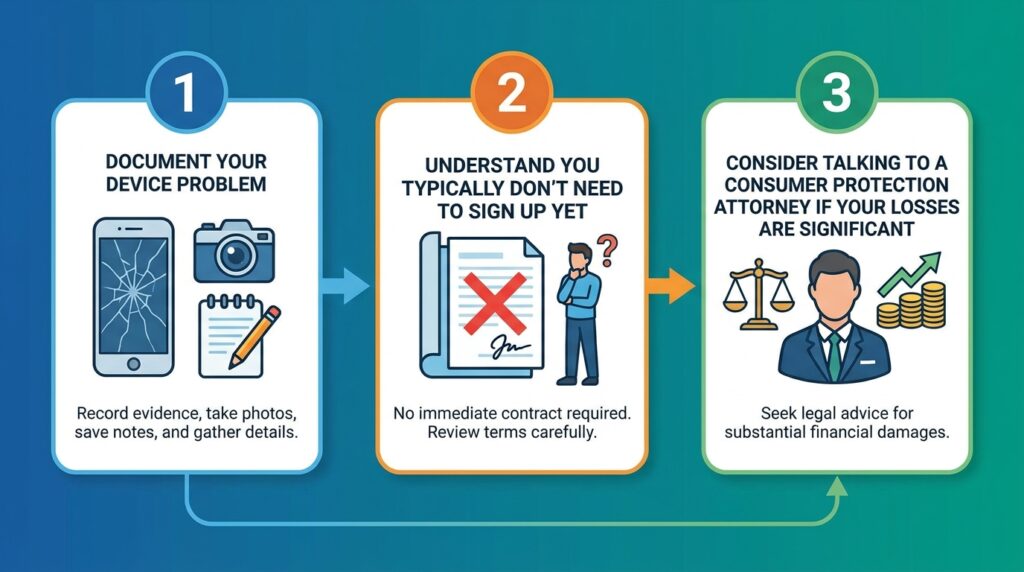
Save everything related to your phone’s issue. That includes your original purchase receipt or order confirmation, screenshots of error messages or boot loop videos, any repair quotes you received, and records of any time you contacted Samsung support.
If you complained to Samsung and they told you it needed a motherboard replacement, write down the date and, if possible, get that in writing or save the chat transcript. Contemporaneous records, meaning notes made close to when something actually happened, carry real weight later.
Why You Typically Don’t Need to Sign Up Yet
Here’s something that trips a lot of people up. With most class actions, there’s nothing to actively join at this stage. If the class gets certified and a settlement is eventually reached, class members typically get notified directly and given instructions for filing a claim at that point. Until then, simply being a qualifying purchaser is usually enough to preserve your spot. Our guide on how class action lawsuits work without proof upfront breaks down this process in more detail if you want the fuller picture.
When to Consider Talking to a Consumer Protection Attorney Directly
Staying in the class action is the simpler path for most people. But if you spent a lot more than 500 dollars, lost a business-critical device, or believe your damages are unusually high, it may be worth a free consultation with a consumer protection attorney about whether an individual claim makes more sense for you. That’s a personal decision that depends on your specific losses, and a licensed attorney in your state is the right person to walk through that math with you.
The Computer Fraud and Abuse Act Angle
Ans: The complaint also raises a claim under the Computer Fraud and Abuse Act, a federal law usually associated with hacking cases. The plaintiffs argue Samsung effectively accessed users’ devices without truly informed consent by pushing persistent update notifications that kept appearing until the user gave in and tapped “update now.”
This is one of the more unusual legal angles in the case, and it’s a detail most coverage of this lawsuit has skipped over. It’s a reminder that the legal theories in a case like this often go beyond the obvious “the product broke” argument. Whether a court agrees that repeated update prompts amount to unauthorized access under that law remains to be seen, and it’s the kind of question that could shape how future software update lawsuits get argued.
Think about how many times your own phone has nagged you to install an update before you finally gave in. That everyday annoyance is exactly the behavior this claim is built around, which is part of why it’s drawn attention from people who don’t usually follow phone news closely.
How This Case Compares to Other Device Defect Lawsuits
Software and hardware defect lawsuits against major manufacturers aren’t new. Apple faced a well-known case over secretly throttling older iPhone performance to compensate for aging batteries, a case that eventually settled with payments to millions of affected users.
The pattern in these cases tends to look similar. A company pushes an update. Devices start behaving worse. Owners feel like they were nudged, or in this case actively harmed, into replacing a device that should have had years of life left in it. If you’re curious how these disputes tend to unfold across different industries entirely, our coverage of the Ford F-150 oil consumption lawsuit and the GM CP4 fuel pump class action both show the same basic playbook: a defect surfaces, owners report it, a manufacturer’s response gets challenged in court, and a class action tries to hold the company accountable for the cost of a problem consumers didn’t create.
What makes the Samsung case a bit different is the timing. A software update, something most of us install without thinking twice, is the alleged trigger for physical hardware failure. That’s a newer kind of claim, and how courts handle it here could influence how future smartphone defect cases get argued.
Myth vs Fact: Samsung S22 Lawsuit
Myth 1: I have to sign up for the lawsuit right now or I will lose my rights.
Fact: There is no settlement or claims process open yet, so there’s nothing to actively sign up for at this stage. If a settlement happens, class members are typically notified directly with instructions on what to do next.
Myth 2: Samsung already agreed to pay between 50 and 500 dollars per phone.
Fact: No court filing confirms any such payout amount or settlement fund. Those figures showing up on some websites are not backed by anything in the actual case record as of now.
Myth 3: My Samsung warranty automatically covers a phone bricked by an update.
Fact: According to the lawsuit, Samsung has denied warranty coverage in cases tied to this update, arguing standard warranty terms exclude software-related issues. That denial is part of what the lawsuit itself is challenging.
Myth 4: Joining a class action means the lawyers get everything and I get nothing.
Fact: Attorney fees in class actions are set and approved by a judge, and they come out of any settlement fund itself rather than out of your individual payment. You don’t pay anything upfront to be part of the class.
Frequently Asked Questions
1. What is the Samsung S22 software update lawsuit about?
Ans: It’s a class action claiming Samsung’s October 2024 One UI 6.1.1 update caused Galaxy S22, S22+, and S22 Ultra phones to enter unrecoverable boot loops and suffer permanent hardware damage, and that Samsung refused to offer meaningful help afterward.
2. Which Samsung phones are affected by the software update lawsuit?
Ans: The Galaxy S22, Galaxy S22+, and Galaxy S22 Ultra, purchased in the United States within four years of the January 2026 filing date, are covered by the proposed class.
3. Am I eligible to join the Samsung Galaxy S22 class action?
Ans: If you bought a qualifying S22 series phone in the United States within the class period, you are likely part of the proposed class, even if your device never experienced a boot loop.
4. Do I need to do anything to join the Samsung S22 lawsuit right now?
Ans: Not usually. Most class members don’t need to take action until a settlement is reached and claims administrators send out official notices with instructions.
5. What update caused the Samsung S22 bricking issue?
Ans: The One UI 6.1.1 update, which Samsung rolled out to Galaxy S22 devices starting in September and October 2024, is the update named in the lawsuit.
6. Has Samsung offered a settlement for the S22 bootloop lawsuit?
Ans: No. As of this writing, the case is still in early litigation, and no settlement, payout amount, or claims process has been established.
7. How much money could I get from the Samsung S22 lawsuit?
Ans: It’s too early to say. No court-approved payout figures exist yet, and any eventual amount would depend on settlement negotiations and how many people file valid claims.
8. What is Ramnath v. Samsung Electronics America?
Ans: It’s the formal name of the lawsuit, filed by plaintiffs Nadia Ramnath and Michael Guzman in the Eastern District of New York on January 27, 2026, case number 1:26-cv-00462.
9. Why won’t Samsung honor the warranty for bricked S22 phones?
Ans: Samsung’s standard warranty excludes software-related issues unless they stem from a defect in materials or workmanship, and the lawsuit alleges Samsung used that language to deny claims tied to the update.
10. Can I still sue Samsung if I already paid to fix my phone?
Ans: Possibly. Paying for a repair doesn’t automatically remove you from the class, and your repair receipt could actually help document your damages if the case moves toward a settlement.
Bottom Line for Galaxy S22 Owners
The Samsung S22 software update lawsuit is real, it’s active, and it’s built around a genuinely frustrating situation. An update that was supposed to make your phone better allegedly made it unusable instead, and then the warranty that should have helped got denied.
Right now, the most useful thing you can do is document everything and keep an eye on the case rather than chase settlement numbers that don’t exist yet. If your losses go beyond the cost of a typical repair, or if you just want a professional opinion on your specific situation, a licensed consumer protection attorney can walk you through your options in a way a blog post never fully can.
This article provides general information only and is not legal advice. Laws vary by state and change over time. Do not rely on this content as a substitute for advice from a qualified, licensed attorney in your jurisdiction. For guidance on your specific situation, consult a licensed attorney directly.

Dirk Wasserthal is the Founder and Lead Writer of LegalDiaries.com, an independent legal information platform. He specializes in Mass Torts, Women’s Rights, and emerging legal issues, delivering clear, well-researched, and trustworthy content across Criminal Law, Family Law, Personal Injury, and more. Dirk’s mission is simple — make the law understandable for everyone.