

Quick Answer
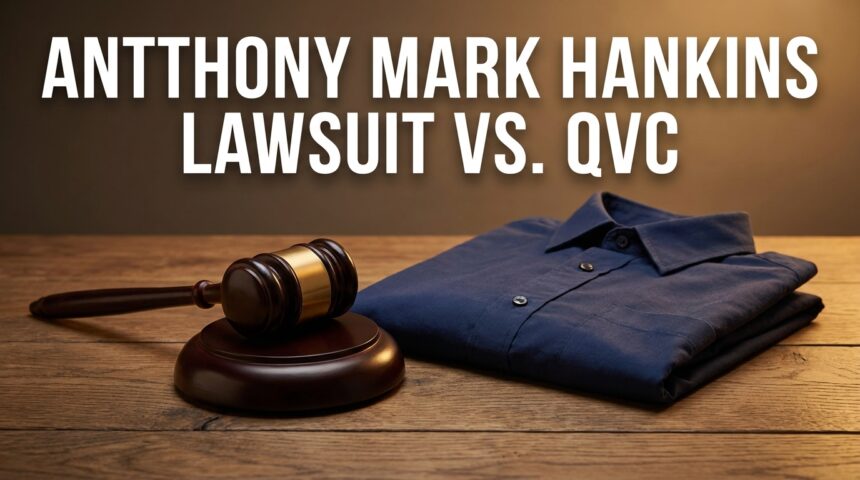
If you searched Antthony Mark Haskins lawsuit QVC, here’s the direct answer. The designer’s real name is Antthony Mark Hankins, and he’s suing QVC Group, HSN Inc., and HSNI, LLC for at least $30 million after 31 years on HSN. He says the networks quietly cut his support, then abruptly fired him in July 2025. The case is still active in federal court in Pennsylvania, and it survived QVC’s own bankruptcy earlier this year.
Antthony Mark Hankins or Antthony Mark Haskins
That spelling mix-up is common enough that it’s worth clearing up properly. His real name is Antthony Mark Hankins. “Haskins” has spread across search results and a few write-ups, but it’s the same person and the same case. You won’t find a separate designer named Haskins tied to this story.
- Quick Answer
- Antthony Mark Hankins or Antthony Mark Haskins
- Who Is Antthony Mark Hankins
- The 31 Year Partnership Between Hankins and HSN
- What Led to the Termination
- Inside the Lawsuit: Case No. 2:26-cv-00912
- Who Is Suing Whom
- The Claims Against QVC and HSN
- The Docket Timeline, From Complaint to Amended Complaint
- Is This a Class Action
- How QVC Group’s Bankruptcy Affected the Case
- Myth vs Fact
- Where the Case Stands Now
- What This Case Teaches About Contracts and Terminations
- Frequently Asked Questions
- The Bottom Line
Who Is Antthony Mark Hankins
Hankins is a fashion designer based in Savannah, Georgia. He built his brand, Antthony Design Originals, largely through television retail, selling handbags, apparel, and accessories directly to viewers who tuned in to watch him. His work leaned on bold prints and a versatile, accessible style, and he built a loyal following over a career that stretched back more than three decades.
That kind of tenure is unusual in home shopping television, which is part of why the story got attention when it ended the way it did.
The 31 Year Partnership Between Hankins and HSN
According to his lawsuit and public statements, Hankins had been on air with HSN for more than 31 years. During that time, HSN moved its studio operations out of St. Petersburg, Florida, and consolidated into QVC’s West Chester, Pennsylvania campus. QVC and HSN had merged in 2017 in a deal worth about $2 billion, and the combined company later rebranded as QVC Group.
For most of that history, Hankins says his sales performance was strong. The lawsuit frames the last few years differently, describing a slow pullback in support that eventually led to his termination.
What Led to the Termination
Hankins alleges that between 2023 and 2025, HSN executives began reducing the airtime, rack space, and promotion his contract had guaranteed him. He says this wasn’t random. It was tied to a deliberate strategic shift.
The Shift Toward a TikTok Centered Strategy
The complaint describes HSN and QVC redirecting resources toward what it calls a “TikTok-centered business model.” In plain terms, the networks were putting more money and attention into short-form social video and platforms like TikTok Shop, aimed at reaching younger shoppers. Hankins argues that legacy, on-air vendors like him got squeezed out of that shift, even though his contract still promised a certain level of support.
This isn’t just a designer’s theory. QVC Group’s own later reporting to its bankruptcy court described TikTok Shop as a major and growing revenue channel, so the strategic pivot Hankins describes lines up with the direction the company itself has confirmed it was heading.
The Sales Numbers Behind the Claim
Hankins says the pullback showed up directly in his numbers. His gross sales in his final full calendar year with the network came in at roughly $13.24 million, which he says was more than $2 million below what he had projected. He argues that when the network gave him full support, his sales consistently beat expectations, and that the gap only opened up once his airtime and promotion started shrinking.
Then, in July 2025, Hankins says HSN notified him by email that the relationship was ending and pulled him off the air the same day, even though shows were already scheduled. He describes the termination as sudden and without legitimate cause.
Inside the Lawsuit: Case No. 2:26-cv-00912
Hankins and his company filed suit on February 11, 2026, in the U.S. District Court for the Eastern District of Pennsylvania. The case is Antthony Design Originals, Inc. and Antthony Mark Hankins v. QVC Group, Inc., HSN Inc., HSNI, LLC, and Does 1 through 10, docketed as Case No. 2:26-cv-00912. According to the federal court docket, the case is presided over by District Judge Mary Kay Costello and is filed as a diversity jurisdiction contract dispute under 28 U.S.C. Section 1332, with a jury demanded by the plaintiffs.
Who Is Suing Whom
The plaintiffs are Hankins personally and his company, Antthony Design Originals, Inc. The defendants are QVC Group, Inc., HSN Inc., and HSNI, LLC, the corporate entities behind the network he appeared on. Hankins is represented by attorney Samuel B. Fineman of Semanoff Ormsby Greenberg and Torchia in Huntingdon Valley, Pennsylvania. Court records show the defendants are represented by attorneys Samantha J. Banks, Kelly A. Quinn, and Edward J. Sholinsky, who entered their appearances in the case on February 20, 2026.
The Claims Against QVC and HSN
The complaint lays out several distinct legal theories rather than one single claim. Hankins alleges:
- Breach of contract: that HSN failed to deliver the airtime, rack space, and promotional support the agreement required.
- Racial discrimination: Hankins, who is Black, says he was treated differently than non-minority vendors. He points to a pattern where he says he was promoted heavily during Black History Month, then sidelined the rest of the year, and terminated without cause despite decades of strong sales.
- Defamation and misappropriation of likeness: the suit claims that after his termination, statements were made to HSN hosts implying the company had acquired his business, which Hankins says was never true. He also alleges his name, photo, and image kept appearing in marketing materials for months after the split, without his permission.
- Interference with business relationships and retaliation: that the network’s conduct damaged his ability to build new business relationships after the termination.
Hankins is asking for at least $30 million in damages and has demanded a jury trial. It’s worth being clear about something here. These are allegations made by one side in an active lawsuit. QVC Group and HSN have not been found liable for anything, and they have every right to dispute each of these claims in court.
The Docket Timeline, From Complaint to Amended Complaint
The federal docket shows how the case has actually moved, step by step:
- February 11, 2026: Original complaint filed, along with a corporate disclosure statement.
- February 12, 2026: Notice issued about the availability of court-annexed mediation.
- February 17, 2026: Judge Costello signed an order directing the parties to meet and confer.
- February 19, 2026: Hankins’ side filed executed waivers of service for all three corporate defendants, setting an answer deadline of April 20, 2026.
- February 20, 2026: Defense attorneys Banks, Quinn, and Sholinsky entered their appearances for QVC Group, HSN Inc., and HSNI, LLC.
- March 29, 2026: Hankins and his company filed a First Amended Complaint, with several supporting exhibits attached.
That’s a normal early-stage pace for a federal contract and discrimination case. Nothing in the docket at this stage reflects a ruling on the merits.
Is This a Class Action
No. This is worth repeating because a lot of the search traffic around this case assumes there’s a settlement fund or a claim form somewhere, and there isn’t one. This is an individual lawsuit brought by Hankins and his own company over their specific business relationship with QVC and HSN. It has nothing to do with regular shoppers or other vendors in general.
If you’re used to seeing coverage of consumer class actions and expected this to work the same way, it doesn’t. Some lawsuits that circulate online aren’t legitimate claim opportunities at all, and it helps to know how to tell the difference. Our guide on class action lawsuits with no real proof of claim walks through how to spot the difference between a real class action and one that just looks like one.
How QVC Group’s Bankruptcy Affected the Case
Two months after Hankins filed suit, QVC Group’s financial troubles caught up with the company in a bigger way.
What Chapter 11 Normally Does to a Pending Lawsuit
QVC Group filed a voluntary Chapter 11 petition on April 16, 2026, in the U.S. Bankruptcy Court for the Southern District of Texas, under Case No. 26-90447, before Judge Alfredo R. Perez. According to the company’s own SEC filing, this was a prepackaged restructuring built around a restructuring support agreement, aimed at cutting total debt from roughly $6.6 billion down to $1.3 billion. QVC Group’s own investor announcement described the filing as a step to strengthen its financial position, and public radio station WHYY reported the company was carrying $6.6 billion in debt as of the end of 2025. When a company files Chapter 11, an automatic stay normally pauses most lawsuits against it, freezing them in place while the bankruptcy case works through the court.
Naturally, that raised the obvious question for anyone following Hankins’ case: did the bankruptcy just erase his lawsuit?
Why Hankins’ Claims Were Preserved
Based on how the case has played out, the answer is no. When QVC Group’s Chapter 11 reorganization plan was confirmed later in 2026, the confirmation order specifically carved out and preserved Hankins’ claims. According to a statement distributed through Business Wire, the confirmation order provides that the bankruptcy plan does not satisfy, discharge, release, or otherwise impair the claims in the federal lawsuit, and it preserves the right to keep pursuing the case, including seeking money damages from the reorganized company.
That kind of carve-out doesn’t happen automatically. It usually reflects both sides treating the litigation as something that needed to be addressed directly during the bankruptcy process rather than something that could just be swept away.
A similar dynamic shows up in other disputes where financial pressure on one side doesn’t automatically erase what the other side is owed. Our coverage of the Kennedy Funding lawsuit is a useful comparison for how business litigation and financial distress can run on parallel tracks.

Myth vs Fact
Myth 1: The Antthony Mark Hankins lawsuit is a class action that QVC and HSN customers can join.
Fact: This is an individual business dispute filed by Hankins and his own company. There is no settlement fund, claim form, or filing deadline for regular shoppers.
Myth 2: QVC’s bankruptcy automatically wiped out Hankins’ lawsuit.
Fact: QVC Group’s confirmed Chapter 11 plan expressly preserved Hankins’ claims, according to the confirmation order. His case can continue in the Eastern District of Pennsylvania.
Myth 3: A $30 million ask in a lawsuit means QVC and HSN already owe that amount.
Fact: The $30 million figure is what Hankins is requesting. It is not a judgment, a settlement, or an admission of wrongdoing by the defendants.
Where the Case Stands Now
As of the most recent docket activity, the case remains active in the U.S. District Court for the Eastern District of Pennsylvania under Case No. 2:26-cv-00912. The amended complaint was filed March 29, 2026, defense counsel has appeared, and QVC Group has since emerged from its Chapter 11 process with Hankins’ claims intact. Public statements from Hankins have framed the case as being about protecting the legacy of a brand he spent decades building, more than about the dollar figure itself.
Because federal litigation moves through discovery, possible motions, and either a settlement or a trial, a final resolution here could realistically take a year or more. There is no announced trial date yet.
What This Case Teaches About Contracts and Terminations
You don’t need a national retail deal for the lessons in this case to be useful. A few practical takeaways apply to almost any long-term business relationship or contract, though the exact legal rules vary by state, so treat this as general guidance rather than advice for your specific situation.
Get specific terms in writing, and keep them. Hankins’ claims lean heavily on the idea that HSN promised a defined level of airtime, rack space, and promotion, then quietly scaled it back. Vague verbal understandings are much harder to enforce than a contract with measurable terms.
Track the financial impact as it happens. Part of what makes this case compelling on paper is that Hankins can point to real numbers, projected sales against actual sales, tied to a specific change in treatment. If you ever end up in a contract dispute, documenting the dollar impact in real time strengthens a claim far more than reconstructing it later.
How a relationship ends matters, not just how long it lasted. No matter how many years a business relationship has run, the way it’s terminated carries legal weight. An abrupt cutoff that skips the notice or process spelled out in a contract can become the foundation of a lawsuit on its own.
Bankruptcy doesn’t automatically erase what you’re owed. If a company you have a claim against files for bankruptcy, it’s worth finding out, often with a lawyer’s help, whether your claim can be preserved through the reorganization, the way Hankins’ claims were here.
Picture a smaller version of this same situation. Say you run a landscaping business, and a property management company you’ve worked with for ten years suddenly cuts your contract in half, then drops you altogether a few months later, right after you complain about it. If you kept the original service agreement, your invoices, and a record of the drop in assigned properties, you’d have something to work with. If all you had was a verbal understanding and a gut feeling that something changed, proving it gets much harder. The scale is different from a $30 million federal case, but the underlying problem, a one-sided change to a long relationship with nothing in writing to point to, is exactly the same.
If you’re trying to figure out whether you even need a lawyer for a dispute like this, it helps to first understand the difference between an attorney and a lawyer. And once you’re actually looking for representation, knowing the signs of a bad attorney can save you from handing a serious case to the wrong person.
Frequently Asked Questions
1. Is it Antthony Mark Hankins or Antthony Mark Haskins?
Ans: His real name is Antthony Mark Hankins. “Haskins” is a common misspelling that shows up in search traffic and some secondary write-ups, but it refers to the same person and the same case.
2. How much money is Hankins suing QVC and HSN for?
Ans: At least $30 million in damages, according to the federal complaint, with a jury trial demanded.
3. Is the Antthony Mark Hankins lawsuit a class action?
Ans: No. It’s an individual lawsuit brought by Hankins and his company over their own business relationship with QVC and HSN. There is no claim form for shoppers or other vendors.
4. Did QVC’s bankruptcy end the Hankins lawsuit?
Ans: No. QVC Group filed for Chapter 11 bankruptcy in April 2026, but the confirmed reorganization plan specifically preserved Hankins’ claims, so the lawsuit can continue.
5. What company is Antthony Mark Hankins suing?
Ans: QVC Group, Inc., HSN Inc., and HSNI, LLC, the corporate family behind the HSN network he appeared on for 31 years.
6. What is Antthony Design Originals?
Ans: Antthony Design Originals is the fashion brand founded by Hankins, known for handbags, apparel, and accessories sold mainly through television retail over more than three decades.
7. Why was Antthony Mark Hankins terminated from HSN?
Ans: HSN notified him in July 2025 that the relationship was ending. Hankins alleges the termination followed years of reduced airtime and support tied to a shift toward TikTok focused marketing, though HSN has not publicly detailed its own reasoning.
8. Where is the Antthony Mark Hankins lawsuit being heard?
Ans: In the U.S. District Court for the Eastern District of Pennsylvania, under Case No. 2:26-cv-00912, before Judge Mary Kay Costello.
9. Can QVC or HSN customers join this lawsuit?
Ans: No. This is a private business dispute between Hankins, his company, and the defendants. There is no process for customers to join or file a claim.
10. What happened to QVC Group’s bankruptcy case?
Ans: QVC Group filed a prepackaged Chapter 11 case in Texas in April 2026 aimed at cutting billions in debt, and it has since emerged from that process while Hankins’ claims against it remain active.
The Bottom Line
The Antthony Mark Hankins lawsuit against QVC and HSN is a real, still-developing federal case, not a rumor and not a consumer class action. A designer who spent 31 years building his brand on home shopping television says that relationship ended abruptly and unfairly, and he’s asking a jury to hold the companies accountable for at least $30 million. QVC and HSN have not been found liable for anything, and the case is still working through the courts even after QVC’s own bankruptcy.
If you’re dealing with a contract dispute, a sudden termination, or a discrimination claim of your own, this case is a useful reminder that documentation, timing, and choosing the right attorney can shape how a claim plays out. For guidance on your specific situation, consult a licensed attorney directly.
This article provides general information only and is not legal advice. Laws vary by state and change over time. Do not rely on this content as a substitute for advice from a qualified, licensed attorney in your jurisdiction. For guidance on your specific situation, consult a licensed attorney directly.

Dirk Wasserthal is the Founder and Lead Writer of LegalDiaries.com, an independent legal information platform. He specializes in Mass Torts, Women’s Rights, and emerging legal issues, delivering clear, well-researched, and trustworthy content across Criminal Law, Family Law, Personal Injury, and more. Dirk’s mission is simple — make the law understandable for everyone.