


Arizona voter data lawsuit dismissal is the story making headlines this year, and here’s the short version. A federal judge threw out the U.S. Department of Justice’s lawsuit against Arizona, ruling that the state does not have to hand over its full voter registration list to federal officials. If you’re an Arizona voter wondering what this means for your personal information, you’re in the right place.
- What Was the Arizona Voter Data Lawsuit About?
- Timeline: How the Case Unfolded
- Why Did Judge Brnovich Dismiss the DOJ’s Lawsuit?
- What Voter Data Did the DOJ Want From Arizona?
- What Did Fontes and Attorney General Mayes Say?
- Arizona Isn’t Alone: The DOJ’s Nationwide Voter Roll Fight
- Will the Justice Department Appeal the Arizona Ruling?
- What This Ruling Means for Your Own Voter Registration Data
- Common Mistakes People Make When Reading About This Case
- Myth vs Fact: Arizona Voter Data Lawsuit
- How to Check or Protect Your Voter Registration Information in Arizona
- Where to Read the Official Ruling and Statements
- Frequently Asked Questions
- Bottom Line
This case matters because it touches something personal: your name, your birthdate, your address, and even part of your Social Security number. The DOJ wanted all of that. Arizona said no. A judge agreed with Arizona. Let’s walk through exactly what happened, why it happened, and what it means going forward.
What Was the Arizona Voter Data Lawsuit About?
In January 2026, the DOJ sued Arizona Secretary of State Adrian Fontes. The lawsuit demanded that Fontes turn over the state’s complete, unredacted voter registration list. That list includes sensitive details about every registered voter in Arizona.
The DOJ sued Arizona Secretary of State Adrian Fontes in January 2026, demanding the state’s full, unredacted voter registration list. Fontes refused, citing state and federal privacy protections. A federal judge dismissed the case in April 2026, ruling the DOJ had no legal authority to demand that data.
Fontes had already turned down two requests from the DOJ the previous summer. Both times, he declined to sign a memorandum of understanding that would have let federal officials access the data. When he kept refusing, the DOJ took him to federal court.
Think of it like a landlord asking a tenant for a copy of every document in the tenant’s personal filing cabinet, not just the lease. Arizona’s argument was simple: nothing in federal law requires that kind of handover, and the state has its own duty to protect voter privacy.
Timeline: How the Case Unfolded
Here’s how the case moved through the courts, start to finish.
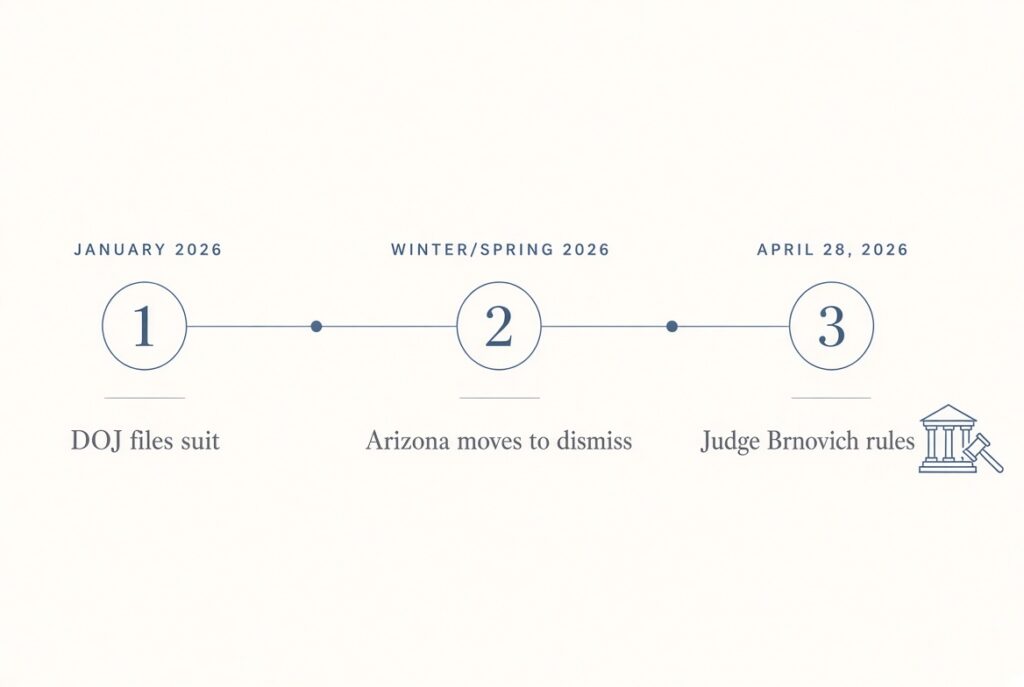
January 2026, DOJ Files Suit Against Fontes. The Justice Department’s Civil Rights Division filed a federal lawsuit asking a judge to order Fontes to produce Arizona’s statewide voter registration list, including full names, birthdates, home addresses, and either driver’s license numbers or the last four digits of Social Security numbers.
Winter and Spring 2026, Arizona Moves to Dismiss. Fontes, backed by Arizona Attorney General Kris Mayes, filed a motion asking the court to throw the case out before it went any further. Their argument was that none of the federal laws the DOJ cited actually gave it the power to demand this information.
April 28, 2026, Judge Brnovich Rules. U.S. District Judge Susan Brnovich agreed with Arizona. She dismissed the case with prejudice, meaning the DOJ cannot refile the same claim later.
Why Did Judge Brnovich Dismiss the DOJ’s Lawsuit?
Judge Brnovich’s reasoning came down to one core question: does federal law actually give the Attorney General the right to demand this specific list.
Judge Brnovich ruled that Arizona’s statewide voter registration list is not a document the Attorney General can legally demand from a state. She found that Title III of the Civil Rights Act of 1960 does not authorize the DOJ’s request, and she dismissed the case with prejudice.
According to reporting from Votebeat, the judge also rejected the DOJ’s backup arguments under the National Voter Registration Act and the Help America Vote Act. None of the three laws, she found, required Arizona to disclose the data.
CBS News quoted a key line from her opinion: the case presented a legal question about whether the Attorney General is entitled to the list under Title III, not a political question about whether she should be. That distinction is worth sitting with. Judge Brnovich, a Trump appointee, wasn’t ruling on politics. She was ruling on what the statute actually says.
What Is Title III of the Civil Rights Act of 1960?
Title III gives the Attorney General power to inspect certain election records tied to federal elections, mainly to investigate possible discrimination in voting.
Title III of the Civil Rights Act of 1960 lets the Attorney General inspect certain election records to investigate voting discrimination. Judge Brnovich ruled it does not give the DOJ authority to demand a state’s complete, unredacted voter registration list for a broad data pull.
It was written to fight voter suppression, not to hand the federal government a blanket right to collect every voter’s personal file. That distinction was at the heart of Arizona’s win.
What Does “Dismissed With Prejudice” Mean?
This phrase confuses a lot of people, so let’s clear it up.
Dismissed with prejudice means the court permanently ended this specific claim, and the DOJ cannot refile the same lawsuit against Arizona using the same legal theory. It’s different from a dismissal without prejudice, which would allow the case to be refiled after fixing the problem.
Judge Brnovich dismissed with prejudice because, in her words, amendment would be legally futile. In other words, there was no fix the DOJ could make to this particular claim that would change the outcome. If you’re curious how courts decide whether a lawsuit even has enough to move forward in the first place, our guide to what happens when a class action lawsuit lacks proof walks through similar dismissal standards in a different context.
What Voter Data Did the DOJ Want From Arizona?
The DOJ’s request was not small. It asked for a full electronic copy of Arizona’s voter registration list, including:
- Full name and date of birth for every registered voter
- Home address on file
- Driver’s license number or the last four digits of a Social Security number
- A unique voter identifier under federal election law
That’s the kind of information that, if leaked or mishandled, could open the door to identity theft. It’s not hard to see why Fontes pushed back so hard, and why privacy advocates paid close attention to the outcome.
What Did Fontes and Attorney General Mayes Say?
After the ruling, Fontes and Mayes released a joint statement through the Arizona Attorney General’s office. Here’s part of what they said:
“That database contains the sensitive personal information of millions of Arizona voters. Arizona acted correctly in refusing this request, and today’s ruling vindicates that decision. Our offices will continue to defend the privacy of Arizona voters against federal overreach.”
This wasn’t the first time the two pushed back publicly. Earlier in the year, Mayes and Fontes sent a letter directly to Arizona’s county recorders, the local officials who actually hold and manage the day-to-day voter registration data. The letter warned that handing over unredacted files to the DOJ would violate both state and federal law, and told recorders they had a duty to decline any such request. That letter matters because it shows this wasn’t just one office saying no. It was a coordinated effort across state and county government to keep the data protected.
Fontes also spoke about the ruling more casually in a separate statement, saying the case against him and the DOJ’s request had been dismissed and that he would keep protecting Arizonans’ personal information from what he called illegal requests. Whatever your politics, the practical takeaway for a voter is the same: the state fought to keep this specific data out of federal hands, and for now, it won.
Arizona Isn’t Alone: The DOJ’s Nationwide Voter Roll Fight
Arizona is one of many battlegrounds in a much bigger fight. The DOJ’s own press releases show it has filed similar lawsuits against dozens of states, with Assistant Attorney General Harmeet Dhillon of the Civil Rights Division publicly defending the effort as necessary for election security and accurate voter rolls.
By the time Arizona’s case was decided, courts in five other states had already rejected the same legal theory on the merits. That made Arizona the sixth straight loss for the DOJ on this specific argument. Not every dismissal happened for the same reason, though. In Georgia, for example, a judge dismissed the DOJ’s lawsuit simply because it was filed in the wrong court, a procedural issue rather than a ruling against the DOJ’s legal authority, and the government refiled elsewhere. Arizona’s dismissal was different. It was a ruling on the actual merits of whether the DOJ had the legal right to demand the data at all.
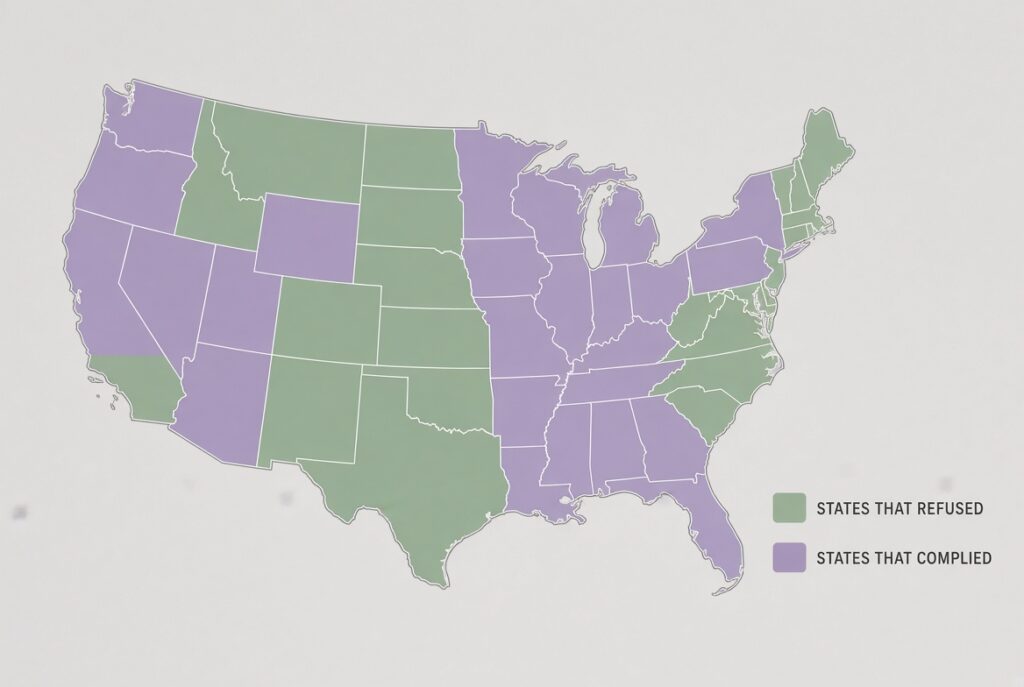
States that refused and had lawsuits dismissed:
| State | Outcome |
|---|---|
| Arizona | Dismissed with prejudice, April 2026 |
| Michigan | Dismissed, DOJ has appealed |
| Oregon | Dismissed, DOJ has appealed |
| California | Dismissed, DOJ has appealed |
| Rhode Island | Dismissed |
| Massachusetts | Dismissed |
States that complied or agreed to comply (based on AP and Fox News reporting): Alaska, Arkansas, Indiana, Louisiana, Mississippi, Nebraska, Ohio, Oklahoma, South Carolina, South Dakota, Tennessee, Texas, and Wyoming.
This is a good reminder that laws and outcomes vary by state. If you live outside Arizona, your state’s situation may look completely different, and you should check local reporting or a licensed attorney in your state for specifics. It’s part of a broader pattern of the current administration pursuing federal litigation against states and institutions over compliance issues, similar in structure to the federal government’s lawsuit over student visa policy, even though the subject matter is completely different.
Will the Justice Department Appeal the Arizona Ruling?
As of this writing, the DOJ has not confirmed whether it will appeal the Arizona dismissal. It has already appealed similar losses in Michigan, Oregon, and California, so an appeal in Arizona is a real possibility, but nothing has been filed or announced yet.
There’s one other detail worth knowing. A DOJ official reportedly said last month, before the ruling came down, that the department wanted to do an individualized assessment of Arizona’s voter data before deciding on next steps. That comment suggests the DOJ may not treat every state’s case identically going forward, even if it keeps pursuing the broader campaign.
If the DOJ does appeal, the case would move to the Ninth Circuit Court of Appeals. That process can take months, sometimes longer. Until then, the dismissal stands, and Arizona is not required to hand over the list.
What This Ruling Means for Your Own Voter Registration Data
Say you’re a registered voter in Maricopa County. You’ve probably wondered at some point who can see your address or birthdate on file. Here’s the honest answer after this ruling: the DOJ does not currently have your unredacted voter data from the state, and this case confirms Arizona was not legally required to give it to them.
That doesn’t mean your information is invisible. Basic voter registration details, like your name and party affiliation, are often public record in Arizona through official channels, and that was true before this lawsuit too. What changed is narrower: the federal government tried to get a much deeper, more sensitive data set, and a court said no.
If you’re the type of person who worries about identity theft, this ruling is a point in your favor, not a red flag. Nothing about it suggests your data was exposed. If anything, it shows the state pushed back specifically to prevent that kind of exposure.
Common Mistakes People Make When Reading About This Case
A few misunderstandings keep showing up in comment sections and social media, so let’s address them directly.
One common mistake is assuming this ruling was about voter fraud, one way or the other. It wasn’t. Judge Brnovich did not rule on whether Arizona’s rolls are accurate or whether fraud exists. She ruled narrowly on whether the DOJ had legal authority to demand this specific data under specific statutes.
Another mistake is confusing Fontes’ title. He is Arizona’s Secretary of State, not the Attorney General. Kris Mayes is the Attorney General. A few national outlets got this wrong in their coverage, so if you’ve seen conflicting titles elsewhere, that’s why.
A third mistake is treating “dismissed with prejudice” as the end of the entire fight. It ends this specific claim. It does not stop the DOJ from trying a different legal argument in the future, or from appealing this decision.
Myth vs Fact: Arizona Voter Data Lawsuit
Myth 1: The dismissal means the DOJ can never ask Arizona for voter data again, under any circumstances.
Fact: Dismissal with prejudice only closes this specific claim under these specific statutes. The DOJ could still pursue a different legal theory in a new case, or appeal this ruling to a higher court.
Myth 2: Arizona already handed over the sensitive voter data before the case was dismissed.
Fact: Fontes refused the DOJ’s requests from the start, both before the lawsuit was filed and throughout the litigation. The unredacted data was never turned over.
Myth 3: This ruling proves Arizona’s voter rolls are messy or poorly maintained.
Fact: The case was about legal authority, not accuracy. The judge never evaluated whether Arizona’s voter list has errors, because that question was not part of the lawsuit.
How to Check or Protect Your Voter Registration Information in Arizona
If this whole situation has you wanting to double check your own registration, here’s what you can actually do.
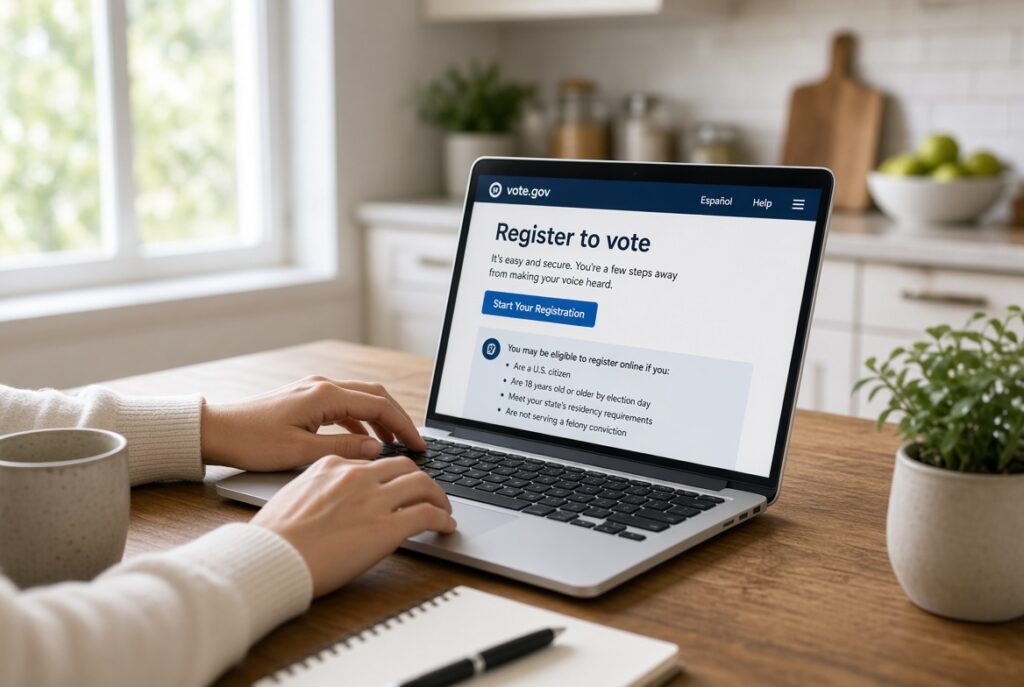
You can look up your own voter registration status directly through the Arizona Secretary of State’s voter portal, which shows your registration details without exposing them publicly to anyone else. If you ever get a suspicious call, email, or letter asking you to confirm sensitive details like your Social Security number under the banner of “voter verification,” treat it as a red flag. Neither the state nor a legitimate federal request would typically ask you, the individual voter, to hand that over directly outside official channels.
If you’re worried enough about privacy that you want a professional opinion on your specific situation, that’s a completely reasonable next step, and a licensed attorney in your state is the right person to ask.
Where to Read the Official Ruling and Statements
If you want to read this directly instead of taking any article’s word for it, here’s where to look. The actual court order is available through CourtListener’s public archive, which hosts federal court filings for free. The Arizona Attorney General’s office also posted the official joint statement from Mayes and Fontes in full.
Frequently Asked Questions
1. Why did the DOJ sue Arizona over voter data?
Ans: The DOJ sued because Arizona Secretary of State Adrian Fontes refused to turn over the state’s full, unredacted voter registration list after two requests. The DOJ argued federal law required the disclosure, and Arizona disagreed.
2. Who is Judge Susan Brnovich?
Ans: Susan Brnovich is a U.S. District Judge for the District of Arizona, appointed by President Trump. She is also the widow of former Arizona Attorney General Mark Brnovich.
3. What is Title III of the Civil Rights Act of 1960?
Ans: Title III gives the U.S. Attorney General power to inspect certain election records tied to federal elections, mainly to investigate voting discrimination. Judge Brnovich ruled it does not authorize a full voter registration list demand like the one made against Arizona.
4. What does dismissed with prejudice mean?
Ans: It means the court permanently closed this specific legal claim, and the DOJ cannot refile the exact same lawsuit against Arizona. The DOJ could still try a different legal argument or appeal the decision.
5. Will the DOJ appeal the Arizona ruling?
Ans: The DOJ has not confirmed an appeal as of publication. It has appealed similar losses in Michigan, Oregon, and California, so an Arizona appeal is possible but unconfirmed.
6. What voter data did the DOJ want from Arizona?
Ans: The DOJ wanted full names, dates of birth, home addresses, driver’s license numbers or partial Social Security numbers, and unique voter identifiers for every registered Arizona voter.
7. Which states have refused to give the DOJ voter data?
Ans: Arizona, Michigan, Oregon, California, Rhode Island, and Massachusetts have all had similar DOJ lawsuits dismissed as of this ruling, based on the same core legal argument.
8. Which states have given the DOJ their voter rolls?
Ans: Reporting from the AP and Fox News names Alaska, Arkansas, Indiana, Louisiana, Mississippi, Nebraska, Ohio, Oklahoma, South Carolina, South Dakota, Tennessee, Texas, and Wyoming as states that complied or agreed to comply.
9. Is Adrian Fontes the Arizona Attorney General or Secretary of State?
Ans: Adrian Fontes is Arizona’s Secretary of State. Kris Mayes is Arizona’s Attorney General. Some national outlets have mixed up these titles in their coverage.
10. Is my voter registration information private in Arizona?
Ans: Basic details like your name and party affiliation may be accessible through official public record channels, as they were before this lawsuit. This ruling specifically blocked the DOJ from obtaining a deeper, unredacted data set, including birthdates and partial Social Security numbers.
Bottom Line
The Arizona voter data lawsuit dismissal comes down to a court saying no to a very broad federal request. Judge Brnovich ruled that the DOJ’s own cited laws, including Title III of the Civil Rights Act of 1960, don’t give it the power to demand Arizona’s full voter registration list. Fontes and Mayes called it a win for voter privacy, and for now, that’s exactly what it is.
This story is still moving. The DOJ hasn’t said whether it will appeal, and similar cases are playing out in courts across the country. If you have specific concerns about your own voter data, your identity, or how this ruling might apply to your situation, talk to a licensed attorney rather than relying on any single article, including this one. It also helps to understand the difference between an attorney and a lawyer before you start calling around, and if you do hire someone, it’s worth knowing the warning signs of a bad attorney ahead of time.
This article provides general information only and is not legal advice. Laws vary by state and change over time. Do not rely on this content as a substitute for advice from a qualified, licensed attorney in your jurisdiction. For guidance on your specific situation, consult a licensed attorney directly.

Dirk Wasserthal is the Founder and Lead Writer of LegalDiaries.com, an independent legal information platform. He specializes in Mass Torts, Women’s Rights, and emerging legal issues, delivering clear, well-researched, and trustworthy content across Criminal Law, Family Law, Personal Injury, and more. Dirk’s mission is simple — make the law understandable for everyone.