



The TruLife Distribution lawsuit is not one single case. It’s actually a string of related lawsuits going back to at least 2021, between two competing supplement distribution companies run by a father and his son. If you’re trying to figure out what’s real and what’s just internet noise, you’re not alone. This article walks through exactly what the court record shows, in order, so you can see for yourself.
- Quick Answer: What’s Happening Right Now
- What Is the TruLife Distribution Lawsuit, Exactly?
- Who’s Involved
- Timeline: How We Got Here
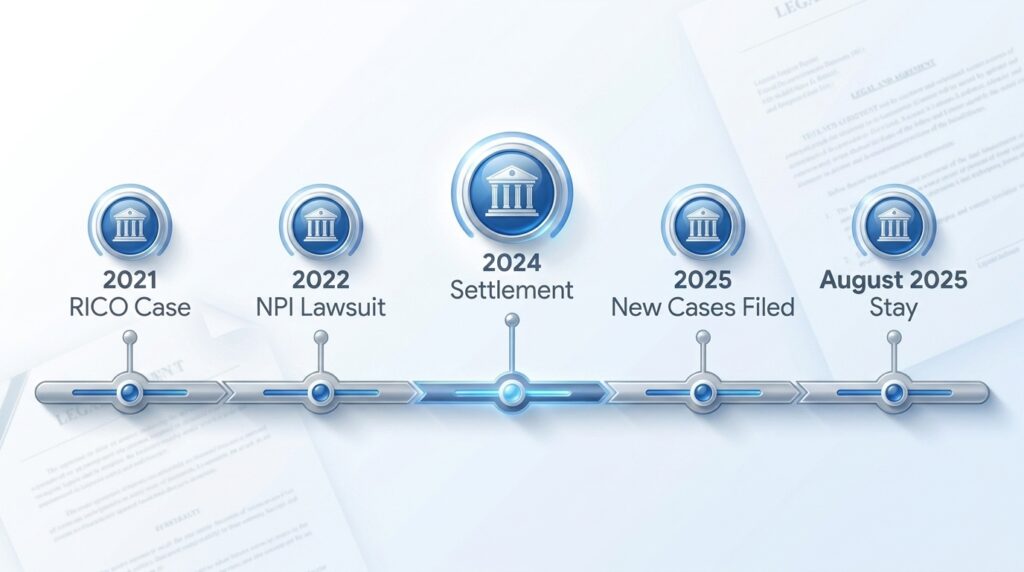
- 2021: TruLife Sues the Gould Family Over Civil RICO Claims
- 2022: NPI Sues TruLife Over Case Studies
- 2024: A Global Settlement
- 2025: Two New Federal Cases
- August 2025: Both New Cases Get Paused
- Current Status: Where Things Stand Today
- What the Claims Actually Allege (and Don’t Prove)
- Is TruLife Distribution a Scam?
- Myth vs Fact
- TruLife’s Public Response
- Why This Case Keeps Coming Back
- What This Means If You’re Evaluating a Distribution Partner
- Frequently Asked Questions
- Conclusion
Quick Answer: What’s Happening Right Now
Here’s the short version. TruLife Distribution and Nutritional Products International, known as NPI, have been suing each other on and off since 2021. The two newest federal cases, filed in early 2025, are currently paused. A judge stayed both cases in August 2025 while a Florida state court decides whether an older settlement already covers these new claims. Nobody has won. Nobody has lost. No judge has ruled on whether anyone did anything wrong.
That last point matters a lot, so we’ll come back to it more than once. An allegation in a lawsuit is one side’s version of events. It’s not proof of anything.
What Is the TruLife Distribution Lawsuit, Exactly?
TruLife Distribution is a company based in Florida. It helps health, wellness, and nutrition brands get their products onto store shelves in the United States. Brian Gould founded it in 2019.
Nutritional Products International does similar work. It was founded back in 2008 by Brian’s father, Mitch Gould. The two companies compete for the same kind of clients in the same industry.
Since the split, the two companies have gone back and forth in court more than once. A federal judge reviewing the most recent filings pointed out that court records show at least eleven related legal actions between these two parties over the years. That includes fraud-style claims, a civil racketeering complaint (more on that below), trademark disputes, and now a fight over an old settlement.
Here’s a helpful way to think about it. This is a business fight, not a consumer case. If you bought a supplement somewhere and you’re wondering if this lawsuit affects you as a customer, it doesn’t. None of these filings involve product safety or consumer harm. It’s two companies arguing about how they compete with each other.
Who’s Involved
Knowing who’s who makes the rest of this a lot easier to follow.
TruLife Distribution, Inc. is the company Brian Gould started in 2019. It works with health and wellness brands trying to break into the U.S. retail market.
Brian Gould runs TruLife as its founder and CEO. He’s named as a defendant in the lawsuits NPI has filed.
Nutritional Products International, or NPI, is the competing company. Mitch Gould, Brian’s father, founded it in 2008.
Mitch Gould leads NPI and is named as a defendant in the lawsuits TruLife has filed against the Gould family.
Scott Gould and Sherry Gould were also named as defendants in TruLife’s 2021 filing, along with a company called In Health Media.
Think of it like this. Picture a family business that split into two competing businesses. Now imagine both sides suing each other over who’s allowed to say what about their track record. That’s the shape of this dispute.
Timeline: How We Got Here
Let’s walk through this year by year, because the order matters.
2021: TruLife Sues the Gould Family Over Civil RICO Claims
In April 2021, TruLife Distribution filed a lawsuit against Mitch Gould, Scott Gould, Sherry Gould, In Health Media, and NPI. The case was filed in the U.S. District Court for the Southern District of Florida and raised civil RICO claims.
Here’s what RICO means in plain terms. RICO stands for the Racketeer Influenced and Corrupt Organizations Act. It’s a law that lets someone sue if they can show a pattern of coordinated wrongdoing tied to an organized group. If a RICO claim succeeds, the person who filed it can potentially collect three times their actual damages, plus attorney’s fees. That’s why businesses sometimes reach for it in aggressive commercial fights. It raises the stakes fast.
This case never got that far. The parties settled and filed a joint request to dismiss the case. On August 13, 2021, the judge dismissed it with prejudice, which means TruLife couldn’t refile the same claims again later. You can see the docket details confirming the parties and the dismissal date on Unicourt’s case record. As is typical with settlements like this, neither side admitted any wrongdoing, and the settlement terms weren’t made public.
2022: NPI Sues TruLife Over Case Studies
The following year, NPI filed its own lawsuit. NPI accused TruLife and Brian Gould of using NPI’s own client case studies and testimonials, then presenting that work as TruLife’s own results. NPI also claimed TruLife used a fraudulently created email address designed to look like it came from NPI.
The complaint cited a few different laws. One was Florida’s Deceptive and Unfair Trade Practices Act, often shortened to FDUTPA. That’s a state law that bans unfair or deceptive business practices, and it covers business-to-business disputes as well as consumer ones. The complaint also cited the federal Lanham Act, which covers false advertising and trademark issues between competitors, and the Anticybersquatting Consumer Protection Act, which deals with misleading domain names and email addresses.
Here’s where honesty matters. Different sources online report different case numbers and slightly different outcomes for this 2022 lawsuit. Some say NPI voluntarily dismissed it within weeks. Others describe it dragging on with counterclaims into 2024. You can see a docket summary confirming the case existed, along with the judge assigned to it, through Law360’s case page. Rather than guess at a specific docket number that keeps changing depending on where you look, the safest thing to tell you is this: the case was real, the allegations were as described above, and the broader dispute between the two companies was eventually folded into a larger settlement in 2024.
2024: A Global Settlement
By 2024, the parties reached what’s been described as a global settlement, meaning it was meant to resolve the various claims between them all at once. Neither side admitted fault as part of it. If that sounds like the end of the story, you’d think so too. It wasn’t.
2025: Two New Federal Cases
Early in 2025, the fight reignited. NPI filed a new case against TruLife Distribution and Brian Gould on March 28, 2025, in the Southern District of Florida, again raising unfair competition and false advertising style claims. Then, on April 21, 2025, TruLife filed its own case against Gould family members and NPI, reportedly raising civil RICO claims again.
You can review the actual federal docket for the newer NPI case on Justia’s court records page, which lists the parties, the filing date, and the assigned judge.
August 2025: Both New Cases Get Paused
This is the most important recent event, and it’s the one a lot of older articles online completely miss. On August 8, 2025, Judge Robin L. Rosenberg ruled on TruLife’s request to pause both new cases. In her order, she noted that the dispute traces back years, with at least eleven related actions between the parties.
Rather than let both sides fight the same battle twice, she ordered both federal cases stayed, meaning paused, and administratively closed. This will stay in place while a Florida state court in Palm Beach County decides something specific: whether the 2024 settlement already covers, and therefore blocks, these new 2025 claims. You can read the full order yourself directly from the U.S. government’s court records site, which spells out exactly what was decided and what wasn’t.
That last part is worth repeating. The order is explicit that pausing the case does not decide who’s right. It’s a procedural timeout, not a ruling.
Current Status: Where Things Stand Today
As of the most recent public filings, both 2025 federal cases, numbered 9:25-cv-80410 and 9:25-cv-80488, remain stayed and administratively closed. They’re waiting on the Palm Beach County Circuit Court to rule on the settlement question.
Here’s what that means in practice. No judge has ruled on whether TruLife engaged in false advertising or unfair competition. No judge has ruled on TruLife’s claims against the Gould family or NPI either. Both sides are essentially on hold.
Court dockets can move at any time, sometimes within days. If you need the current status for something specific, like a business decision or a legal filing of your own, check the court’s public docket directly instead of relying on any article, including this one.
What the Claims Actually Allege (and Don’t Prove)
Across all these filings, a handful of legal theories keep showing up. Let’s break down what each one actually means, since the names alone don’t tell you much.
Unfair competition and false advertising under the Lanham Act means one company claims another made false statements about its own work in a way that hurt business.
Deceptive trade practices under FDUTPA covers a wider range of misleading or unfair business conduct under Florida law.
Fraud or misrepresentation claims, in this case, center on the accusation that TruLife used NPI’s case studies as if they were its own.
Civil RICO, raised by TruLife in both 2021 and 2025, argues a broader pattern of coordinated misconduct rather than a single bad act.
Here’s an example to make this concrete. Imagine two rival plumbing companies. One accuses the other of copying its before-and-after project photos and using them in ads to win new customers. That’s roughly the shape of the case studies allegation here, just in the supplement distribution world instead of plumbing.
It’s worth remembering that filing a lawsuit is easy. Winning one is a different story. Courts look at actual evidence, not just the claims in a complaint. If you’re curious how that process generally works and how often claims actually succeed once they reach real scrutiny, our breakdown of the odds of winning a personal injury lawsuit covers that dynamic in a different context, but the core lesson about evidence versus allegations applies just as much here.
Is TruLife Distribution a Scam?
Based strictly on what’s in the court record, no. No judge has found that TruLife committed fraud or ran any kind of scam.
So why does that word keep showing up in search results? Mostly because “lawsuit” is a scary word, and once it’s attached to a company name online, it tends to stick around, especially when there’s limited public information filling in the gaps. That’s a search behavior pattern, not a legal finding.
If you’re evaluating TruLife, or honestly any distribution partner, for your own business, don’t rely on search result rumors either way. Do your own basic homework instead. Talk to current clients directly. Pull public court records yourself instead of trusting a summary. Get everything in writing before you sign a contract.
Myth vs Fact
Myth 1: There’s a settlement fund or claim form that regular consumers can apply to.
Fact: This has never been a consumer class action. There’s no settlement fund and no claim form for individual people, because the dispute is strictly between the two companies and related individuals.
Myth 2: Being named in a lawsuit means you did something wrong.
Fact: A lawsuit is just one side’s accusation. Nothing has been proven until a judge or jury actually rules on the evidence, and in this case, that hasn’t happened yet.
Myth 3: This is a single lawsuit that’s been dragging on since 2021.
Fact: It’s actually a series of separate but related lawsuits, with at least eleven related actions noted by the court, including a settlement in between that later became disputed.
If you want to understand more about why allegations alone don’t equal proof in any type of case, our piece on class action lawsuits without clear proof covers that same idea from a different angle.
TruLife’s Public Response
TruLife Distribution has spoken publicly about this dispute on its own company blog. The company described itself as having been fully cleared of the claims made against it, and stated that no ruling was ever made against the company as a result of the earlier lawsuit. You can read TruLife’s full statement on its own site.
Keep in mind that’s the company’s own account of events, not an independent court ruling. It’s worth reading alongside the actual docket, not instead of it. Both sides in litigation like this typically describe outcomes in the way that reflects best on them.
Why This Case Keeps Coming Back
You might be wondering how the same two parties end up back in court again and again. Family business disputes tend to work this way more often than you’d expect.
When two sides have both a business relationship and a personal one, a settlement can quiet things down for a while without actually fixing the underlying tension. Then something triggers a new disagreement, and the case history from years earlier gets pulled right back into the new fight. That pattern, more than any single allegation, seems to explain why this has stretched into a five-year, eleven-plus-action saga instead of one clean case with a beginning and an end.
What This Means If You’re Evaluating a Distribution Partner
If you’re a brand owner thinking about working with either TruLife or NPI, or honestly any distribution company, here’s a practical approach that doesn’t depend on picking a side in this dispute.
Ask for references and actually call current clients yourself, rather than trusting case studies alone. Search public court records directly using free tools like PACER or a state court’s online docket, instead of relying on a blog summary. Put every promise made during a sales pitch into the written contract, since verbal claims are hard to enforce later. Review any exit clause or cancellation terms before you sign anything, not after.
None of this requires assuming anyone is guilty of anything. It’s just the same due diligence you’d want to do before any major business commitment. For a look at how another business dispute played out and what lessons carried over for consumers and partners alike, see our coverage of the CarGuard lawsuit.
Frequently Asked Questions
1. What is the TruLife Distribution lawsuit about?
Ans: It’s a series of related lawsuits between two competing supplement distribution companies, TruLife and NPI, run by a father and son. The claims involve unfair competition, false advertising, and civil RICO allegations, and none of it has been decided by a judge yet.
2. Is TruLife Distribution still operating?
Ans: Yes, based on public information, TruLife Distribution continues to operate as a health and wellness distribution company in Florida.
3. Is TruLife Distribution legit, or is it a scam?
Ans: No court has found TruLife committed fraud or ran a scam. The word “scam” shows up online mostly because of search behavior around the word lawsuit, not because of any legal ruling.
4. Was TruLife Distribution found guilty of anything?
Ans: No. Nothing in the public court record shows a judge ruling that TruLife did anything wrong. The 2021 case ended in a settlement, and the newest cases are currently paused without any ruling on the merits.
5. Who is Brian Gould, and who is Mitch Gould?
Ans: Brian Gould founded TruLife Distribution in 2019. His father, Mitch Gould, founded the competing company NPI back in 2008. Both have been named in lawsuits filed by the other’s company.
6. Is there a consumer settlement or claim form for this lawsuit?
Ans: No. This has never been a consumer class action, so there’s no settlement fund or claim form available to the general public.
7. What is the current status of the TruLife Distribution lawsuit?
Ans: The two most recent federal cases are stayed and administratively closed, meaning paused, while a Florida state court decides whether an earlier settlement already covers the new claims.
8. What laws is TruLife Distribution accused of violating?
Ans: The various filings cite the federal Lanham Act for false advertising, Florida’s FDUTPA for deceptive trade practices, and civil RICO claims for a broader pattern of alleged coordinated misconduct. These are allegations, not proven violations.
Conclusion
TruLife Distribution and NPI have been in and out of court for years, and the newest chapter is currently on pause while a Florida state court sorts out an old settlement. No one has won this fight, and no one has been found at fault. If you’re following this story because it affects a business decision of your own, the smartest move is to check the live docket yourself and talk to a licensed attorney about how it applies to your specific situation, rather than relying on any single article, including this one, as the final word.
If you’re researching other ongoing business or consumer disputes in this same space, our coverage of the Isotonix lawsuit is a useful next read.
This article provides general information only and is not legal advice. Laws vary by state and change over time. Do not rely on this content as a substitute for advice from a qualified, licensed attorney in your jurisdiction. For guidance on your specific situation, consult a licensed attorney directly.

Dirk Wasserthal is the Founder and Lead Writer of LegalDiaries.com, an independent legal information platform. He specializes in Mass Torts, Women’s Rights, and emerging legal issues, delivering clear, well-researched, and trustworthy content across Criminal Law, Family Law, Personal Injury, and more. Dirk’s mission is simple — make the law understandable for everyone.