



The right personal injury lawyer Rancho Cucamonga residents actually recommend to friends and family isn’t the one with the biggest freeway billboard, it’s the one who picks up the phone, explains your options honestly, and fights for every dollar your case is worth. If you’re reading this, you’re probably somewhere in that process right now: hurt, dealing with an insurance company that isn’t returning calls fast enough, and trying to figure out what happens next.
- When Should You Hire a Personal Injury Lawyer in Rancho Cucamonga?
- Rancho Cucamonga & San Bernardino County Accident Statistics You Should Actually See
- Common Types of Personal Injury Cases in Rancho Cucamonga
- What You Actually Have to Prove: The Four Elements of Negligence
- California’s Medical Malpractice Damages Cap (MICRA), Explained Properly
- Statute of Limitations: The Deadline You Cannot Afford to Miss
- What Compensation Can You Actually Recover?
- Who’s Actually Allowed to File a Wrongful Death Claim?
- How to Choose the Right Personal Injury Lawyer in Rancho Cucamonga
- Frequently Asked Questions
- Bottom Line
This guide walks through the parts that actually matter: when hiring a lawyer makes sense, how California’s negligence and damages rules work, what your claim might realistically be worth, how to avoid the mistakes that quietly shrink a settlement, and what to actually ask before you commit to a firm. A lot of pages on this topic recycle the same few paragraphs about “statute of limitations” and “free consultations” without ever citing a source or a real number. This one does with the actual code sections, current damages caps, and local accident data included.
When Should You Hire a Personal Injury Lawyer in Rancho Cucamonga?
Not every accident needs a lawyer. If you rear-ended someone at five miles an hour in a parking lot and nobody’s hurt, you probably don’t need one. But the calculation changes fast once any of the following is true:
- You needed emergency care, surgery, or ongoing physical therapy
- The insurance company denied your claim outright or offered a number that doesn’t come close to covering your bills
- Fault is disputed, or the other side is trying to blame you
- You’ve missed work, or your injury could affect your ability to earn income long-term
- The at-fault driver had no insurance, or not enough
- Someone died because of another party’s negligence
Here’s the part most guides gloss over: timing matters more than people realize. Insurance adjusters are trained to get you on a recorded statement within days of the accident, while you’re still shaken up and before you know the full extent of your injuries. Whatever you say gets used sometimes against you, sometimes to justify a lower offer. It’s not just your statement at risk, either. Surveillance footage from nearby businesses can get overwritten in as little as a week or two. Skid marks fade. Witnesses move or stop answering calls. A lawyer’s first job, often, isn’t negotiating, it’s locking down evidence before it disappears.
Handling It Yourself vs. Hiring a Lawyer
| Handling It Yourself | Hiring a Personal Injury Lawyer | |
| Insurance negotiation | You negotiate alone, against a trained adjuster | Attorney negotiates on your behalf |
| Evidence gathering | Easy to miss what matters, or gather it too late | Investigation starts immediately |
| Valuing your claim | Hard to know what future costs to include | Full economic and non-economic value is calculated |
| Cost upfront | Free, but time-consuming and stressful | Free consultation; fee only comes from your recovery |
| Best suited for | Minor injuries, clear fault, cooperative insurer | Serious injuries, disputed fault, denied or lowballed claims |
This isn’t a knock on handling small claims yourself; plenty of minor accidents genuinely don’t need a lawyer. But once an insurer stops cooperating, or an injury turns out to be more serious than it first seemed, the math above tends to flip fast.
Rancho Cucamonga & San Bernardino County Accident Statistics You Should Actually See

Most pages on this topic talk about accidents in vague terms “accidents happen every day on our roads” without a single real number attached. That’s not particularly useful if you’re trying to understand your own situation.
Here’s what the data actually shows. In 2024, 14,615 people were injured or killed in vehicle collisions across San Bernardino County, according to the county’s own traffic safety data. Zoom into Rancho Cucamonga specifically, and the California Office of Traffic Safety’s 2022 city rankings show 539 people killed or injured in the city that year including 89 alcohol-involved crashes, 82 speed-related collisions, 33 pedestrian victims, 35 bicyclist victims, and 21 hit-and-run incidents.
That last number is worth sitting with: 21 hit-and-run collisions in one year, in one city. If you were hit and the other driver fled, you’re not an unusual case, you’re one of dozens locally, and your own uninsured motorist coverage (more on that shortly) may end up doing more work than you’d expect.
The corridors that show up again and again in local crash reports are the ones you’d guess: the 210 and 15 freeways, Foothill Boulevard, Haven Avenue, and the retail-heavy stretches near Victoria Gardens.
Common Types of Personal Injury Cases in Rancho Cucamonga
| Case Type | What It Usually Involves |
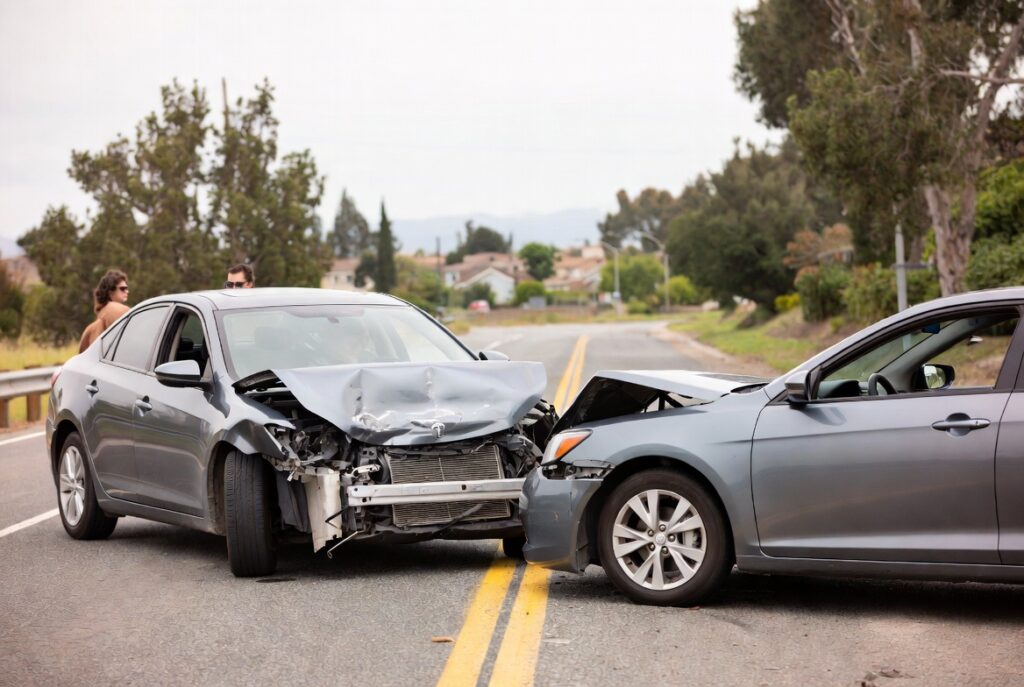
| Car & Truck Accidents | Rear-end collisions, intersection crashes, freeway pileups on the 210 or 15 |
| Motorcycle Accidents | Higher injury severity, and often unfair insurer bias against riders |
| Pedestrian & Bicycle Accidents | Crosswalk and intersection collisions where right-of-way is disputed |
| Slip and Fall / Premises Liability | Wet floors, poor lighting, uneven walkways at retail centers |
| Dog Bites | California holds owners strictly liable, even for a first bite |
| Drunk Driving Accidents | Often support both criminal charges and a separate civil claim |
| Rideshare & E-Scooter Accidents | Uber, Lyft, and e-scooter crashes with layered insurance questions |
| Workplace Injuries | Some fall outside workers’ comp and support a separate claim |
| Product Liability | Defective vehicle parts, equipment, or consumer products |
| Medical Malpractice | Misdiagnosis, surgical errors, medication mistakes |
| Wrongful Death | When someone else’s negligence takes a loved one’s life |
A few of these deserve more than a table row.
Pedestrian and bicycle cases get complicated fast because fault often comes down to who had the right of way, and that’s not always as obvious as it seems. If you were crossing outside a marked crosswalk, for instance, California’s jaywalking laws can directly affect how fault gets split between you and the driver.
Product liability cases are also more common than most people assume they’re not limited to obviously defective car parts. Consumer products, medical devices, and pharmaceuticals can all trigger a claim. Our coverage of the Depo-Provera lawsuit is a good example of how a widely used product can end up at the center of large-scale litigation.
What You Actually Have to Prove: The Four Elements of Negligence
Nearly every personal injury claim in California car accidents, slip and falls, dog bites, all of it comes down to proving negligence. That means establishing four specific things, not just showing that you got hurt:
- Duty of care the other party owed you a legal obligation to act reasonably. Every driver, for instance, has a duty to obey traffic laws.
- Breach they failed to meet that duty. Running a red light is a breach.
- Causation their breach directly caused your accident and injury, not some unrelated factor.
- Damages you suffered real, measurable harm: medical bills, lost income, pain and suffering.
Miss any one of these four, and the claim doesn’t hold up, no matter how badly you were hurt. This is where a lot of self-represented claims quietly fall apart: the injury is real, but the causation link never gets properly documented.
When the Other Driver Has No Insurance: UM/UIM Claims
Given that Rancho Cucamonga saw dozens of hit-and-run collisions in a single recent year, this section matters more than most articles on this topic let on. If the at-fault driver has no insurance, or not enough to cover what you’re owed, you may still be able to recover through your own uninsured/underinsured motorist (UM/UIM) coverage. It’s a strange quirk of how California auto insurance works: you end up filing a claim against your own insurer, and that insurer, not the at-fault driver, becomes the party you’re negotiating with. The process looks different from a standard third-party claim, and insurers scrutinize their own UM/UIM claims just as closely.
California’s Medical Malpractice Damages Cap (MICRA), Explained Properly
If your injury involves a doctor’s or hospital’s negligence, there’s a detail almost every competing page skips entirely: California caps how much you can recover for pain and suffering in medical malpractice cases specifically. This limit comes from a law called MICRA, and it doesn’t apply to car accidents or slip-and-falls, only medical negligence.
As of 2026, the cap sits at $470,000 for injury cases and $650,000 for wrongful death cases. That number isn’t frozen, either under a 2022 reform (AB 35), it’s scheduled to climb every year until it reaches $750,000 for injury cases and $1 million for wrongful death by 2033.
Here’s the detail that gets left out constantly, and it matters: this cap only touches non-economic damages. Your actual medical bills, future care costs, and lost income are never subject to it. A firm that lists “medical malpractice” as a service without explaining this is giving you half the picture, and half a picture is how people end up disappointed by a settlement they didn’t understand going in.
Statute of Limitations: The Deadline You Cannot Afford to Miss
You generally have two years from the date of injury to file a personal injury lawsuit in California. That’s not a rule of thumb, it’s written into California Code of Civil Procedure §335.1, and the California Courts self-help center confirms the same standard for civil injury claims.
If a government entity is involved in a city bus, a pothole on a public street, or a hazard at a government building that deadline shrinks dramatically to six months to file an initial claim, under California Government Code §911.2. This is the single most common way people accidentally lose a valid case: they assume they have two years across the board, and by the time they realize a government agency was involved, the shorter window has already closed.
California also uses pure comparative negligence, which is more favorable to injured people than the rules in many other states. Even if you’re found partly responsible for an accident, you can still recover compensation, it just gets reduced by your percentage of fault. If a jury decides you were 20% responsible for a crash worth $100,000 in damages, you’d still walk away with $80,000, not zero.
How a Personal Injury Claim Actually Moves Forward
- Get medical treatment. This isn’t optional even if you feel okay at first, it’s both a health decision and the foundation of your medical record.
- Investigation begins. Your attorney pulls police reports, photographs the scene, and tracks down camera footage before it disappears.
- A demand letter goes out. This formally lays out liability and damages to the insurer.
- Negotiation happens. Most cases resolve here, sometimes over weeks, sometimes over months.
- Litigation, if it’s necessary. Unresolved cases get filed in San Bernardino County Superior Court.
- Resolution. Through settlement or verdict, compensation gets finalized and paid out.

What Compensation Can You Actually Recover?
Damages in a California personal injury case generally fall into three buckets:
- Economic damages medical bills, lost wages, property damage, future medical costs
- Non-economic damages pain and suffering, emotional distress, loss of enjoyment of life
- Punitive damages rare, reserved for cases involving genuinely reckless or intentional conduct
Here’s a simplified example to make the math concrete. Say your medical bills total $8,000, you missed two weeks of work worth $3,000, and your car needs $2,000 in repairs. That’s $13,000 in economic damages before pain and suffering is even factored in. For a moderate injury with a few months of recovery, non-economic damages often land somewhere close to that economic total; for a serious or permanent injury, they can run several times higher. Insurance companies routinely push back hardest on exactly these two categories: future medical necessity and lost earning capacity which is a big part of why represented claimants tend to walk away with more.
Two quick illustrations (hypothetical, not real cases, just to show the range): a rear-end collision with whiplash, a week of missed work, and $6,000 in medical bills might reasonably settle somewhere in the $15,000–$30,000 range once pain and suffering is factored in. A catastrophic injury, like a traumatic brain injury or spinal cord injury requiring long-term care, can be worth hundreds of thousands of dollars or more, because the future medical and lost-earning-capacity numbers alone often dwarf everything else. The gap between those two scenarios is exactly why “average settlement” figures you see quoted elsewhere are close to meaningless without context.
So, How Much Is Your Claim Actually Worth?
There’s no calculator that spits out an honest number here, and any site that promises one is oversimplifying. What actually moves the needle:
- How severe and how permanent the injury is
- How clear-cut liability is
- The at-fault party’s insurance policy limits (you generally can’t collect more than the policy allows, outside certain exceptions)
- How well-documented your medical treatment is
- Your own percentage of fault, if any
If you want a more detailed sense of how these factors play out in real cases, we’ve broken it down further in the chances of winning a personal injury lawsuit.
Who’s Actually Allowed to File a Wrongful Death Claim?
Grief doesn’t automatically come with legal standing, which surprises a lot of families. Under California law, the people eligible to file a wrongful death claim generally include:
- A surviving spouse or registered domestic partner
- Surviving children
- In some situations, other financial dependents or heirs, such as a parent or stepchild who relied on the deceased
If you’re not sure whether you qualify, that’s a conversation worth having directly with an attorney rather than guessing, since eligibility can hinge on specific family and financial circumstances.
How to Choose the Right Personal Injury Lawyer in Rancho Cucamonga

Not every attorney is the right fit for your case, and picking based on a billboard or a slick ad is how people end up with representation that doesn’t actually serve them. Look for:
- Local experience familiarity with San Bernardino County courts, judges, and how local insurers tend to negotiate
- A real track record ask directly about settlements and verdicts in cases similar to yours, not just a vague “we’ve won millions” claim
- A contingency fee arrangement you shouldn’t pay anything upfront, and the fee (typically 33%–40%) only comes out of what you actually recover
- Communication you can count on you should never be guessing what’s happening with your own case
- A willingness to go to trial insurers negotiate harder with firms that have a track record of showing up in court, not just settling every time
- Language accessibility the Inland Empire is genuinely diverse, and a firm that communicates in your preferred language will serve you better during a stressful process
Most firms offer both in-person and virtual consultations now, so distance from a Rancho Cucamonga office shouldn’t rule anyone out. And if your situation doesn’t fit a typical contingency-fee case a smaller dispute, for instance local legal aid organizations and the county bar association’s lawyer referral service are worth knowing about too; not every valid claim needs a full-scale personal injury firm.
Quick terminology note, since it trips people up: “attorney” and “lawyer” get used interchangeably, but there area few technical differences worth knowing. More importantly, before you sign a retainer with anyone, it’s worth reading through these signs of a bad attorney. A bad fit here costs you more than a slow start ever would.
Questions Worth Asking During a Free Consultation
Most people walk into a consultation without a plan and let the attorney drive the whole conversation. A few questions tend to reveal more than a firm’s marketing ever will:
- Who will actually handle my case day to day you, or a paralegal I’ll rarely talk to?
- Have you tried cases like mine in front of a San Bernardino County jury, or do you settle everything?
- What do you estimate my case is worth, and what’s that estimate based on?
- How often will I get updates, and through what channel?
- What happens to my case if you’re unavailable for an extended period?
A firm that answers these clearly, without dodging, is usually the one worth hiring. A firm that gets vague or defensive is telling you something too.
Frequently Asked Questions
1. Do I need a lawyer for a minor accident in Rancho Cucamonga?
Not always. If your injuries are minor, fault is clear, and the insurance company is cooperating, you may be able to handle a small claim yourself.
2. How much does a personal injury lawyer cost?
Most work on contingency, typically 33%–40% of your final settlement, and you owe nothing unless they win your case.
3. How long does a personal injury case take in California?
Straightforward claims can resolve in a few months. Cases involving disputed liability, serious injuries, or litigation often take a year or longer.
4. What if I was partly at fault for the accident?
You can still recover compensation under California’s comparative negligence rule. Your award is reduced by your percentage of fault, not eliminated.
5. Is there a cap on how much I can recover?
Only in medical malpractice cases, where non-economic damages are capped under MICRA. Most other personal injury claims in California have no such cap.
6. Who can file a wrongful death claim in California?
Generally a surviving spouse or domestic partner, surviving children, and in some cases other financial dependents.
7. What’s the difference between a settlement and a verdict?
A settlement is an agreement reached with the insurer, usually without going to trial. A verdict is a decision handed down by a judge or jury after a case actually goes to court.
8. Do personal injury cases in California usually go to trial?
No, the large majority settle before trial. Litigation is typically a last resort when negotiations stall or liability is seriously disputed.
Bottom Line
Most of what determines whether a Rancho Cucamonga personal injury claim turns out well isn’t dramatic. It’s whether the evidence got locked down early, whether the medical documentation is solid, and whether whoever’s handling your case actually understands the local courts and insurers they’re negotiating with. The legal deadlines are real, the damages caps are real in the cases where they apply, and the difference between a firm that explains all of this clearly and one that doesn’t is usually the difference in what ends up in your pocket. If you’re still working through what happened, a free consultation with a local attorney costs nothing and tells you exactly where you stand.

Dirk Wasserthal is the Founder and Lead Writer of LegalDiaries.com, an independent legal information platform. He specializes in Mass Torts, Women’s Rights, and emerging legal issues, delivering clear, well-researched, and trustworthy content across Criminal Law, Family Law, Personal Injury, and more. Dirk’s mission is simple — make the law understandable for everyone.