




Chances of winning a personal injury lawsuit are far better than the fear-filled stories you might have heard but they don’t happen by accident. If you’re drowning in medical bills, lost wages, and pain after a crash or fall, you’re probably asking, what are the chances of winning a personal injury lawsuit in the real world, not just on TV. The truth is that the overwhelming majority of injury victims walk away with compensation, most without ever seeing the inside of a courtroom. This comprehensive 2026 guide breaks down the real personal injury lawsuit success rate, the critical difference between a personal injury settlement vs trial, and the six proven steps that turn a stressful claim into a life-changing recovery. Whether you’re researching chances of winning personal injury lawsuit for a car accident, a slip and fall, or medical malpractice, you’ll leave here with clear, actionable answers no legal jargon, just straight facts.
- Personal Injury Lawsuit Success Rates in 2026: What the Numbers Really Say
- How Hard Is It to Win a Personal Injury Lawsuit? The Honest Truth
- Settlements vs. Trial: Which Path Will Your Case Take?
- 6 Proven Steps to Maximize Your Chances of Winning a Personal Injury Lawsuit
- What Factors Decide Your Case Value and Success?
- 7 Dangerous Myths About Winning a Personal Injury Lawsuit
- Avoid These Common Mistakes That Kill Your Chances
- State Trends: Where Your Chances Are Strongest
- Real-World Case Scenarios: The Odds in Action
- Frequently Asked Questions About the Chances of Winning a Personal Injury Lawsuit
- Your Next Step: Turn Knowledge into Action
Personal Injury Lawsuit Success Rates in 2026: What the Numbers Really Say
If you’ve ever wondered how hard is it to win a personal injury lawsuit, the short answer is: most people win just not in court. The average personal injury win rate at trial hovers around 50%, but that number doesn’t tell the whole story. When we talk about real-world chances of winning personal injury case 2026, we have to look at settlements.
Here’s what the latest data from the U.S. Department of Justice Bureau of Justice Statistics, state court reports, and insurance industry analyses show:
- 95% to 96% of personal injury cases settle before trial. Only about 4% to 5% ever reach a jury.
- Plaintiffs (the injured person) win roughly 50% to 52% of the cases that do go to trial.
- The overall “success rate” defined as receiving a settlement or a plaintiff trial verdict is above 90% when represented by an attorney.
- Cases handled by lawyers settle for 3 to 3.5 times more on average than those without legal representation, according to the Insurance Research Council.
Key Takeaway: Winning usually means securing a fair check, not a dramatic courtroom scene. The personal injury lawsuit success rate is overwhelmingly determined at the negotiation table.
Success Varies by Case Type
Your specific type of accident massively influences your odds. Here’s a breakdown of trial win rates for common claims, compiled from verdict research and court data, aligned with the latest personal injury statistics 2026:
| Case Type | Approx. Trial Win Rate | Key Evidence That Moves the Needle |
| Car Accidents | 60% – 64% | Police reports, dashcam footage, clear liability rules |
| Motorcycle/Truck Accidents | 55% – 60% | Electronic logging data, FMCSA regulations |
| Slip-and-Fall / Premises | 35% – 40% | Maintenance logs, incident reports, security video |
| Medical Malpractice | 27% – 41% | Expert medical testimony, deviation from standard of care |
| Product Liability | 30% – 40% | Manufacturing defects, recall notices, technical experts |
| Workplace/Construction | 45% – 55% | OSHA reports, safety violations |
Complex product litigation, such as the Depo Provera lawsuit, demonstrates that even challenging cases can settle for significant amounts when the evidence is strong and mass tort strategies are used.
What this means for you: If you have a car accident case with clear negligence, your chances of winning a personal injury lawsuit at trial are better than a coin flip. But even in tougher categories like medical malpractice, a strong settlement is still the most probable outcome which is exactly why the “settlement win” is the real metric to watch.
How Hard Is It to Win a Personal Injury Lawsuit? The Honest Truth
Many victims ask, how hard is it to win a personal injury lawsuit, expecting a simple yes or no. The real answer depends on four things the insurance company will never tell you:
1. Can you prove the other party was negligent?
If liability is crystal clear (a rear-end collision, a store’s unmarked wet floor), your path is dramatically easier. If it’s a he-said-she-said situation, difficulty multiplies.
2. Are your injuries severe and well-documented?
Soft-tissue injuries with minimal medical records are far harder to value and easier for insurers to lowball. Surgeries, fractures, and visible trauma create undeniable proof.
3. Do you have an experienced personal injury lawyer?
You might think you can handle it alone, but the data is brutal: unrepresented claimants typically recover only a fraction of what lawyers obtain. Before you search for representation, it helps to understand the difference between attorney and lawyer both can represent you, but the right personal injury trial attorney brings negotiation power that changes the game. The difference between an attorney and a lawyer can seem subtle, but a seasoned personal injury attorney who knows the local courts can dramatically increase your settlement.
4. Is there enough insurance coverage?
You can have the strongest case in the world, but if the at-fault party carries minimum limits and no assets, even a perfect win yields limited dollars. Your lawyer will investigate all available policies, including your own underinsured motorist coverage.
Bottom line: It’s not impossibly hard to win but it takes preparation, patience, and professional guidance. That’s why the chances of winning personal injury lawsuit claims skyrocket when victims follow a proven system.
Settlements vs. Trial: Which Path Will Your Case Take?
One of the biggest concerns victims have is the personal injury settlement vs trial decision. You hear scary stories about juries, but reality is far more predictable. Understanding settlement versus trial dynamics in tort cases can help you set realistic expectations right from the start.
Personal Injury Settlement vs Trial: 2026 Comparison
| Factor | Settlement | Trial |
| Frequency | 95%–96% of cases | 4%–5% |
| Timeline | 3–12 months (average) | 1–3 years |
| Cost | Lower (contingency fee covers negotiated resolution) | Higher (expert witnesses, court fees, prep) |
| Privacy | Completely confidential | Public record |
| Certainty | Guaranteed compensation | No guarantee — you could get zero |
| Potential Payout | Often lower than a trial award, but certain | Potentially higher, but with significant risk |
| Emotional Stress | Moderate | Extremely high — depositions, cross-examinations |
What percentage of personal injury cases go to trial? Less than 5%. That means statistically, your chances of winning a personal injury lawsuit through settlement are astronomically high. Even among those that file a formal lawsuit, most still settle during the litigation process often right before trial, when insurers finally face the pressure of a courtroom showdown.
Real-world example: A 2023 study of Florida auto negligence cases found that 97% resolved before a verdict. Of the tiny fraction that went to a jury, plaintiffs won 58% of the time, but the real headline is that the settlement mill grinds out wins every single day.

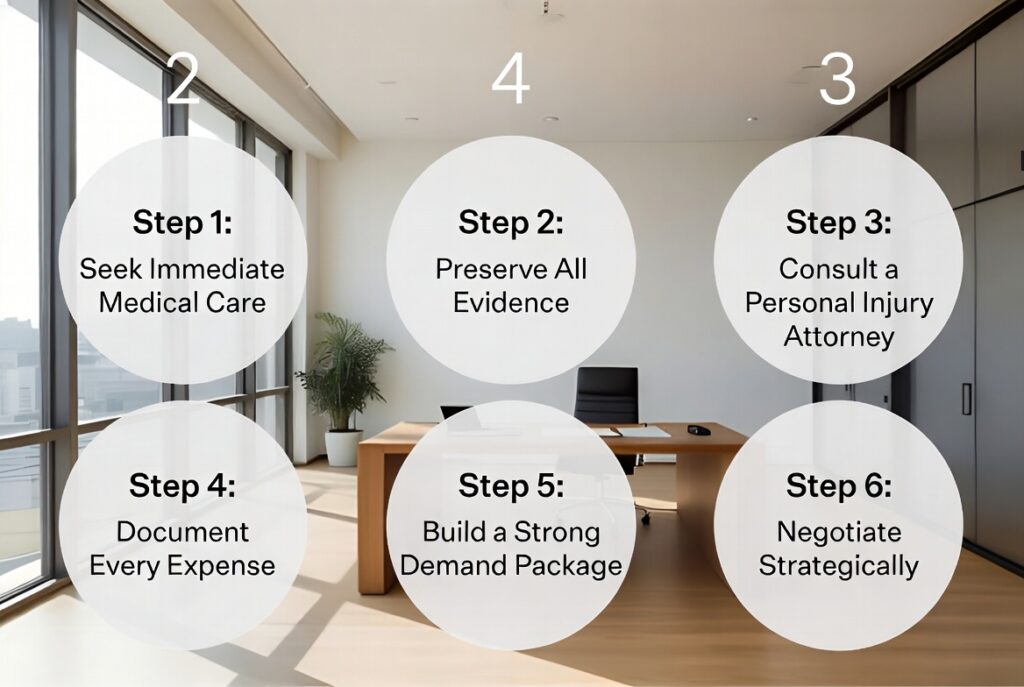
6 Proven Steps to Maximize Your Chances of Winning a Personal Injury Lawsuit
The chances of winning personal injury case 2026 don’t improve by luck; they improve with action. Follow these steps immediately.
Step 1: Seek Immediate Medical Care and Keep Going
Your health comes first, but this also builds the foundation of your claim. Gaps in treatment are the insurance adjuster’s favorite weapon. Follow every referral, attend every PT session, and never skip a follow-up. Medical records are the DNA of your case value.
Step 2: Preserve All Evidence as if Your Case Depends on It (Because It Does)
- Take photos of the accident scene, your injuries, weather conditions, and property damage.
- Save the shoes and clothing you wore during a slip-and-fall.
- Secure dashcam or surveillance footage immediately.
- Keep a pain journal handwritten entries describing daily struggles are powerful.
Bold reminder: The defendant’s insurance team starts building their defense the day of the accident. You should too.
Step 3: Contact a Personal Injury Attorney Before You Say a Word to Insurers
This is where the difference between an attorney and a lawyer matters. A specialized personal injury lawyer knows how to handle insurance adjusters, identify all liable parties, and calculate the true value of your claim, including future medical needs. If you’ve ever thought about what goes into building a strong personal injury practice, you’d realize the expertise required to win these cases is immense it’s not DIY territory. Most offer free consultations and work on contingency, so you risk nothing.
Step 4: Document Every Expense Including the Invisible Ones
Don’t just save bills. Record:
- Miles driven to medical appointments
- Over-the-counter medications and ice packs
- Income lost, including missed overtime and bonuses
- Help you had to hire for household chores
- The “invisible” costs of pain, lost hobbies, and sleepless nights
Step 5: Build a Powerful Demand Package
Your attorney will compile a demand letter that tells your story with medical records, witness statements, economic loss calculations, and a compelling narrative of how the injury changed your life. This is the single most important document before a lawsuit is filed. A weak demand letter kills settlement leverage.
Step 6: Negotiate Aggressively and Be Ready for Trial
The best settlements come when the insurance company knows your lawyer is fully prepared to walk into a courtroom. Most cases settle after a lawsuit is filed, during discovery. Your chances of winning personal injury lawsuit money go up when you show you’re not afraid of the trial setting.
What Factors Decide Your Case Value and Success?
Winning isn’t just about a verdict; it’s about maximizing the number on the check. These variables directly impact your personal injury lawsuit success rate:
- Severity of Injury: Spinal damage, traumatic brain injuries, and permanent disabilities yield higher settlements and verdicts.
- Clarity of Liability: When the other driver was obviously drunk or a store manager knew about a spill for hours, your leverage skyrockets.
- Credibility: Honesty is non-negotiable. Any exaggeration of symptoms caught on surveillance destroys cases.
- Damages Evidence: Economic damages (medical bills, lost wages) are concrete. Non-economic damages (pain and suffering) need a skilled narrative.
- Quality of Legal Representation: The difference between an attorney and a lawyer can seem subtle, but a seasoned personal injury attorney who knows the local courts can dramatically increase your settlement.
- Venue and Jurisdiction: Some counties are notoriously plaintiff-friendly, while others lean conservative. The chances of winning personal injury case 2026 in Cook County, Illinois, look very different from a rural Texas venue.
- Insurance Policy Limits: The at-fault party’s coverage caps the collectible amount. Your underinsured motorist coverage can become a lifesaver.
7 Dangerous Myths About Winning a Personal Injury Lawsuit
Myth 1: “I’ll automatically get a huge payout because I was hurt.”
Reality: You must prove negligence and damages. The legal system compensates based on evidence, not sympathy.
Myth 2: “The insurance company is on my side.”
Reality: Adjusters are trained to minimize payouts. Their job is to protect profits, not your recovery.
Myth 3: “I can just wait and see how my injuries develop before filing.”
Reality: The statute of limitations is strict in most states, it’s one to three years. Always check your state-specific statutes of limitations early because missing the deadline kills your claim entirely.
Myth 4: “Hiring a lawyer means I’ll have to go to court.”
Reality: Hiring a lawyer dramatically increases your settlement chance and typically prevents court, not causes it.
Myth 5: “My case is too small to win.”
Reality: Even minor injuries with clear liability yield settlements. Insurers routinely pay to avoid bad faith claims.
Myth 6: “If I had a pre-existing condition, I can’t recover.”
Reality: You can recover for aggravation of a pre-existing condition. The “eggshell plaintiff” rule protects you.
Myth 7: “All personal injury lawyers are the same.”
Reality: Track records, trial experience, and resources vary wildly. Some attorneys excel at settling; others thrive in court. Know who you’re hiring.
Avoid These Common Mistakes That Kill Your Chances
Even strong claims crumble when victims make these missteps:
- Giving a recorded statement without an attorney. Adjusters will use your words against you.
- Posting on social media. A photo of you smiling at a barbecue can be twisted into “not really injured.”
- Not following doctor’s orders. Non-compliance screams “not serious” to a jury.
- Accepting the first offer. Early offers are almost always lowballs.
- Ignoring future damages. Once you settle, you can’t go back for more if you need another surgery.
- Waiting too long. Every state has firm deadlines; always verify your state-specific statutes of limitations so you don’t forfeit your right to compensation.
Pro tip: Before you sign anything, have a qualified attorney review it. The personal injury lawsuit success rate plummets when victims go it alone.
State Trends: Where Your Chances Are Strongest
Geography matters. Jury verdict research shows noticeable state-by-state differences in the average personal injury win rate and award amounts:
- Plaintiff-friendly venues: New York, California, Illinois, Florida (certain counties) higher trial win rates and larger awards, but also more cases filed, meaning insurers often settle faster to avoid exposure.
- Conservative jurisdictions: Texas, the Dakotas, parts of the South stricter liability standards and lower non-economic damage caps can affect settlement negotiations.
- Damage caps: Many states have limits on pain and suffering, especially in medical malpractice cases, which directly impacts the chances of winning personal injury lawsuit value you can keep.
Understanding local trends helps set realistic expectations. Your lawyer will know exactly how adjusters and juries behave in your county.
Real-World Case Scenarios: The Odds in Action
Scenario 1 — Sarah’s Rear-End Collision:
Sarah was stopped at a red light when she was hit from behind. She suffered a herniated disc requiring epidural injections. Liability was indisputable. Her attorney negotiated a $185,000 settlement within 10 months. Chances of winning: near-certain settlement success without trial.
Scenario 2 — Mark’s Slip-and-Fall at a Grocery Store:
Mark slipped on a grape in the produce aisle. No witnesses, no store incident report, and surveillance footage was overwritten. Proving the store knew about the hazard was nearly impossible. His case settled for a nominal nuisance amount only after a lengthy pre-litigation struggle. How hard is it to win a personal injury lawsuit without solid proof? Very.
Scenario 3 — Maria’s Delayed Injury from a Defective Product:
A faulty space heater caused a fire six months after purchase. Linking the defect to the manufacturer required expensive expert analysis. Despite strong damages, the trial risk was high. The case settled for a substantial sum during discovery, once the expert report landed. Personal injury settlement vs trial favored the sure thing.
Frequently Asked Questions About the Chances of Winning a Personal Injury Lawsuit
- What are the chances of winning a personal injury lawsuit?
Overall, your chances of receiving compensation are above 90% when you have an attorney. Most cases settle; only 4–5% go to trial, where plaintiffs win about half the time. The exact chances of winning a personal injury lawsuit depend heavily on evidence, injury severity, and legal representation. - How hard is it to win a personal injury lawsuit in court?
It’s challenging, requiring strong proof of negligence, credible expert testimony, and a skilled trial lawyer. That’s why nearly all plaintiffs opt for a settlement it’s the safer, faster path to compensation. If your question is how hard is it to win a personal injury lawsuit through settlement, it’s far easier with proper legal guidance. - What is the average personal injury win rate at trial?
The average personal injury win rate for plaintiffs nationwide hovers around 50–52%, but this varies dramatically by case type. Car accident plaintiffs win closer to 60%+, while medical malpractice cases see lower success rates. - What percentage of personal injury cases go to trial?
Only about 3% to 5% of filed personal injury cases reach a verdict. The vast majority resolve through settlements, mediations, or voluntary dismissals. - What’s the difference between a lawyer and an attorney for my case?
While often used interchangeably, understanding the difference between an attorney and a lawyer can help you choose the right advocate. An attorney has passed the bar and can represent you in court; a personal injury trial attorney specifically has litigation experience, which can pressure insurers to offer higher settlements. - Do I need a lawyer to win a personal injury case?
Technically no, but statistically yes if you want maximum compensation. Pro se litigants consistently recover far less than represented plaintiffs. The complexities of procedural rules, evidence, and negotiation make DIY representation extremely risky. - How long does it take to win a personal injury lawsuit?
Settlements can occur in a few months; cases that enter litigation typically take 1–2 years. Complex trials can stretch to 3 years. The wait pays off when the settlement fully covers future care. - Can I still win if I’m partially at fault?
Yes, depending on your state’s laws. In pure comparative fault states, you can recover even if you’re 99% at fault, though your award is reduced by your percentage of fault. In modified comparative fault states, you must be less than 50% or 51% at fault to recover. This directly affects your chances of winning personal injury lawsuit amounts. - What is the biggest factor that determines my chances of winning?
Evidence quality. Photographs, medical records, witness statements, and prompt legal action form an unshakable foundation. The personal injury lawsuit success rate rises and falls on documentation. - How much do personal injury lawyers cost?
Almost all work on a contingency fee basis they only get paid if you win, typically receiving 33–40% of the settlement or verdict. There are no upfront fees. - What if the person who hurt me has no insurance?
Your lawyer will explore all avenues: your uninsured/underinsured motorist coverage, other potentially liable parties, umbrella policies, and even the possibility of a personal judgment (though collection can be difficult). - Should I accept the insurance company’s first offer?
Almost never. Initial offers are typically 20–40% of a claim’s true value. Once you accept, the case is over forever. A lawyer can negotiate multiples of that first number. - Can I sue for emotional distress?
Yes, as part of pain and suffering — non-economic damages. Severe diagnoses like PTSD, anxiety, and depression are compensable when linked to the accident. - What is the statute of limitations for personal injury lawsuits?
It varies by state: typically 1–3 years for negligence, but shorter for claims against government entities. Always verify your state-specific statutes of limitations early; missing the deadline destroys your case. - Is a class action or mass tort relevant to my injury?
If a defective drug or product injured many people, you might be part of a larger litigation. For instance, the Depo Provera lawsuit shows how mass torts handle widespread harm. A personal injury lawyer can tell you if individual or group litigation is best. - Will my case go to trial if I hire a lawyer?
No, over 95% settle. A lawyer’s willingness and ability to go to trial actually increases the settlement offer the insurance company wants to avoid a courtroom. - How do I check a lawyer’s track record?
Ask about their verdict and settlement history in cases similar to yours. Look for board certifications in civil trial law, client reviews, and whether they have the dedication shown by those who understand what goes into building a strong personal injury practice meaning they’ve built a career around winning, not just settling cheap.
Your Next Step: Turn Knowledge into Action
Chances of winning a personal injury lawsuit are never 100% guaranteed and any lawyer who promises otherwise is lying. But the system, for all its complexity, is built to give injured people a path to justice. When you get the right medical care, gather unshakeable evidence, and bring in a battle-tested personal injury attorney, your odds of walking away with a life-stabilizing check are overwhelmingly strong.
Don’t let fear of court or intimidating insurance adjusters stop you. The data is clear: the vast majority of people in your position recover compensation, and the steps you take today directly control the outcome. Your first free consultation with a reputable personal injury law firm costs nothing but waiting can cost you everything.
Disclaimer: This article provides general legal information and is not a substitute for professional legal advice. Laws vary by state and individual circumstances. Always consult a qualified personal injury attorney regarding your specific case. Past case results do not guarantee future outcomes.

Dirk Wasserthal is the Founder and Lead Writer of LegalDiaries.com, an independent legal information platform. He specializes in Mass Torts, Women’s Rights, and emerging legal issues, delivering clear, well-researched, and trustworthy content across Criminal Law, Family Law, Personal Injury, and more. Dirk’s mission is simple — make the law understandable for everyone.