



Tennessee Landlord Tenant Communication Law is transforming how landlords and tenants interact in 2026. Officially titled House Bill 1814 or the Landlord Transparency Act, this legislation took effect on January 1, 2025, and applies fully to qualifying leases this year.
- What Is HB 1814: The Landlord Transparency Act?
- Which Tennessee Counties Does the New Law Apply To?
- Key Requirements Under the New Tennessee Landlord Tenant Communication Law
- Detailed Breakdown: What Must Be Disclosed?
- Why Was HB 1814 Passed? Background and Objectives
- How Landlords Can Comply with HB 1814 in 2026: Step-by-Step Guide
- Sample Landlord Disclosure Form & Lease Addendum
- Penalties and Consequences of Non-Compliance
- How the Law Affects Tenants: Rights and Practical Advice
- Best Practices for Property Managers and Out-of-State Landlords
- Common Questions About the New Tennessee Landlord Tenant Communication Law
- Broader Context: How HB 1814 Fits Into Tennessee Landlord-Tenant Laws 2026
Landlords and tenants in major Tennessee cities are adapting to stricter rules aimed at preventing communication breakdowns that cause delayed repairs, escalated disputes, and unnecessary court cases. Whether you manage single-family homes, apartments in Nashville, Memphis, Knoxville, or Chattanooga, mastering these requirements is crucial for compliance, risk reduction, and fostering trust.
What Is HB 1814: The Landlord Transparency Act?
HB 1814, passed in the 2024 legislative session and enacted as Public Chapter 907, amends Tennessee Code Annotated § 66-28-302. It expands prior basic disclosure obligations (mainly name and address) into comprehensive, modern contact requirements.
Landlords or authorized agents must now provide detailed written information at or before tenancy begins, including business-hour and 24-hour emergency contacts, emails, and options for online portals. This applies primarily in counties governed by the Uniform Residential Landlord and Tenant Act (URLTA).
The core objective is clear: enable tenants to quickly reach the right parties for maintenance, emergencies, or notices, while holding absentee and out-of-state landlords accountable. This New Tennessee Landlord Tenant Communication Law promotes faster resolutions and better housing quality.
Key Quote: “The goal is to ensure tenants and government agencies can always identify and contact the landlord or authorized agent in a timely manner.” Insights from property management analyses.
Which Tennessee Counties Does the New Law Apply To?
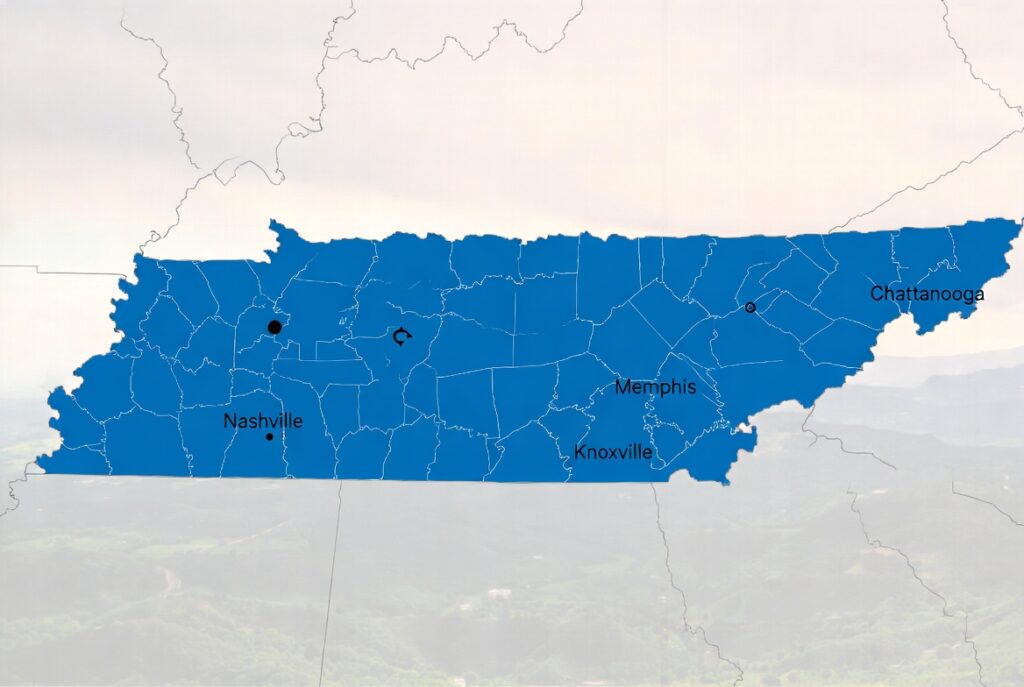
The new Tennessee landlord tenant communication law primarily applies in counties with populations over 75,000 that fall under URLTA. These include major metro areas such as:
- Shelby County (Memphis)
- Davidson County (Nashville)
- Knox County (Knoxville)
- Hamilton County (Chattanooga)
- Rutherford, Williamson, Montgomery, Sumner, Wilson, and others like Anderson, Blount, Bradley, Madison, Maury, Sevier, Sullivan, Washington
Smaller rural counties with populations under 75,000 generally follow general Tennessee property law rather than full URLTA provisions, though providing clear contact information remains a smart practice everywhere to prevent conflicts.
Pro Tip: If you own properties in both URLTA and non-URLTA counties, adopting one consistent disclosure process simplifies your operations and reduces risk.
Key Requirements Under the New Tennessee Landlord Tenant Communication Law
Under the updated Tennessee Code § 66-28-302, landlords or their authorized agents must disclose the following in writing before the lease starts:
- Full name and physical mailing address of the managing agent or property management company
- Full name and physical mailing address of the owner or person authorized to accept service of process and notices
- Business hours telephone number
- 24-hour emergency telephone number (if different)
- Office email address
- Dedicated maintenance contact (phone, email, or access to an online tenant portal)
All information must remain current throughout the tenancy. Changes require prompt written notification to tenants. Verbal agreements, casual texts, or incomplete details do not suffice documentation is mandatory.
Detailed Breakdown: What Must Be Disclosed?
| Contact Type | Required Details | Notes |
| Managing Agent | Name, physical address, business phone, 24-hr emergency, email | Must be accurate and current |
| Owner / Authorized Agent for Notices | Name, physical address, business phone, 24-hr emergency, email | Critical for service of process |
| Maintenance Services | Phone/email OR online tenant portal | Portals strongly recommended for efficiency |
Physical addresses are preferred over P.O. boxes to enhance accountability.
Why Was HB 1814 Passed? Background and Objectives
Tenant advocates and code enforcement officials supported this change after persistent complaints about unresponsive landlords, particularly out-of-state investors hard to reach during crises like heating failures or water leaks.
Main objectives of the Landlord Transparency Act:
- Speed up maintenance requests and repairs, Reducing habitability issues.
- Strengthen enforcement of rental standards.
- Reduce disputes and evictions through proactive communication.
- Improve overall quality of rental housing in Tennessee.
This law reflects broader trends toward transparency in the rental sector amid growing urban populations and investor-owned properties.
How Landlords Can Comply with HB 1814 in 2026: Step-by-Step Guide
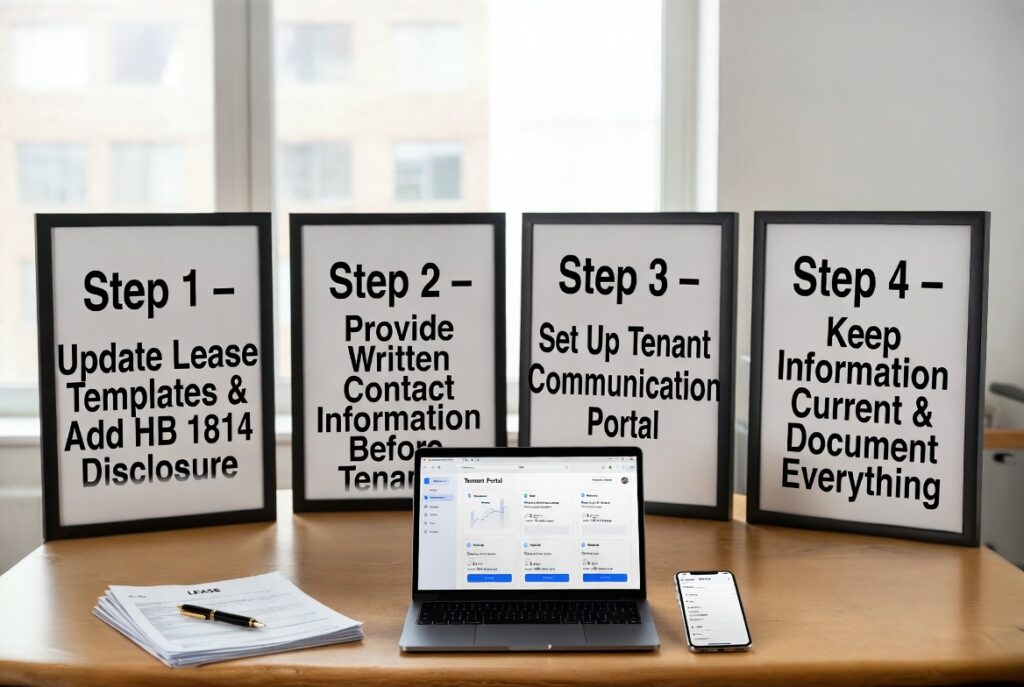
Following these steps will keep you fully compliant:
- Update your lease templates — Add a dedicated HB 1814 disclosure addendum.
- Provide the written disclosure before the tenant signs the lease or pays any deposit.
- Use multiple channels — Combine email, phone, and a reliable tenant portal (such as AppFolio, TenantCloud, or Buildium).
- Document delivery — Get tenant signature or electronic acknowledgment.
- Review contacts regularly — Update tenants promptly in writing if information changes.
- For multi-family properties — Consider posting summary contacts in common areas as a best practice.
Professional property management companies often automate tracking and updates, saving time and ensuring consistency.
Sample Landlord Disclosure Form & Lease Addendum
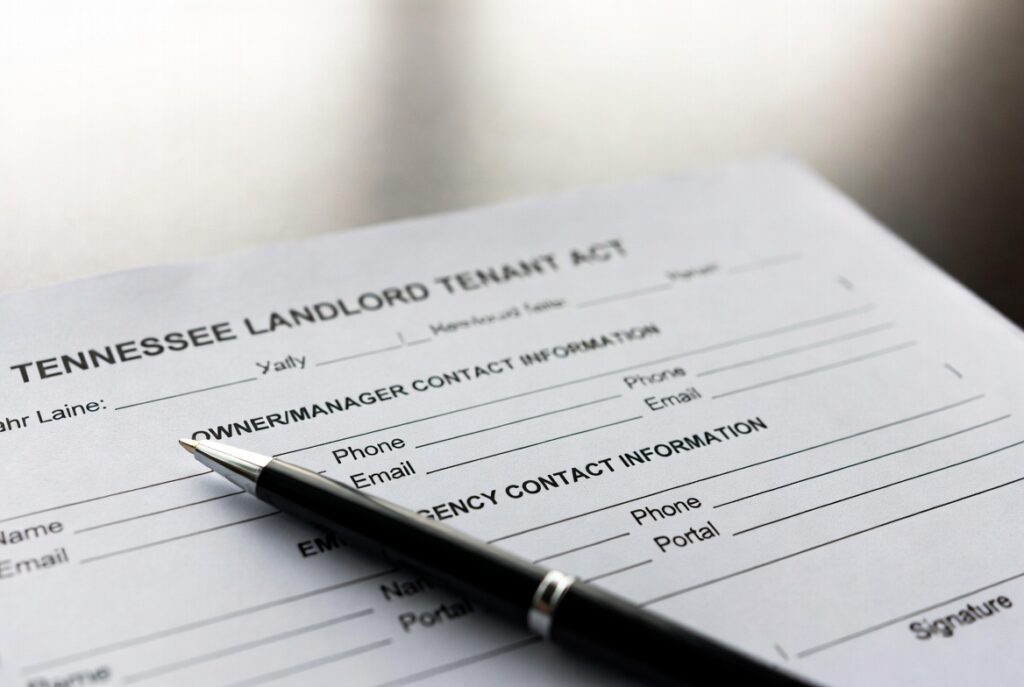
Here is a professional, ready-to-adapt template:
Tennessee Landlord Contact Disclosure – HB 1814 Compliance
Property Address: _______________________________
Managing Agent / Property Manager:
Name: _______________________________
Physical Address: _______________________________
Business Phone: ________________ | 24-Hr Emergency: ________________
Email: _______________________________
Owner or Authorized Agent for Notices:
Name: _______________________________
Physical Address: _______________________________
Business Phone: ________________ | 24-Hr Emergency: ________________
Email: _______________________________
Maintenance Requests:
Phone/Email: _______________________________
OR Tenant Portal: _______________________________
Tenant Acknowledgment: I received this disclosure prior to signing the lease.
Signature: _______________________ Date: __________
Customize this form and have a qualified Tennessee real estate attorney review it for your operations.
Penalties and Consequences of Non-Compliance
Non-compliance carries tangible risks. If landlords fail to provide required information:
- Tenants may request it in writing.
- If not supplied within a reasonable time (courts often reference 10 days), tenants can seek court orders.
- The court shall order compliance and may award the tenant reasonable costs and attorney’s fees.
- Non-compliance can weaken or delay eviction proceedings and expose landlords to additional damages or complications.
Repeated issues may lead to civil fines, code enforcement actions, or reputational harm in competitive markets. Out-of-state owners should appoint a Tennessee-based authorized agent.
Important: These rules do not alter core habitability obligations but facilitate faster enforcement.
How the Law Affects Tenants: Rights and Practical Advice
Tenants now have stronger rights to clear, written contact information from day one.
Best practices for renters:
- Retain a signed copy of the disclosure.
- Submit non-emergency repairs in writing (email or portal) with photos and dates.
- Use the 24-hour emergency line only for true urgencies (e.g., no heat in winter, major leaks).
- Document all communications for protection if disputes arise.
Strong records empower tenants and encourage timely landlord responses.
Best Practices for Property Managers and Out-of-State Landlords
Out-of-state owners should strongly consider appointing a Tennessee-based authorized agent or hiring a reputable local property management company.
Additional recommendations:
- Integrate disclosures into property management software for automatic tracking and updates.
- Use tenant portals that timestamp all communications for court-ready records.
- Train staff on distinguishing business-hour versus emergency responses.
- Conduct annual compliance reviews every January.
Case Example: In scenarios involving unresponsive absentee landlords, poor communication often led to prolonged repair delays and escalated code violations. Post-HB 1814, properties with robust portals report fewer disputes and higher tenant satisfaction.
Common Questions About the New Tennessee Landlord Tenant Communication Law
Does HB 1814 apply to single-family homes?
Yes, in URLTA counties for new, amended, or renewed leases after January 1, 2025.
Can a tenant portal replace all contacts?
No, it satisfies the maintenance portion, but full owner/manager details must still be provided in writing.
What if contacts change mid-lease?
Notify tenants promptly in writing and maintain records.
How does this interact with repair obligations?
It complements habitability rules, typically leading to quicker resolutions.
Additional FAQs:
- Applies to most residential rentals in covered counties.
- Electronic delivery and acknowledgments are generally acceptable if documented.
- Consult an attorney for nuances specific to your portfolio.
Broader Context: How HB 1814 Fits Into Tennessee Landlord-Tenant Laws 2026
The Landlord Transparency Act enhances URLTA provisions on habitability, security deposits, landlord entry (usually 24 hours’ notice), and evictions. Clear communication prevents many conflicts.
Official Resources:
Key Takeaways
- Provide detailed written disclosures before tenancy begins — this is non-negotiable.
- Keep all contact information current and notify tenants of changes promptly.
- Document everything — delivery, acknowledgments, and updates.
- Adopt tenant portals for efficient, trackable communication.
- Clear communication benefits everyone — it’s the law and smart business.
New Tennessee Landlord Tenant Communication Law 2026 emphasizes transparency as a foundation for healthy rental relationships. Landlords who embrace it gain smoother operations and stronger tenant retention, while tenants enjoy faster responses and greater peace of mind.
This article is for informational purposes only and is not legal advice. Laws evolve, and specifics can vary. Always verify with official Tennessee sources or consult a qualified real estate attorney for your situation.
Go to legal diaries for more quality, informative content.

Dirk Wasserthal is the Founder and Lead Writer of LegalDiaries.com, an independent legal information platform. He specializes in Mass Torts, Women’s Rights, and emerging legal issues, delivering clear, well-researched, and trustworthy content across Criminal Law, Family Law, Personal Injury, and more. Dirk’s mission is simple — make the law understandable for everyone.