




Warren Sapp lawsuit headlines have been showing up everywhere since early 2025, and most of them leave out the one detail that actually matters most. Sapp has not filed a lawsuit yet. He filed a notice of claim, a required first step in Florida before you can sue a government agency, asking for $20 million after a 2024 arrest that a state attorney later called unlawful.
- 1. What Is the Warren Sapp Lawsuit About
- 2. What Happened on February 24, 2024
- 3. Is Warren Sapp Suing the Sheriff’s Office, or Something Else
- 4. Why Were the Criminal Charges Against Sapp Dropped
- 5. What Civil Rights Does Sapp Say Were Violated
- 6. How Much Money Is Warren Sapp Asking For
- 7. What Did the Sheriff’s Office’s Own Investigation Find
- 8. Timeline: Every Major Update in the Warren Sapp Case
- 9. What If This Happened to You
- 10. Can You Actually Sue a Sheriff’s Department in Florida
- 11. Myth vs Fact
- 12. Is This the Same as Warren Sapp’s 2026 Case in Hollywood, Florida
- 13. What About Warren Sapp’s Other Past Legal Cases
- 14. What Happens Next
- 15. Frequently Asked Questions
This case touches on real questions a lot of people worry about: what happens if police arrest you and the charges get dropped, whether you can actually sue a sheriff’s office, and how much money a claim like this is realistically worth. We will walk through all of it here, in plain terms, using the actual documents and reporting behind the story.
1. What Is the Warren Sapp Lawsuit About
Warren Sapp, the NFL Hall of Famer, filed a $20 million notice of claim against the Okeechobee County Sheriff’s Office in Florida after he was arrested in February 2024 during a charity convoy event. The criminal charge against him was later dropped, and Sapp says deputies violated his civil rights during the arrest.
The short version is simple. A traffic stop at a gas station turned into a crowd situation, deputies arrested Sapp for interfering, prosecutors reviewed the case and refused to pursue it, and Sapp’s attorney is now pursuing damages from the county. What makes it complicated is everything in between, so let’s go through it step by step.
2. What Happened on February 24, 2024
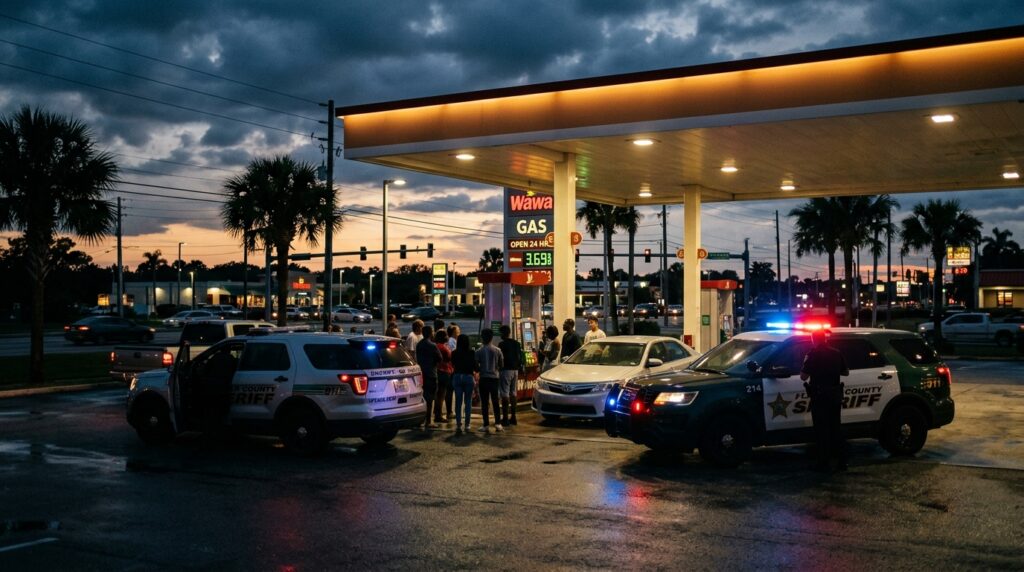
Sapp was part of a charity convoy that had been driving from Miami through Florida for twelve years to raise money for local causes. On this particular day, the Okeechobee County Sheriff’s Office got calls about high-end vehicles speeding, some reportedly going over 100 miles per hour.
Deputies pulled over one driver, a man from New Jersey, at a gas station for going about 65 miles per hour in a 35 zone. That part of the story is not in dispute. What happened next is where the case gets its teeth.
According to body camera footage obtained through public records requests, the deputy’s ticket printer would not work. A crowd started to gather around the gas station, and Sapp, who was part of the convoy, walked over and began talking with the deputy. The deputy told Sapp he was being detained for interfering with an investigation after Sapp did not give his name.
The crowd began chanting for deputies to let him go. According to the sheriff’s office’s own investigation notes, the officer said Sapp tensed up and planted his feet when they tried to place him in the patrol car. Sapp was arrested and taken to the Okeechobee County Jail.
WPTV News obtained the actual notice of claim document along with the body camera video through a public records request, and their reporting on the case includes a transcript of Sapp talking to a supervisor at the jail. In it, Sapp asks why nobody spoke with him at the scene before he was already in the back of a patrol car. The supervisor’s answer, according to the footage, was that they needed to get him out of the situation as quickly as possible.
3. Is Warren Sapp Suing the Sheriff’s Office, or Something Else
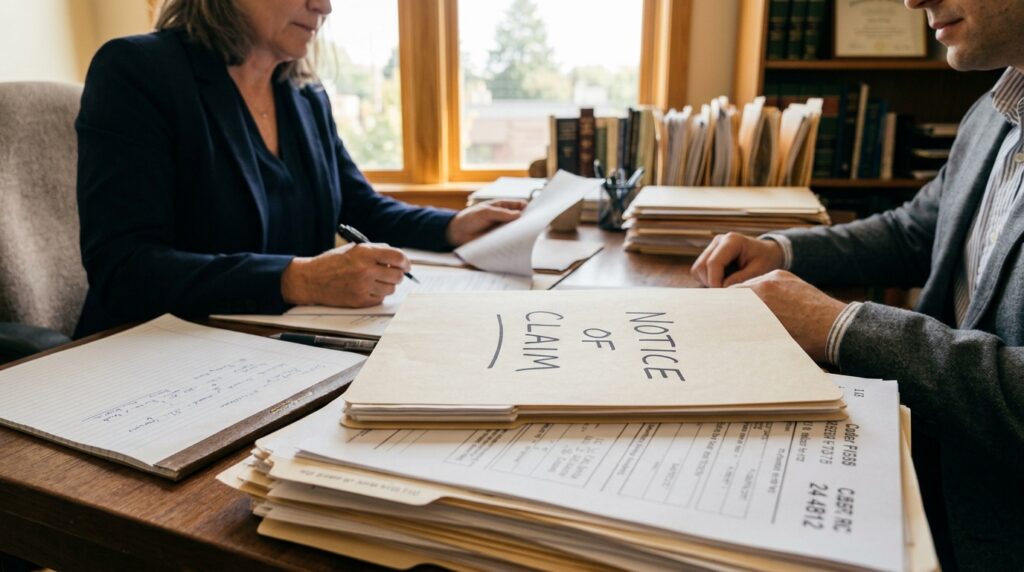
Not yet, at least not in the way most people mean when they hear the word lawsuit. Sapp’s attorney filed a notice of claim in December 2024, which Florida law requires before anyone can sue a government agency. A formal lawsuit can only be filed after a required waiting period.
This distinction gets lost in a lot of headlines, and it matters. A notice of claim is basically a formal letter that says, here is what happened, here is what we believe you owe, and here is your chance to resolve this before we go to court. Government agencies get this extra step that private citizens and companies do not.
Why Florida Law Requires This Step First
Florida law gives government agencies a chance to investigate and potentially settle a claim before facing a lawsuit. This protects taxpayers from being blindsided by sudden litigation and gives the agency room to make things right on its own.
What Happens After the Waiting Period Ends
Once the waiting period passes, which is typically six months from when the notice was filed, the claimant is free to file the actual lawsuit in state or federal court if no settlement has been reached. As of the most recent public reporting, Sapp’s case remains in this pre-litigation stage, and no formal lawsuit has been confirmed as filed.
4. Why Were the Criminal Charges Against Sapp Dropped
Assistant State Attorney Ashley Albright reviewed the arrest and determined the law would not support a conviction beyond a reasonable doubt. She noted that while Sapp’s actions were frustrating to deputies, they did not meet the legal bar for the obstruction charge he was arrested on.
Sapp was arrested for obstruction without violence, sometimes called resisting an officer without violence. This is a common charge in Florida, and it trips up a lot of people who do not realize how narrow it actually is.
What Obstruction Without Violence Actually Means Under Florida Law
Florida’s standard jury instructions, which are the actual guidance judges give juries when explaining this charge, lay out three things the state has to prove. According to the official jury instruction for this offense, the state must show that a person resisted, obstructed, or opposed an officer, that the officer was carrying out a lawful duty at the time, and that the person knew the officer was an officer.
Here is the part people miss. Being annoying, arguing with police, or asking questions is not automatically obstruction. The officer has to actually be engaged in a lawful duty, and there has to be real interference, not just disagreement.
Imagine you are standing near a traffic stop that has nothing to do with you, you ask an officer a question, and the officer tells you to leave. If you keep talking but do not physically block anything or ignore a lawful order tied to an actual duty, you may not have committed a crime at all, even if you get arrested. This is close to what the state attorney found in Sapp’s case.
If you are ever charged with obstruction and believe the arrest did not meet these legal standards, the difference between a conviction and a dismissal often comes down to how your attorney frames the facts at exactly this stage. Reading up on what separates a strong defense attorney from a weak one is worth doing before you ever need one, not after.
5. What Civil Rights Does Sapp Say Were Violated
Sapp’s claim alleges violations of his Fourth Amendment right against unreasonable searches and seizures and his First Amendment right to speak and observe police activity in public. He also alleges false arrest, false imprisonment, and emotional distress.
The Right to Film and Speak to Police
Courts have generally recognized that people have a right to observe, comment on, and even film police activity in public spaces, as long as they do not physically interfere with an officer’s duties. Sapp has publicly said he was exercising free speech and pointing out what he saw as unfair treatment of another driver, not obstructing anyone.
The Right Against Unlawful Detention
The Fourth Amendment requires police to have reasonable suspicion before detaining someone and probable cause before making an arrest. Sapp’s claim argues that simply being present at the scene and asking questions did not meet that threshold.
6. How Much Money Is Warren Sapp Asking For
The notice of claim seeks $20 million total, broken down into roughly $5.75 million for future medical expenses, $5 million for lost wages, and $9 million in aggregate damages covering emotional distress, reputational harm, and punitive damages.
The Damage Breakdown
Sapp’s team has said the emotional toll of the arrest has included trouble sleeping and disruption to his family life, including his son’s birthday. His attorney has also said Sapp intends to donate part of any recovery to help other people who have experienced wrongful arrests but do not have the resources to fight back.
Why the County’s $3,500 Offer Was Rejected
The Florida Sheriff’s Risk Management Fund, which handles liability insurance for the sheriff’s office, offered Sapp $3,500 as an initial settlement. His attorney called the amount inadequate given the scope of the alleged civil rights violations, and it was rejected.
7. What Did the Sheriff’s Office’s Own Investigation Find
An internal after-action report obtained through public records requests found that deputies made several procedural errors, including equipment failures, a missed weapons pat-down, and unclear verbal commands during the arrest.
Equipment Failures and Missed Procedures
The report noted that the ticket printer and laptop issues that started the whole confrontation should have been handled by writing a citation by hand or issuing a verbal warning instead of letting the situation escalate. It also noted that deputies never conducted a standard pat-down for weapons after detaining Sapp, which the review said could have located identification and possibly changed the outcome entirely.
What the After-Action Report Admitted
A supervising lieutenant wrote that several things could have been handled differently. That single admission has become one of the more significant details in the case, since an agency acknowledging its own mistakes tends to strengthen a claimant’s position in negotiations.
8. Timeline: Every Major Update in the Warren Sapp Case
| Date | What Happened |
|---|---|
| February 24, 2024 | Sapp arrested at Okeechobee gas station during charity convoy, charged with obstruction without violence |
| Early 2024 | State Attorney’s Office dismisses the charge, citing insufficient legal grounds |
| December 2024 | Sapp’s attorney files a $20 million notice of claim against Okeechobee County |
| February 2025 | Sheriff’s office after-action report obtained, reveals procedural errors |
| February 2025 | Florida Sheriff’s Risk Management Fund offers $3,500 settlement, rejected |
| April 2025 | Sapp appears at county commission meeting, calls officials “the definition of abuse of power” |
| Mid to late 2025 | Six-month waiting period passes with no confirmed formal lawsuit filed |
| Spring 2026 | Separate matter arises in Hollywood, Florida, unrelated to the Okeechobee claim |
9. What If This Happened to You
Most people reading this are not NFL Hall of Famers with resources to fight a wrongful arrest for years. So let’s talk about what this looks like for an ordinary person.
Imagine you are pulled over for a broken taillight. The officer runs your license, everything is fine, but you ask a question about why you were stopped and the officer feels disrespected. You get arrested for obstruction, spend a night in jail, and the charge gets dropped a week later. You lost work, you had to pay a bail bondsman, and you are angry.
This exact pattern happens more often than people realize, and most people do not know they have options afterward. A dropped charge does not automatically mean you have a winning civil claim, but it is often the first sign that one might exist.
Common Mistakes People Make After a Wrongful Arrest
A lot of people wait too long to talk to an attorney, assuming the dropped charge is the end of the story. Others try to handle a notice of claim themselves without realizing the strict deadlines and formatting requirements government claims involve, and a missed deadline can end a valid claim before it starts.
Understanding your realistic odds matters here too. Not every wrongful arrest becomes a winning case, and knowing what generally affects the outcome of a personal injury or civil claim can help you set expectations before you invest time and money pursuing one.
10. Can You Actually Sue a Sheriff’s Department in Florida
Yes, but with limits. Florida law waives sovereign immunity for tort claims against government agencies, but caps recovery at $200,000 per person and $300,000 per incident unless the state legislature approves a special claims bill for a higher amount.
Sovereign Immunity and Why Damage Caps Matter
Sovereign immunity is the legal principle that normally protects the government from being sued. Florida Statute 768.28 waives that protection in a limited way for negligence and certain civil rights claims, but the payout caps mean that even a case worth far more on paper can be legally limited unless lawmakers step in.
These caps have been a point of ongoing debate. As of 2026, Florida lawmakers have been considering a bill that would raise the caps to $500,000 per person and $1 million per incident, though as of this writing that increase has not been signed into law, and the current $200,000 and $300,000 limits remain in effect.
What a Claims Bill Is and Why Sapp Would Need One
If Sapp were to win his full $20 million demand, Florida’s damage caps mean the county would only be required to pay $200,000 without further action. Anything above that would require the Florida Legislature to pass a special claims bill, a process that can take years and is not guaranteed to succeed even after a court victory.
Picking the right attorney matters enormously in a case like this, since navigating claims bills, sovereign immunity, and federal civil rights claims at the same time takes real experience. If you are ever choosing legal representation for something this complex, it helps to know the warning signs of an attorney who is not equipped to handle it.
11. Myth vs Fact
Myth 1: Warren Sapp has already won $20 million from the sheriff’s office.
Fact: No settlement or judgment has been publicly confirmed. Sapp filed a notice of claim seeking that amount, which is a demand, not a court award, and Florida’s damage caps would likely limit any actual recovery well below $20 million unless a special claims bill is passed.
Myth 2: This is the same case as his 2026 arrest in Hollywood, Florida.
Fact: These are two completely separate legal matters involving different agencies, different charges, and different years. The Okeechobee case involves a 2024 arrest and a civil claim, while the Hollywood matter involves a separate 2026 misdemeanor charge tied to confrontations at city hall.
Myth 3: Refusing to give your name to police is automatically a crime.
Fact: Under Terry v. Ohio, officers can only require identification when they have reasonable suspicion of criminal activity tied to a specific investigation. Simply being present near police activity does not, by itself, create that suspicion.
Myth 4: The case has already gone to trial.
Fact: As of the most recent public reporting, the matter remains in the pre-litigation notice of claim stage, and no trial date has been reported.
12. Is This the Same as Warren Sapp’s 2026 Case in Hollywood, Florida
No. In spring 2026, Sapp was separately charged with a misdemeanor for interfering with city employees during confrontations at Hollywood, Florida city hall and police headquarters. This case is unrelated to the Okeechobee civil rights claim and involves entirely different facts, agencies, and legal issues.
According to reporting from Local10 News, Sapp visited the Hollywood Police Department headquarters in March 2026 and made what officials described as an unusual number of requests, which they say prevented an employee from doing her job. A second incident followed in April.
Additional coverage confirms that a judge placed Sapp under pretrial supervision in May 2026, requiring him to check in with pretrial services twice a week and stay away from the Hollywood Police Department’s records division. A hearing was scheduled for June 2026 to determine next steps.
This is a good moment for a real-world lesson. Search engines and news aggregators often blur separate legal stories about the same public figure together, and it is easy to walk away thinking someone is facing one giant ongoing case when they are actually facing two or more distinct ones with nothing legally connecting them.
13. What About Warren Sapp’s Other Past Legal Cases
Sapp has a long public record that predates both the Okeechobee and Hollywood matters, and it still shows up in search results tied to his name.
The NFL Network Sexual Harassment Lawsuit
In 2016, Sapp was named in a lawsuit filed by a former NFL Network employee alleging inappropriate workplace conduct by several analysts, including Sapp. He publicly responded to some of the specific claims at the time.
Sapp’s 2012 Bankruptcy Filing
Sapp filed for bankruptcy in 2012, reportedly owing more than $6.7 million to creditors along with back child support and alimony obligations, despite having earned millions during his playing career.
Earlier Battery Arrests
Sapp was arrested on a domestic battery charge in 2010, which was later dropped, and again in 2015 following an incident in Las Vegas, which resulted in a no contest plea to a misdemeanor charge. These cases are unrelated to both the Okeechobee civil rights claim and the 2026 Hollywood matter.
14. What Happens Next
The Okeechobee case can proceed to a formal lawsuit now that the waiting period has passed, though as of the most recent reporting no confirmed lawsuit filing has been publicly reported. Most cases like this eventually settle rather than going to a full trial.
Possible Outcomes: Settlement, Trial, or Dismissal
Given the dropped charges and the sheriff’s office’s own admission of procedural errors, a settlement above the initial $3,500 offer seems likely at some point, though the final number is impossible to predict. If no settlement is reached, the case could proceed to trial in state or federal court, a process that typically takes one to three years for civil rights claims of this kind.
15. Frequently Asked Questions
1. Is Warren Sapp suing the Okeechobee County Sheriff’s Office?
Ans: Not yet in the formal sense. He filed a notice of claim, which is a required legal step in Florida before someone can file an actual lawsuit against a government agency.
2. How much is Warren Sapp suing for?
Ans: His notice of claim seeks $20 million, covering future medical expenses, lost wages, emotional distress, and punitive damages tied to the 2024 arrest.
3. Why was Warren Sapp arrested in Florida?
Ans: Deputies arrested him for obstruction without violence after he approached a traffic stop involving another driver and did not identify himself when asked.
4. What is obstruction without violence in Florida?
Ans: It is a charge under Florida Statute 843.02 for resisting, obstructing, or opposing an officer during a lawful duty, without using or threatening violence. It requires real interference, not just disagreement or annoyance.
5. Did Warren Sapp win his lawsuit?
Ans: No lawsuit has been confirmed as filed yet, so there is no verdict or settlement to report. The case remains in the notice of claim stage as of the most recent public reporting.
6. What is a notice of claim in Florida?
Ans: It is a formal written notice that Florida law requires before suing a government agency, giving that agency a chance to investigate and potentially resolve the matter first.
7. Has the Warren Sapp case settled?
Ans: A $3,500 settlement offer was made and rejected by Sapp’s attorney. No larger settlement has been publicly confirmed as of the most recent reporting.
8. Can you sue a sheriff’s department in Florida?
Ans: Yes, Florida law allows it through a limited waiver of sovereign immunity, though recovery is generally capped at $200,000 per person and $300,000 per incident unless the legislature approves a higher amount.
9. Is Warren Sapp facing new charges in 2026?
Ans: Yes, a separate misdemeanor case in Hollywood, Florida, involves alleged interference with city employees. It is unrelated to the Okeechobee civil rights claim.
10. What is the difference between an attorney and a lawyer in a case like this?
Ans: In everyday use the terms are interchangeable, though technically an attorney is licensed to practice law and represent clients in court, while lawyer can refer more broadly to anyone with a law degree. If you want the fuller breakdown, this explainer covers the distinction in detail.
The Warren Sapp lawsuit is really a story about how the legal process works long before anyone sees the inside of a courtroom. A dropped charge does not end the story, a notice of claim is not the same as winning, and a big number in a filing is not the same as a big check.
If you find yourself in a situation that even remotely resembles this one, whether it is a dropped charge, a rough interaction with police, or confusion about what your rights actually are, do not try to sort it out alone. Talk to a licensed attorney in your state who can look at your specific facts and tell you honestly where you stand.
This article provides general information only and is not legal advice. Laws vary by state and change over time. Do not rely on this content as a substitute for advice from a qualified, licensed attorney in your jurisdiction. For guidance on your specific situation, consult a licensed attorney directly.

Dirk Wasserthal is the Founder and Lead Writer of LegalDiaries.com, an independent legal information platform. He specializes in Mass Torts, Women’s Rights, and emerging legal issues, delivering clear, well-researched, and trustworthy content across Criminal Law, Family Law, Personal Injury, and more. Dirk’s mission is simple — make the law understandable for everyone.