



Ford F150 oil consumption lawsuit is the name people use for two separate class action cases claiming that certain F150 trucks burn engine oil far faster than they should. If your truck needs oil added between scheduled changes, you are not imagining it, and you may not be alone. This issue matters because it can mean expensive repairs, lost trade in value, and a truck that just does not feel reliable anymore.
- What Is the Ford F150 Oil Consumption Lawsuit
- Which Ford F150 Trucks Are Affected
- Two Separate Lawsuits: Bryan v Ford and Lyman v Ford
- Bryan, et al. v. Ford Motor Company
- Lyman, et al. v. Ford Motor Company
- How the Two Cases Are Different and Why Both Matter
- What the Lawsuits Actually Claim Went Wrong
- Piston Rings That Do Not Seal Properly
- The Oil Control System and the Combustion Chamber
- A Disputed Owner’s Manual and Oil Change Interval
- What Is TSB 19 2365
- Warning Signs Your F150 May Have This Problem
- Does My Ford F150 Qualify for the Lawsuit
- Is There a Ford F150 Oil Consumption Recall
- Has Ford Settled the Oil Consumption Lawsuit
- Class Action or Individual Lawsuit: Which Path Fits You
- Other Legal Options Worth Knowing About
- What to Do If You Think Your Truck Is Affected
- Start a Written Oil Log
- Get a Dealer Diagnosis in Writing
- Talk to a Licensed Attorney Before You Decide
- Myth vs Fact
- Frequently Asked Questions
- Conclusion
Two federal lawsuits are currently active over this problem, and neither one has reached a settlement yet. Ford has not recalled these trucks. Instead, it issued a repair bulletin that some owners say only masked the symptom instead of fixing it.
Keep reading, and by the end you will know exactly where your truck stands and what your realistic next steps look like.
What Is the Ford F150 Oil Consumption Lawsuit
The Ford F150 oil consumption lawsuit refers to two federal class action cases, Lyman v Ford and Bryan v Ford, both filed in the Eastern District of Michigan. They claim that 2018 through 2020 F150 trucks with the 5.0 liter Coyote V8 engine burn oil at an excessive rate because of a design flaw, and that Ford knew about the problem but did not recall the trucks. Both cases are still active, and no settlement has been reached.
Picture a driver named Maria. She bought a 2019 F150 with the 5.0 liter engine because she needed a reliable truck for her landscaping business. Around 40,000 miles, her dealer told her the truck was a full quart low on oil, even though she had followed every recommended service interval. That single conversation is the exact experience these lawsuits are built around.
Which Ford F150 Trucks Are Affected
The 2018 to 2020 Model Years
The lawsuits cover F150 trucks built for the 2018, 2019, and 2020 model years. Trucks equipped with the EcoBoost engine or the smaller V6 are not part of this specific case. If your truck falls outside these years or has a different engine, this lawsuit likely does not apply to you, though you may still have separate rights under your state warranty laws.
The 5.0 Liter Coyote V8 Engine, Explained Simply
Coyote is simply Ford’s nickname for its 5.0 liter V8 engine. The version installed in these trucks is the third generation of that engine, and it first appeared in the F150 lineup for the 2018 model year. You do not need to know anything technical about engines to follow this. Just know that if your truck has a 5.0 liter V8 under the hood and was built between 2018 and 2020, it falls into the group these lawsuits describe.
Two Separate Lawsuits: Bryan v Ford and Lyman v Ford
This is where most articles online get sloppy, so let us slow down here. There are two different lawsuits, filed four years apart, and both are still moving through court right now.
Bryan, et al. v. Ford Motor Company
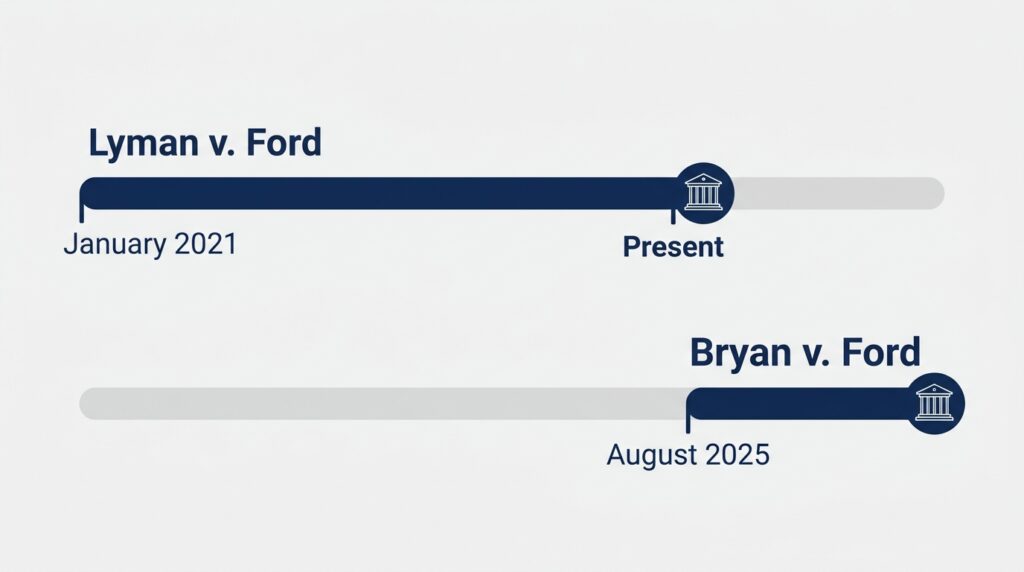
The newer case, Bryan v Ford, was filed on August 28, 2025, in the United States District Court for the Eastern District of Michigan under case number 2:25 cv 12714. Twelve named owners from nine states, including lead plaintiff Daniel Bryan of Kansas, brought this case. A coalition of plaintiffs firms is handling it, including The Miller Law Firm, Sauder Schelkopf, Cohen Milstein Sellers and Toll, Handley Farah and Anderson, Baron and Herskowitz, and Gordon and Partners.
Lyman, et al. v. Ford Motor Company
The older case, Lyman v Ford, was filed back on January 8, 2021, also in the Eastern District of Michigan, under case number 2:21 cv 10024. You can see this case is real and active by checking the actual federal court docket on Justia, which lists court orders in the case as recently as 2023, including a ruling that compelled arbitration for some plaintiffs and dismissed parts of an amended complaint.
How the Two Cases Are Different and Why Both Matter
Think of Lyman as the case that opened the door, and Bryan as the case that walked through it with a wider group of plaintiffs and updated allegations. Several of the same law firms work on both cases, which tells you something. It usually means the earlier case showed enough promise that attorneys were willing to invest in a second, larger filing. If you are wondering whether your truck might qualify under one case, the other, or both, that question is best answered by an attorney reviewing your specific mileage, repair history, and state.
This pattern of a manufacturer facing more than one class action over the same engine defect is not unique to Ford. If you want to see how a similar fight played out against a different automaker, our coverage of the GM CP4 pump class action lawsuit walks through a comparable engine defect dispute from start to finish.
What the Lawsuits Actually Claim Went Wrong
Piston Rings That Do Not Seal Properly
The complaints allege that the piston rings, the small metal rings that keep oil in the lower part of the engine and out of the combustion chamber, do not seal as tightly as they should in this generation of the Coyote engine. When that seal is weak, oil slips past the rings and burns along with the fuel.
The Oil Control System and the Combustion Chamber
Court filings also point to a coating process on the cylinder walls called PTWA, along with something called deceleration fuel shut off, or DFSO. In plain terms, when you take your foot off the gas going downhill or coasting to a stop, the engine can create unusually high vacuum pressure that pulls oil up into the combustion chamber, where it gets burned off instead of doing its job of lubricating the engine.
A Disputed Owner’s Manual and Oil Change Interval
Here is a real world example. Imagine an owner named James who followed his owner’s manual to the letter, changing his oil every 7,500 miles as recommended. According to the lawsuits, that interval assumes a normal rate of oil use. If the engine is consuming oil far faster than normal, following the manual perfectly can still leave a driver with a dangerously low oil level between visits, through no fault of his own.
What Is TSB 19 2365
TSB 19 2365 is a Technical Service Bulletin that Ford issued on December 5, 2019, for 2018 through 2020 F150 trucks with the 5.0 liter engine. It is not a recall. It is an internal repair guide that tells dealership technicians how to reprogram the engine computer, install a new dipstick, and change the oil when a truck shows excessive oil use.
According to the actual bulletin, filed with federal regulators and available through the National Highway Traffic Safety Administration, Ford describes the issue as oil consumption greater than one quart every 3,000 miles with no visible leaks. The bulletin states this may happen because of high intake manifold vacuum during deceleration fuel shut off events, pulling oil into the combustion chamber from the crankcase, valve guides, and the positive crankcase ventilation system.
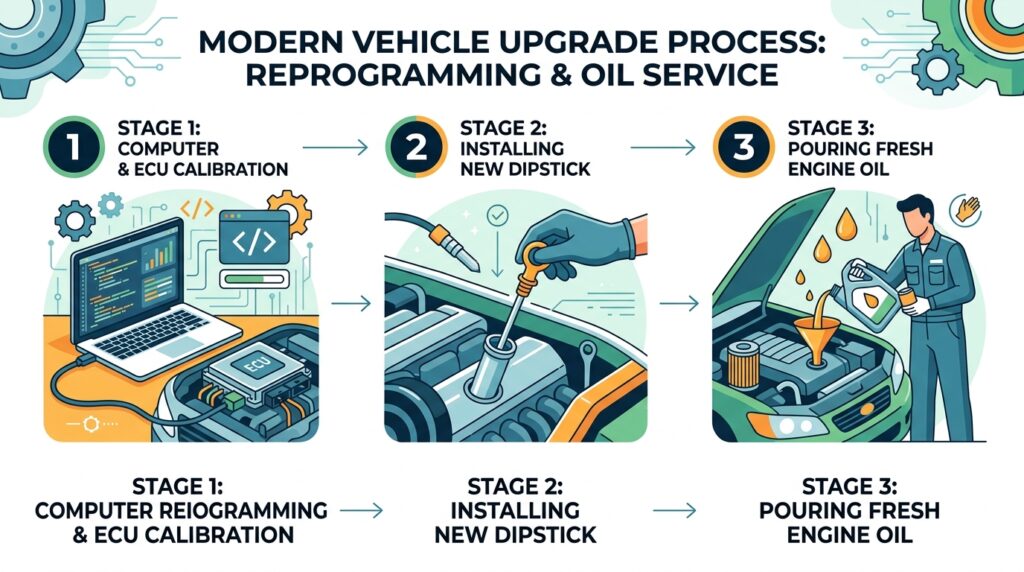
The proposed fix has three parts. Technicians reprogram the powertrain control module, install a new oil level indicator with a wider normal range printed on it, and perform an oil and filter change. Plaintiffs in the lawsuits argue that widening the acceptable range on the new dipstick did not fix the underlying oil loss. It just made the same oil level look normal on paper.
Picture an owner who has the TSB service done and feels relieved, only to find the truck still needs a top off two months later. That is the exact frustration driving many of the complaints in both lawsuits.
Warning Signs Your F150 May Have This Problem
You do not need a mechanic to notice most of these signs. Watch for:
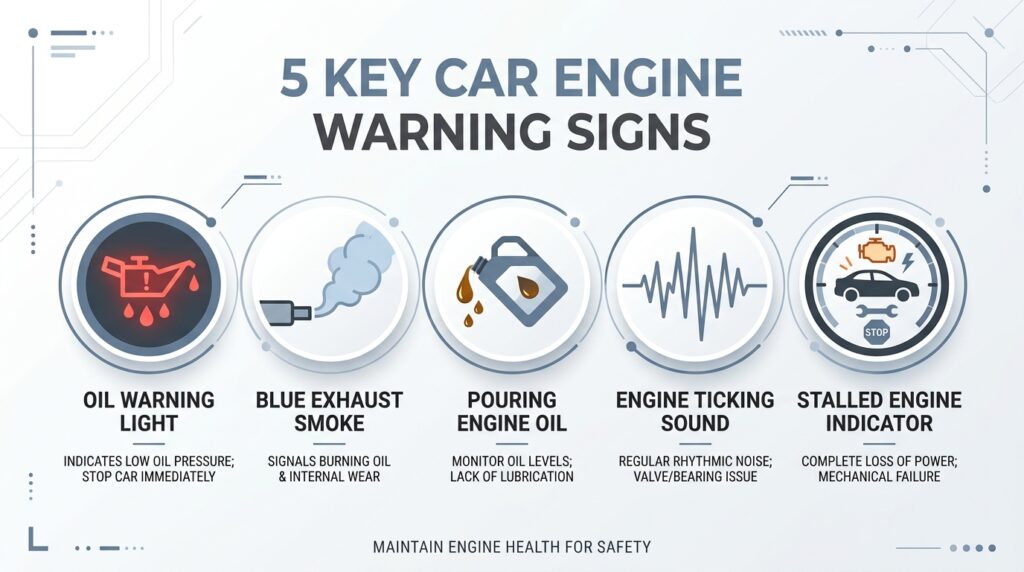
The oil change reminder light turning on earlier than expected, sometimes well before your usual interval.
Blue or gray smoke from the exhaust, especially when you first start the truck or accelerate hard.
Needing to add oil between scheduled oil changes, more than a small top off.
A noticeably louder engine, or a ticking or rattling sound that was not there before.
Any unexpected stalling, though this is less common and should be treated as urgent.
If two or more of these sound familiar, it is worth having a dealer check your oil consumption rate and documenting the result in writing.
Does My Ford F150 Qualify for the Lawsuit
Your truck may fit the group described in these lawsuits if it is a 2018, 2019, or 2020 model year F150 with the 5.0 liter Coyote V8 engine, and you have documented needing to add oil between scheduled changes. Meeting this description does not guarantee you will receive money. It only means you may want to speak with an attorney about your options.
Think of it this way. Two neighbors both own 2019 F150 trucks with the 5.0 liter engine. One has kept every oil change receipt and a written note from the dealer about low oil levels. The other has never mentioned an oil problem to anyone and has no records. The first neighbor is in a far stronger position to explore a claim, simply because the paperwork backs up the story.
Is There a Ford F150 Oil Consumption Recall
No. As of now, Ford has not issued a safety recall for F150 oil consumption, and there is no NHTSA recall on file for this issue. Ford addressed the problem only through TSB 19 2365, a repair bulletin, which is a different and less formal process than a recall.
This distinction matters more than people realize. A recall is triggered when a defect creates a safety risk, and it requires the manufacturer to notify every owner and fix the problem at no cost, usually with government oversight. A technical service bulletin is simply guidance for dealership technicians and does not carry the same legal weight or owner notification requirements.
Has Ford Settled the Oil Consumption Lawsuit
No settlement exists yet. Both Bryan v Ford and Lyman v Ford remain active in federal court, with Bryan currently in the discovery phase, where each side exchanges evidence. Any website telling you a specific dollar amount or payout is available right now is getting ahead of the actual facts.
This is worth repeating because a few competing articles online already list dollar figures for a payout, which is misleading at this stage. If you see a number promising a guaranteed check, treat it with real skepticism until an official settlement is announced and confirmed through the court.
Class Action or Individual Lawsuit: Which Path Fits You
Staying in the Class Action
If you do nothing and your truck fits the description in the case, you are typically included in the class automatically. If the case eventually settles or wins at trial, you would likely receive whatever the court approves for class members, without needing to hire your own lawyer or file separately.
Opting Out to Sue on Your Own
You also have the right to opt out of the class and pursue an individual claim instead, often under your state’s lemon law. This path can make sense if your damages are unusually high, for example if you already paid for a full engine replacement. One helpful way to think about it, a class action does not always require the kind of individual proof people assume. Our guide on class action lawsuits without proof breaks down what documentation actually matters and what does not.
Other Legal Options Worth Knowing About
State Lemon Laws
Many states have their own consumer protection laws, often called lemon laws, that cover repeated repair attempts on a defect that a dealer cannot fix. These laws vary quite a bit by state, so what works for a neighbor in Texas may not apply the same way in Ohio.
The Magnuson Moss Warranty Act
The Magnuson Moss Warranty Act is a federal law, found at 15 U.S.C. Section 2301 and following sections, that sets rules for how manufacturers must honor written warranties on consumer products, including vehicles. According to the Federal Trade Commission, the Act directs regulators to set disclosure standards for written warranties and gives consumers a legal remedy when a company breaks its warranty promises.
If you have ever dealt with a separate vehicle warranty dispute, our article on the CarGuard lawsuit covers how warranty related legal claims tend to play out in practice.
What to Do If You Think Your Truck Is Affected
Start a Written Oil Log
Write down your mileage every time you check or add oil. A simple notebook or phone note works fine. This single habit is often the deciding factor in whether a claim moves forward smoothly or gets stuck.
Get a Dealer Diagnosis in Writing
Ask your dealer to note the oil consumption rate on your service paperwork every time you visit, not just a verbal explanation. Request a copy before you leave the service department.
Talk to a Licensed Attorney Before You Decide
Before you decide whether to stay in the class action or explore an individual claim, it helps to know exactly who you are talking to. Our guide on the difference between an attorney and a lawyer clears up a common point of confusion. And since not every attorney who advertises online is the right fit, it is worth reading through the signs of a bad attorney before you sign anything.
Myth vs Fact
Myth 1: Ford recalled the F150 for oil consumption, so I do not need to do anything.
(Fact:) Ford has not recalled these trucks for oil consumption. It issued a repair bulletin, TSB 19 2365, which is optional service guidance handled through your dealer, not a mandatory recall notice sent to every owner.
Myth 2: A class action lawsuit means a settlement check is already on its way.
(Fact:) Both lawsuits are still active in court, and no settlement has been reached. No check exists yet, and any claim of a guaranteed payout right now should be treated with caution.
Myth 3: Any time I add oil between changes, it proves my truck has the defect described in the lawsuit.
(Fact:) Small amounts of oil use are normal in most engines. The lawsuits describe a specific, excessive rate of oil loss, generally more than one quart every 3,000 miles with no visible leak, so a documented pattern matters more than a single top off.
Frequently Asked Questions
1. Is there a recall on the Ford F150 for oil consumption?
(Ans:) No. Ford has not issued a recall for this issue. It addressed the problem only through TSB 19 2365, a repair bulletin available through your local Ford dealer.
2. What years of Ford F150 are affected by the oil consumption lawsuit?
(Ans:) The lawsuits cover 2018, 2019, and 2020 model year F150 trucks equipped with the 5.0 liter Coyote V8 engine.
3. How do I know if my F150 qualifies for the oil consumption lawsuit?
(Ans:) Your truck likely fits the description if it matches the affected years and engine, and you have documentation showing you needed to add oil between scheduled changes.
4. Has Ford settled the oil consumption lawsuit?
(Ans:) Not yet. Both Bryan v Ford and Lyman v Ford remain active in federal court, and no nationwide settlement has been announced.
5. How do I join the Ford F150 oil consumption class action?
(Ans:) If your truck fits the class description, you are typically included automatically unless you choose to opt out. Speaking with an attorney can help you understand your specific options.
6. What is TSB 19 2365?
(Ans:) It is a technical service bulletin Ford issued in December 2019 describing the oil consumption issue and outlining a three part repair, a computer reprogram, a new dipstick, and an oil change.
7. Is the 5.0 Coyote engine known for burning oil?
(Ans:) Some 2018 through 2020 versions of the Coyote V8 have been the subject of owner complaints and two federal lawsuits alleging excessive oil consumption tied to a design defect.
8. What counts as excessive oil consumption in a Ford F150?
(Ans:) According to Ford’s own service bulletin, oil consumption greater than one quart every 3,000 miles with no visible leak is considered excessive for this engine.
9. Do I need my own lawyer to join a class action?
(Ans:) Not necessarily to remain part of the class, but speaking with an attorney is strongly recommended if you are weighing whether to opt out and file an individual claim instead.
10. What is the difference between the Lyman and Bryan lawsuits?
(Ans:) Lyman was filed first, back in January 2021, while Bryan was filed later, in August 2025, with a broader group of plaintiffs across nine states. Both remain active in the same federal court.
Conclusion
The Ford F150 oil consumption lawsuit is really two ongoing cases, Lyman v Ford and Bryan v Ford, both accusing Ford of selling 2018 through 2020 trucks with a 5.0 liter engine that burns oil far faster than it should. There is no recall, and there is no settlement yet, no matter what any payout calculator online might suggest.
If your truck matches this description, the most useful thing you can do today is start documenting everything, your mileage, your oil top offs, and your dealer visits. From there, a conversation with a licensed attorney in your state is the clearest way to understand where you actually stand.
This is general information only and not a substitute for advice from a qualified attorney licensed in your jurisdiction.

Dirk Wasserthal is the Founder and Lead Writer of LegalDiaries.com, an independent legal information platform. He specializes in Mass Torts, Women’s Rights, and emerging legal issues, delivering clear, well-researched, and trustworthy content across Criminal Law, Family Law, Personal Injury, and more. Dirk’s mission is simple — make the law understandable for everyone.