


Florida Tint Laws 2026 are essential knowledge for every driver in the Sunshine State. With intense year-round sunshine, many Floridians turn to window tint for relief from heat, glare, and UV damage. However, Florida Tint Laws 2026 are strictly enforced, and violating them can lead to costly tickets, failed inspections, and insurance complications.
- Why Florida Tint Laws 2026 Matter in the Sunshine State
- Legal Florida Window Tint Limits by Vehicle Type (2026)
- Windshield Tint Rules in Florida – The AS-1 Line
- How Police Enforce Florida Tint Laws
- Penalties and Fines for Violating Florida Tint Laws
- Medical Sunscreening Exemption – How to Legally Go Darker
- Practical Tips for Getting Legal Tint in Florida
- How to Choose the Best Legal Window Tint for Florida’s Climate
- Frequently Asked Questions About Florida Tint Laws
- Additional Considerations in Florida Tint Laws 2026
- Final Thoughts on Florida Tint Laws 2026
This comprehensive 2026 guide covers everything about Florida Tint Laws 2026 from exact VLT limits and reflectivity rules to medical exemptions, police enforcement practices, fines, and practical tips trusted by local drivers. Whether you drive a sedan in Miami, an SUV in Orlando, or a truck in Tampa, understanding Florida Tint Laws 2026 helps you stay compliant while maximizing comfort.
Why Florida Tint Laws 2026 Matter in the Sunshine State
Florida’s subtropical climate makes Florida Tint Laws 2026 more relevant than ever. Temperatures often exceed 90°F, turning vehicles into ovens. Quality tint reduces cabin heat by up to 60%, blocks 99% of harmful UV rays, protects leather and electronics from fading, and improves privacy and safety by reducing glare.
Yet Florida Tint Laws 2026 prioritize road safety. Dark tint can impair visibility at night or in bad weather and hinder law enforcement. All rules are outlined in Florida Statutes 316.2951–316.2957 and enforced by the Florida Highway Safety and Motor Vehicles (FLHSMV).
Key Principle in Florida Tint Laws 2026: Measurements are always combined factory glass plus applied film. Never rely solely on the film’s advertised VLT.
Legal Florida Window Tint Limits by Vehicle Type (2026)
Florida applies different rules depending on whether you drive a sedan or a larger multipurpose vehicle.
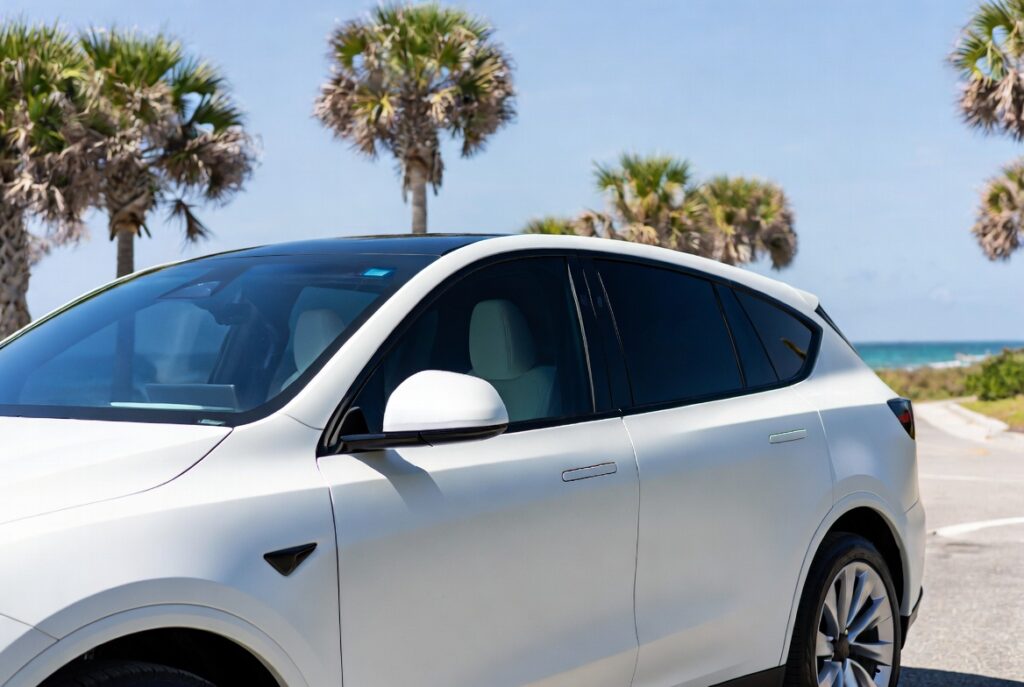
Comparison Table: Florida Tint Laws 2026
| Window Location | Sedans, Coupes & Passenger Cars | SUVs, Vans, Trucks & MPVs | Important Notes |
| Windshield | Non-reflective tint only above AS-1 line | Non-reflective tint only above AS-1 line | No tint below the line without exemption |
| Front Side Windows | 28% VLT minimum | 28% VLT minimum | Strictest requirement for all vehicles |
| Rear Side Windows | 15% VLT minimum | 6% VLT minimum | Rear can be significantly darker on SUVs |
| Rear Window | 15% VLT minimum | 6% VLT minimum | – |
Reflectivity limits are equally important: maximum 25% on front side windows and 35% on rear windows. Mirrored, chrome, or brightly colored tints (red, amber, yellow, or blue) are prohibited on any window.
Many professional shops offer standard “legal packages” typically 28% on the front sides paired with 15% or 6% on the rear depending on your vehicle type.
Windshield Tint Rules in Florida – The AS-1 Line
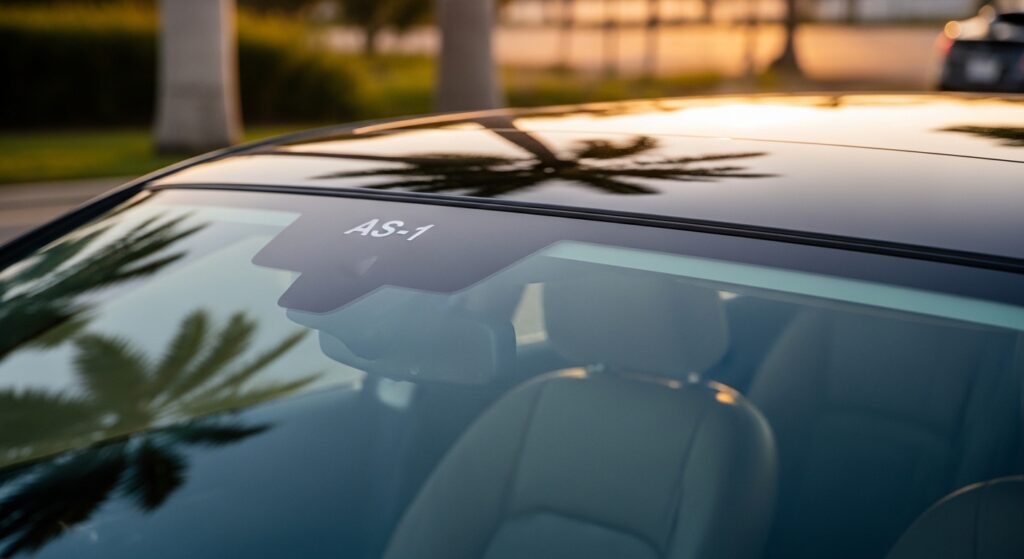
The windshield is one of the most strictly regulated areas. You may only apply non-reflective tint above the manufacturer’s AS-1 line (usually the top 5–6 inches). The area below this line must remain clear for safety reasons unless you have an approved medical exemption.
How Police Enforce Florida Tint Laws
Officers use calibrated tint meters during traffic stops, with special focus on the front side windows. Reputable installers always place a compliance label on the driver’s door jamb showing the film specifications. You can view the list of approved window tint meters used by law enforcement on the Florida Department of Highway Safety and Motor Vehicles (FLHSMV) website.
In practice, there is sometimes a small tolerance (±2–3%), but this is not guaranteed. If your front windows measure below 28% VLT, you can still receive a citation.
Penalties and Fines for Violating Florida Tint Laws
Violating Florida tint laws is considered a non-criminal traffic infraction.
- First offense: Typically around $116 (can reach $150+ including court costs). Many drivers receive a “fix-it” ticket that allows time to correct the tint.
- Repeat offenses: Fines can increase to $211 or more, often requiring a court appearance.
- Tint shops: Knowingly installing illegal tint can result in a second-degree misdemeanor, with fines up to $500 and possible jail time.
While these violations usually add no points to your license, repeated issues can lead to registration problems. Illegal tint may also complicate insurance claims if visibility is questioned in an accident.
Note for Truck & SUV Owners: Many Florida drivers with trucks also face other vehicle issues. Ford F-150 owners should stay informed about common problems.
Medical Sunscreening Exemption – How to Legally Go Darker
Florida provides a formal medical exemption under Section 316.29545, Florida Statutes for individuals with specific photosensitivity conditions.
Qualifying conditions include:
- Lupus (SLE or Systemic Lupus Erythematosus)
- Other autoimmune diseases
- Albinism
- Total or facial vitiligo
- Xeroderma pigmentosum
- Dermatomyositis
- Any other physician-certified condition requiring limited light exposure
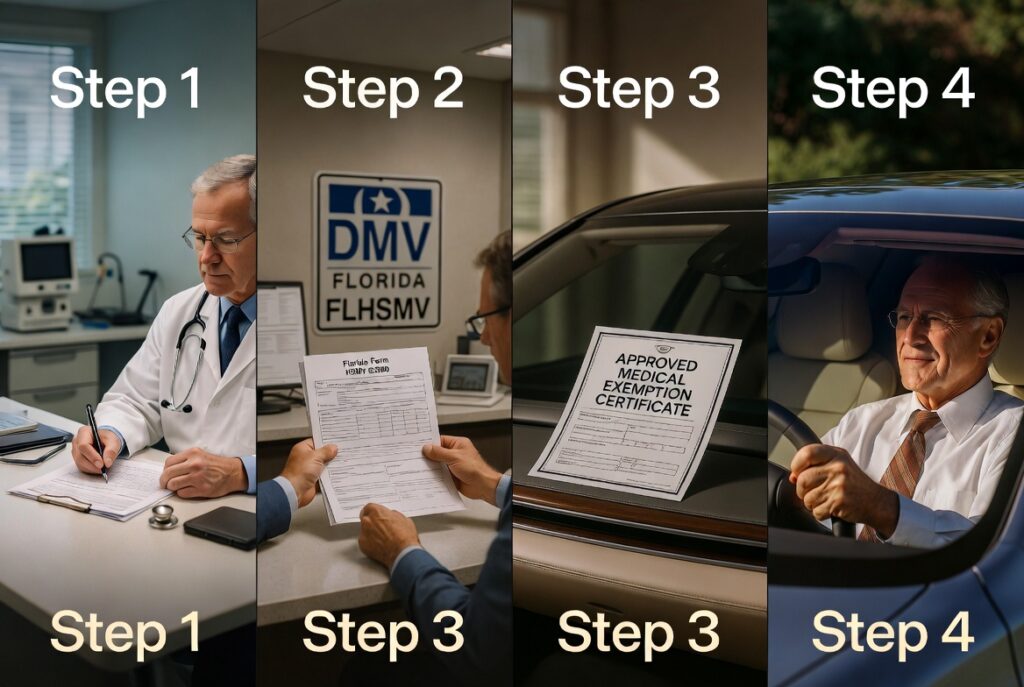
Step-by-Step Process to Apply:
- Download Form HSMV 83390 — Application for Sunscreening Medical Exemption from the official FLHSMV website.
- Have a licensed physician, osteopathic physician, or advanced practice registered nurse complete the Physician’s Statement of Certification.
- Submit the completed form with required documents and pay the small processing fee.
- Once approved, carry the vehicle-specific exemption certificate in your car at all times.
The exemption is non-transferable and becomes invalid if you sell or transfer the vehicle. Full details and the statute are available on the official Florida Statutes page for Section 316.29545.
Practical Tips for Getting Legal Tint in Florida
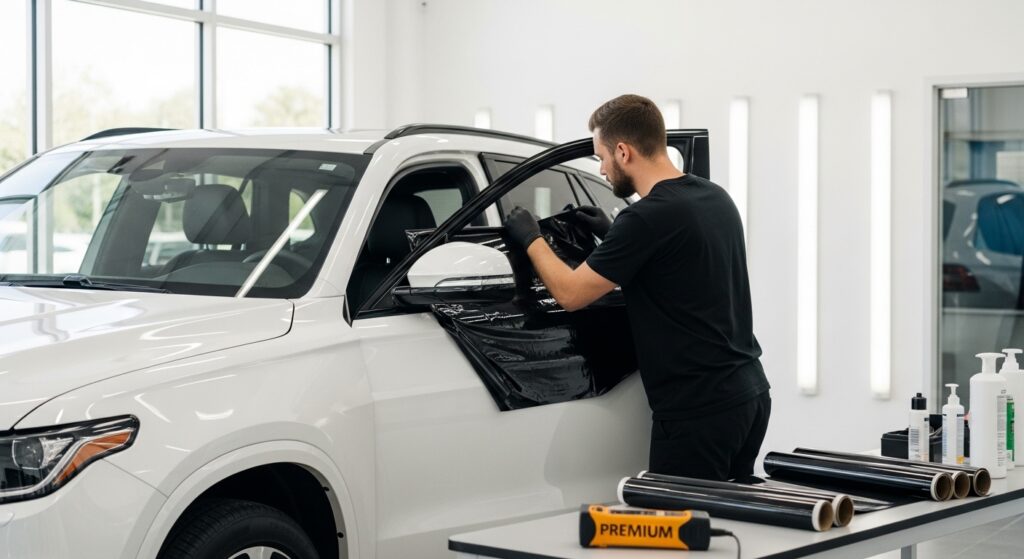
- Opt for high-quality ceramic or spectrally selective films they provide superior heat rejection and UV protection while staying within legal VLT limits.
- Always request exact VLT percentages in writing and ask the shop to measure the finished installation with a professional tint meter.
- Aim slightly above the minimum (for example, 32–35% on front sides) to create a safe buffer.
- Enforcement can be stricter in South Florida counties like Miami-Dade and Broward, so double-check before installation if you live in those areas.
How to Choose the Best Legal Window Tint for Florida’s Climate
Under Florida Tint Laws 2026, focus on films with high infrared rejection (IRR) and UV protection. Legal ceramic tint can lower interior temperatures significantly, reduce AC load, improve fuel efficiency (or EV range), and protect against sun damage.
Frequently Asked Questions About Florida Tint Laws
Is 20% tint legal on front windows in Florida?
No. Front side windows must allow at least 28% VLT.
What is the darkest legal tint for SUVs in Florida?
Rear side windows and rear window can go down to 6% VLT, but front sides remain limited to 28% VLT.
Can you tint the entire windshield under Florida Tint Laws 2026?
Only if you have an approved medical exemption.
How much is a tint ticket in Florida?
First offenses usually cost around $116, though total costs with fees vary by county.
Do I need a medical exemption to go darker than the standard limits?
Yes — without it, exceeding the VLT percentages is illegal.
Does illegal tint affect car insurance?
It typically doesn’t void coverage immediately, but it can create complications during claims if visibility is a factor.
Will my Florida tint comply in other states?
Not always. Compare with neighboring rules, such as Texas Tint Laws 2026.
Related Legal Note: Travelers should also be aware of varying pedestrian rules, like those covered in Is Jaywalking Legal in California?.
Additional Considerations in Florida Tint Laws 2026
Out-of-State Vehicles: Generally exempt if not registered in Florida, but long-term residents must comply.
Commercial Vehicles: Slightly different rules may apply check with FLHSMV.
Aftermarket Add-ons: Perforated films or louvers have specific restrictions.
Inspection Stations: Tint is often checked during annual safety inspections in certain counties.
Cost of Legal Tint in 2026: Expect $250–$900 depending on vehicle size, film quality, and number of windows. Premium ceramic packages with lifetime warranties offer the best value.
Final Thoughts on Florida Tint Laws 2026
Florida Tint Laws 2026 balance driver comfort in a harsh climate with public safety. By choosing legal VLT percentages, proper films, and obtaining medical exemptions when needed, you can enjoy cooler rides, better privacy, and peace of mind.
Always work with reputable local installers, keep documentation in your vehicle, and verify the latest rules directly with FLHSMV, as regulations can evolve.
Last updated: June 2026. This guide on Florida Tint Laws 2026 is for informational purposes only. Consult official sources or a legal professional for your specific situation.
Go to legal diaries for more quality, informative content.

Dirk Wasserthal is the Founder and Lead Writer of LegalDiaries.com, an independent legal information platform. He specializes in Mass Torts, Women’s Rights, and emerging legal issues, delivering clear, well-researched, and trustworthy content across Criminal Law, Family Law, Personal Injury, and more. Dirk’s mission is simple — make the law understandable for everyone.