


If you live in Texas, you already know how brutal the summer sun can be. Temperatures regularly soar above 100°F, turning your car into an oven and making every drive uncomfortable. Window tint is one of the smartest investments Texas drivers make it reduces heat, blocks harmful UV rays, protects your interior, cuts glare, and increases privacy. But crossing the line with your tint can lead to expensive tickets, failed inspections, and insurance issues.
- What Is VLT and Why It Matters in Texas
- Legal Tint Limits for Passenger Cars and Sedans in 2026
- Legal Tint Limits for SUVs, Trucks, and Vans (Multi-Purpose Vehicles)
- Reflectivity Limits and Prohibited Tint Colors
- Medical Exemptions: How to Legally Install Darker Tint
- How to Obtain a Medical Exemption (2026 Process):
- The Mandatory Certification Label (Sticker)
- HB 1126: The New Judicial Exemption (Effective 2025)
- The 20% vs 25% VLT Loophole Explained
- Penalties, Fines, and Fix-It Tickets
- How Law Enforcement Tests Tint
- Frequently Asked Questions About Texas Tint Laws 2026
- Pro Tips for Perfect Legal Tint in Texas
- Conclusion
This comprehensive 2026 guide breaks down everything you need to know about Texas tint laws, including legal VLT percentages, reflectivity limits, prohibited colors, the mandatory certification sticker, medical exemptions, the new HB 1126 judicial exemption, and practical tips that most guides miss.
What Is VLT and Why It Matters in Texas
Visible Light Transmission (VLT) measures the percentage of visible light that passes through your vehicle’s glass and any applied film. A higher VLT percentage means lighter tint; a lower percentage means darker tint.
The most common mistake drivers make is relying only on the film’s advertised VLT rating. Factory glass already has some built-in tint, typically blocking 20-30% of light. A film rated at 35% can easily measure below the legal limit when combined with the glass. Always insist on a combined VLT measurement using a calibrated tint meter before leaving the shop.
Texas tint laws focus heavily on front visibility for driver and officer safety while allowing more flexibility on rear windows.
Legal Tint Limits for Passenger Cars and Sedans in 2026
Windshield
Only a non-reflective tint strip is allowed above the manufacturer’s AS-1 line or within the top 5 inches (whichever is lower). The strip must measure 25% VLT or higher combined. Full windshield tinting is prohibited unless it was factory installed and meets federal standards.
Front Side Windows (Driver and Passenger)
Must allow more than 25% VLT combined. This is the most strictly enforced area.
Rear Side Windows
Any level of darkness is permitted.
Rear Window
Any darkness allowed, but if heavily tinted, your vehicle must have functional dual side mirrors providing a clear view of at least 200 feet behind.
Legal Tint Limits for SUVs, Trucks, and Vans (Multi-Purpose Vehicles)
The front window rules remain the same as passenger cars, but rear windows offer more flexibility due to different vehicle design and larger factory mirrors.
Many Texas truck owners also deal with other vehicle specific issues. For example, owners of 2018–2020 Ford F-150 trucks should be aware of ongoing concerns like excessive oil consumption.
| Window Position | Legal VLT Requirement | Additional Rules |
| Windshield | Top strip only, ≥25% VLT | Non-reflective, above AS-1 or top 5 inches |
| Front Side Windows | More than 25% VLT combined | Strictly enforced |
| Rear Side Windows | Any darkness allowed | No minimum |
| Rear Window | Any darkness allowed | Dual side mirrors required if heavily tinted |
Reflectivity Limits and Prohibited Tint Colors
Texas law caps luminous reflectance at 25% on all windows. Mirror-like, chrome, or highly reflective films are illegal as they create dangerous glare for other drivers.
Banned Colors: Red, amber, and blue tints are strictly prohibited on any window. These colors are reserved for emergency and law enforcement vehicles. Even light versions of these colors can result in a citation regardless of VLT.
Clear UV-blocking films are fully allowed on all windows, including the entire windshield, because they do not reduce visible light transmission.
Medical Exemptions: How to Legally Install Darker Tint
Texas provides a clear pathway for drivers with medical conditions that increase sensitivity to sunlight.
Common qualifying conditions include:
- Lupus
- Porphyria
- Albinism
- Vitiligo
- Solar urticaria
- Xeroderma pigmentosum
- Severe photosensitivity disorders
- Certain skin cancers
- Autoimmune conditions with significant sun sensitivity
How to Obtain a Medical Exemption (2026 Process):
- Visit a licensed physician, optometrist, or ophthalmologist.
- Request a signed statement that includes your name, specific medical condition, and explanation of why darker tint is medically necessary.
- Keep the original or certified copy in your vehicle at all times.
The exemption primarily allows darker front side windows. It does not automatically permit full windshield tint below the AS-1 line. Always present the document during traffic stops or inspections.

The Mandatory Certification Label (Sticker)
Every professional tint installation must include a compliance certification label placed on the lower rear corner of the driver’s side window. This label proves the film meets Texas standards.
Missing this sticker can result in a citation even if your tint measures legal. Installers who fail to apply it can face fines up to $1,000.
HB 1126: The New Judicial Exemption (Effective 2025)
House Bill 1126 provides a targeted exemption for judges. Vehicles displaying official “State Judge,” “U.S. Judge,” “U.S. A.L. Judge,” or “County Judge” specialty license plates are exempt from standard tint restrictions. This change was made to enhance personal safety and privacy for members of the judiciary. It does not apply to regular drivers. Read the official bill analysis here.
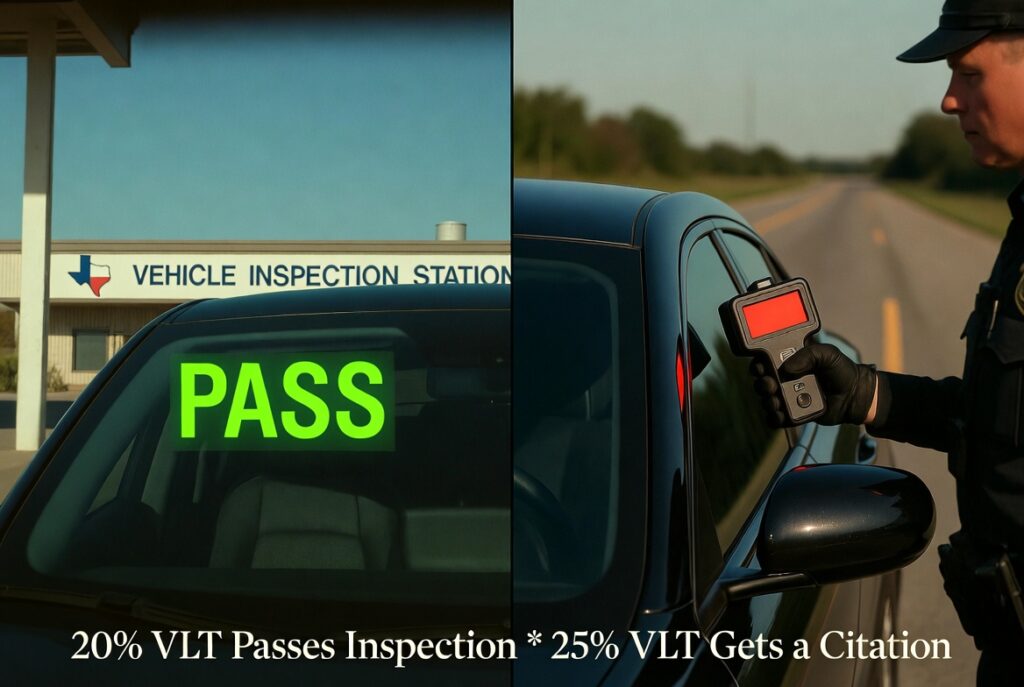
The 20% vs 25% VLT Loophole Explained
This remains one of the most confusing aspects of Texas tint laws:
- Texas Transportation Code (enforced by police): Front side windows must transmit more than 25% VLT.
- DPS Inspection Rules: Some stations may pass vehicles with tint as low as 20% VLT.
Recommendation: Always aim for 28-35% combined VLT on front windows. This gives you a safe buffer against meter variations and aggressive enforcement.
Penalties, Fines, and Fix-It Tickets
Violating Texas tint laws is a Class C misdemeanor. Fines typically range from $20 to $1,000. Illegal tint can also complicate insurance claims in accidents if reduced visibility is a factor.
Note for Truck Owners: Diesel truck owners (especially GM Duramax models) facing other mechanical problems may want to review the GM CP4 Pump Class Action Lawsuit for potential claims and reimbursements.
How Law Enforcement Tests Tint
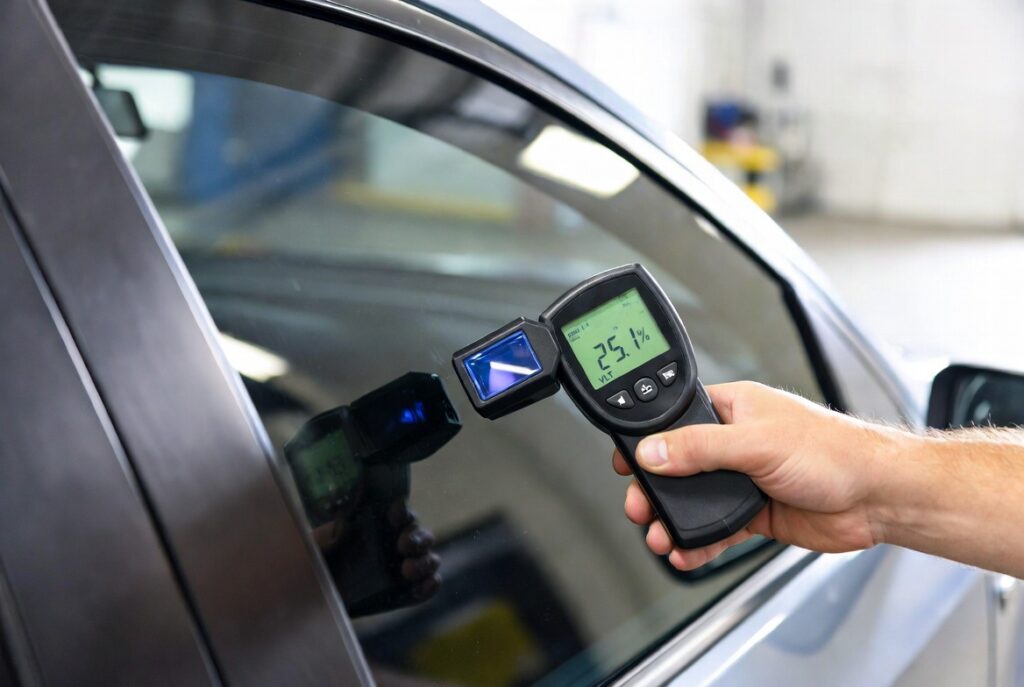
Texas officers use professional handheld tint meters that measure combined VLT accurately. They also check for the presence of the required certification sticker. Enforcement is active across the state, with hundreds of citations issued annually in major counties.
Out-of-state vehicles are generally exempt from Texas rules unless registered in the state.
For the full legal text, refer to Texas Transportation Code § 547.613.
Frequently Asked Questions About Texas Tint Laws 2026
Is 20% tint legal on front windows in Texas?
No. The legal minimum is more than 25% VLT combined. While some inspection stations may pass lower readings, police can still issue citations.
Can I tint my entire windshield in Texas?
No. Only a legal top strip is permitted. Clear UV-blocking film is the best full-windshield option.
What is the darkest legal tint for front windows?
Just over 25% VLT combined. For rear windows, you can go as dark as 5% or limo black with proper dual mirrors.
Do I need a sticker on my tint?
Yes. The certification label is mandatory.
How do I get a medical exemption for darker tint?
Obtain a signed physician’s statement and keep it in your vehicle at all times.
Does Texas tint law differ for trucks and SUVs?
Rear windows have more flexibility, but front rules are the same.
Will my Texas tint get me in trouble in other states?
Yes. For example, states like California have much stricter rules (and different pedestrian laws — see our guide: Is Jaywalking Legal in California?).
How much does legal tint cost in Texas in 2026?
Quality ceramic tint installations typically range from $250 to $800 depending on vehicle size and film quality.
Pro Tips for Perfect Legal Tint in Texas
- Choose high-quality ceramic or nano-ceramic films for superior heat rejection without excessive reflectivity.
- Work only with certified installers who measure combined VLT and apply the proper label.
- Combine legal tint with clear UV windshield film for maximum protection.
- Re-test your windows after installation, as temperature can slightly affect readings.
- Document everything keep receipts and medical letters organized.
Conclusion
Texas tint laws in 2026 strike a balance between practical benefits in our harsh climate and road safety requirements. By keeping front side windows above 25% VLT, using only allowed colors and reflectivity levels, applying the required certification sticker, and obtaining proper medical documentation when needed, you can enjoy cooler, safer, and more comfortable drives while staying fully compliant.
Whether you drive a daily commuter sedan in Dallas, a family SUV in Houston, or a work truck in San Antonio, understanding these rules protects you from unnecessary fines and headaches.
For the latest official standards, visit the Texas Department of Public Safety Window Tinting Standards page.
Last updated: June 2026. This guide is for informational purposes. Laws can change — verify with official sources for your specific vehicle.
Go to legal diaries for more quality, informative content.

Dirk Wasserthal is the Founder and Lead Writer of LegalDiaries.com, an independent legal information platform. He specializes in Mass Torts, Women’s Rights, and emerging legal issues, delivering clear, well-researched, and trustworthy content across Criminal Law, Family Law, Personal Injury, and more. Dirk’s mission is simple — make the law understandable for everyone.