



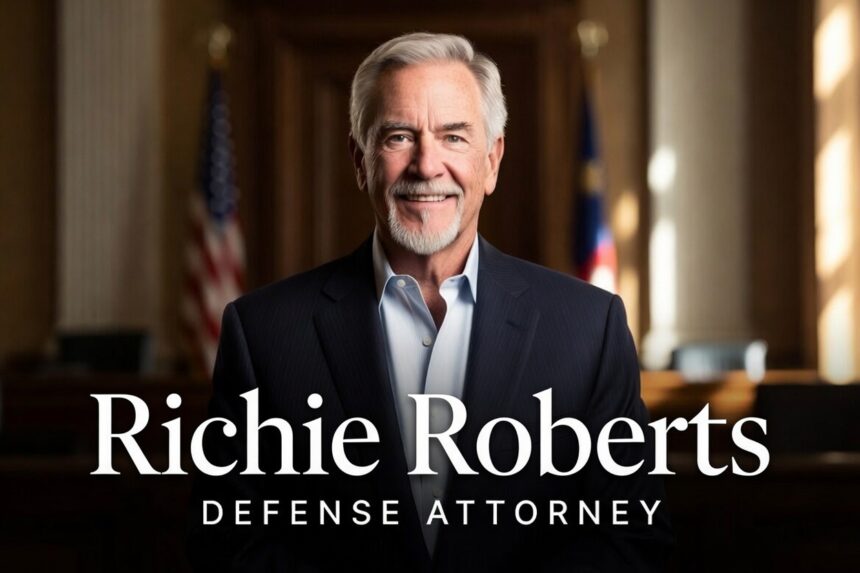
Richie Roberts Defense Attorney careers rarely follow a straight line, but few have ever bent as sharply as the one lived by Richard M. Roberts. One moment you’re the celebrated prosecutor who helped dismantle a heroin empire; the next, you’re standing beside the kingpin you locked up, now serving as his defense lawyer. And a decade after a Hollywood blockbuster cements your legend, you’re pleading guilty to stealing from your own clients and surrendering your law license for good.
- The Man Behind the Badge: Richie Roberts’ Early Life and Path to Law
- The Prosecutor Who Took Down a Kingpin: The Frank Lucas Case
- Richie Roberts Defense Attorney vs. Prosecutor: The Career Pivot
- Representing Frank Lucas and Beyond: Inside the Defense Practice
- The Unlikely Friendship Between Richie Roberts and Frank Lucas
- The Real American Gangster: Separating Fact from Hollywood Fiction
- Common Myths About Richie Roberts (Debunked)
- Professional Downfall: Tax Crimes, Client Theft, and Disbarment
- Why Client Trust Accounts Are Absolutely Sacred
- Practical Lessons for Lawyers, Law Students, and the Public
- What Is the Difference Between Richie Roberts as Prosecutor and Defense Attorney?
- Current Status: Is Richie Roberts Still Practicing in 2026?
- The Broader Impact: Why the Richie Roberts Story Still Matters
- Detailed Case Scenario: A Young Prosecutor Becomes a Defense Lawyer
- Frequently Asked Questions (FAQ)
- Conclusion: The Double-Edged Legacy of a Gangster’s Lawyer
This is not a movie plot, it’s the real, unfiltered arc of Richie Roberts, the man behind the American Gangster myth. In this comprehensive article, we walk you through every stage of his legal journey, separating hard facts from Hollywood fiction. We extract practical lessons that law students, practicing attorneys, and curious readers can use right now. Whether you’re wondering “is there a difference between a prosecutor and a defense attorney” or asking what happened after the movie, you’ll find clear, actionable answers here.
The Man Behind the Badge: Richie Roberts’ Early Life and Path to Law
Before he was a headline, Richie Roberts was a scrappy kid from the Bronx, born on November 28, 1937, and raised partly by his grandparents. At age eight, he moved to Newark, New Jersey, and grew up in a tough, blue-collar environment. At Weequahic High School, Roberts excelled in football and baseball discipline that later served him well in the United States Marine Corps, where he served six years and rose to sergeant.
Post-military, Roberts attended Upsala College and later finished his undergraduate degree at Rutgers University. While working full-time as a detective, he burned the midnight oil at Seton Hall University School of Law, earning his J.D. and passing the New Jersey bar in 1971. This combination of street-cop instinct and formal legal training became his superpower. By 1963, he’d already joined the Essex County Prosecutor’s Office as a detective, diving deep into undercover organized-crime work.
He targeted heavy hitters in the Genovese, Lucchese, and Bruno crime families, learning how criminal networks functioned from the inside. That hands-on experience planted the seeds for the historic takedown that made him famous. It also planted the seeds for his later pivot to criminal defense work, a shift that would define his complicated legacy.

The Prosecutor Who Took Down a Kingpin: The Frank Lucas Case
In the early 1970s, heroin flooding the East Coast was devastating communities at an alarming rate. The man responsible for much of that poison was Harlem-based trafficker Frank Lucas, who claimed to import nearly pure heroin directly from Southeast Asia’s Golden Triangle. Lucas’s “Blue Magic” brand was so potent it became a street sensation and a public health catastrophe. Roberts, by then an assistant prosecutor, was tapped to head the Essex County Bureau of Narcotics, a federally supported task force.
Roberts assembled a tight-knit team of detectives Eddie Jones, Al Spearman, and Benny Abruzzo known informally as the “Z-TEAM”. Together, they painstakingly tied Lucas to massive heroin shipments, money laundering, and a network of corrupt officials. In January 1975, authorities raided Lucas’s home in Teaneck, New Jersey. The evidence was overwhelming, and Lucas was convicted in 1976, receiving a staggering 70-year sentence that combined federal and state time.
Facing decades behind bars, Lucas agreed to cooperate with the government, giving up fellow traffickers and dirty cops. His cooperation led to early release in 1981. That decision set the stage for one of the strangest second acts in legal history: the prosecutor who helped imprison the kingpin would soon become his personal defense attorney.
Richie Roberts Defense Attorney vs. Prosecutor: The Career Pivot
In the late 1970s, Roberts left the prosecutor’s office, citing internal politics and a hunger for greater independence. After briefly joining a small firm, he opened his own criminal defense practice around 1981–1985, serving the West Caldwell and Newark areas. The shift from prosecutor to defense lawyer is more common than many people assume. Former prosecutors bring unique insight into how charges are built, evidence is evaluated, and witnesses are pressured with knowledge that can give a defense lawyer a real edge.
Roberts himself said that knowing “what they’re thinking” helps you anticipate the state’s next move. If you’re unclear on the exact professional distinctions between legal roles, our guide on the difference between attorney and lawyer breaks down titles, responsibilities, and ethical boundaries. And if you’re considering launching your own practice, you’ll find actionable strategies from business structure to client acquisition in our article on how to start a law firm.
Representing Frank Lucas and Beyond: Inside the Defense Practice
One of Roberts’s earliest and most famous clients was Frank Lucas, the very man he had helped convict. This was not a publicity stunt; it was the beginning of a decades-long professional relationship. Roberts defended Lucas on later drug charges, Social Security fraud allegations, and various other legal scrapes. Over the years, the Richie Roberts defense attorney practice handled a wide range of cases, including high-stakes homicide trials, complex racketeering (RICO) matters, and white-collar defenses.
His courtroom style was direct, unpolished, and deeply tactical. Colleagues described him as a relentless cross-examiner who could spot investigative shortcuts instantly because he had been the investigator himself. That reputation attracted clients who wanted a fighter who understood both sides of the justice system. For Lucas, the representation went far beyond legal counsel. Lucas trusted Roberts so completely that he asked him to serve as godfather to his son Ray.
This extraordinary request shows just how tangled their personal and professional lives had become. The attorney-client bond that formed between them defied easy moral judgment, and it would later become one of the most discussed aspects of Roberts’s career.
The Unlikely Friendship Between Richie Roberts and Frank Lucas
After Lucas’s release, the two men stayed in contact for decades, speaking frequently and meeting regularly at Roberts’s law office. When Lucas’s health declined, Roberts remained one of his most consistent visitors. In 2019, Lucas died at age 88. Roberts offered a simple, memorable eulogy: “No one is all good. No one is all bad. You try to see the good and you try to forget the bad.”
His final words to Lucas were: “Bye, Frank. See you at the end of the line.” That moment captures the strange, complicated humanity of their relationship. Yet even this genuine, decades-long friendship could not shield Roberts from his own later ethical collapse. The bond reminds us that criminal law practice can blur lines in ways that demand extraordinary self-awareness and ironclad ethical boundaries.
The Real American Gangster: Separating Fact from Hollywood Fiction
When Ridley Scott’s American Gangster hit theaters in 2007, starring Russell Crowe as Roberts and Denzel Washington as Lucas, it grossed over $127 million and introduced millions to their story. However, the film took enormous liberties with reality. Federal Judge Sterling Johnson Jr., who worked on the actual case, famously stated: “The movie is one percent reality and ninety-nine percent Hollywood.” Roberts himself acknowledged that his on-screen character was a composite of several investigators.
The film invented a dramatic custody battle for Roberts, but in reality Richie Roberts has no children and that storyline was pure fabrication. The cinematic church arrest scene never happened; Lucas was already under indictment, and the takedown was procedural, not theatrical. Even the infamous claim that Lucas smuggled heroin inside fallen soldiers’ coffins is hotly disputed by historians and associates.
A 2007 New York Times piece confirmed the strange friendship and the chilling detail that Lucas once placed a $100,000 contract on Roberts’s life. So while the emotional core had some factual basis, the procedural specifics were heavily fictionalized. If you’re comparing Richie Roberts defense attorney real life versus the movie, the gap is enormous.
Richie Roberts vs. Hollywood: Accuracy Scorecard
| Element | Film Version (2007) | Reality |
| Roberts’s role | Lone-hero detective working nearly alone | Important task force leader, part of a larger team |
| Personal life | Bitter custody fight over a son | No children; storyline invented for drama |
| Lucas’s arrest | Dramatic church confrontation | Lucas already under indictment; arrest was procedural |
| Friendship & defense work | Shown at the very end | Accurate Roberts really became Lucas’s defense lawyer |
| Heroin import method | Allegedly inside coffins of dead soldiers | Strongly disputed; likely exaggerated |
| Overall accuracy | Gripping crime thriller | Broad strokes true, details heavily fictionalized |
Common Myths About Richie Roberts (Debunked)
Myth #1: “He was the lead detective who single-handedly busted Lucas.”
Reality: Roberts was a task force leader; multiple agencies and detectives contributed. The film compressed a collaborative, multi-agency effort into one character for dramatic effect.
Myth #2: “Roberts became Lucas’s attorney after the movie came out.”
Reality: He began representing Lucas in the early 1980s, decades before the film. The movie depicted the outcome of a relationship that had already existed for years.
Myth #3: “His disbarment was just a minor paperwork error.”
Reality: It involved intentional theft from client trust accounts and perjury clear, serious ethical violations that go to the heart of a lawyer’s professional duties.
Myth #4: “He’s still practicing as a Richie Roberts defense attorney in New Jersey today.”
Reality: As of 2026, Richie Roberts is a disbarred attorney. Any speaker profile or website claiming he is active is outdated and incorrect. Always verify an attorney’s license through the official state bar directory.
Myth #5: “Richie Roberts was a lawyer first, then became a cop.”
Reality: He worked as a detective before and during law school. His career began in law enforcement, not in private practice. That sequencing is crucial to understanding his later move to defense work.
Professional Downfall: Tax Crimes, Client Theft, and Disbarment
The final chapter of the Richie Roberts defense attorney story is a harsh cautionary tale. In April 2017, Roberts pleaded guilty in federal court to failing to pay income taxes and the employer’s share of payroll taxes for his own law firm. He received probation and home confinement. But that was only the prelude to a much more serious ethical collapse. New Jersey authorities soon charged Roberts and his former law partner with misusing more than $140,000 from client trust accounts.
According to NJ.com’s detailed coverage, during the 2019 trial Roberts pleaded guilty to theft by failure to make lawful disposition and perjury. He admitted taking $20,000 in client money to pay personal alimony obligations. The ABA Journal reported that Superior Court Judge Donald Collester delivered a devastating rebuke at sentencing: “The man once portrayed as a hero is now a criminal, thief, liar.”
Roberts received five years of probation and 270 hours of community service. He surrendered his law license as part of the resolution and is now permanently disbarred. The same man celebrated in a blockbuster film had lost everything because of ethical breaches that no amount of past heroism could excuse.
Why Client Trust Accounts Are Absolutely Sacred
Every lawyer learns on day one that client trust funds (IOLTA accounts) are inviolable. Even temporary, well-intentioned “borrowing” constitutes theft under professional conduct rules. The disciplinary system treats trust account violations as near-automatic grounds for disbarment. Roberts’s case is a permanent warning that personal financial pressures divorce, debt, tax bills never justify dipping into client money.
If you ever face a cash crisis, contact your state’s lawyers’ assistance program immediately. No amount of courtroom brilliance or public goodwill insulates you from the consequences of a trust account violation. The bar’s message is clear and unforgiving: you touch that money, you lose your license.
Practical Lessons for Lawyers, Law Students, and the Public
1. Former prosecutors can become powerful defense attorneys. Insider knowledge of how the state builds cases gives you an edge in plea negotiations and trial strategy. However, you must fully switch ethical frameworks when you change sides.
2. Client trust account integrity is non-negotiable. Even extreme personal hardship does not excuse commingling or misuse. Seek help early; once you touch that account, your career is almost certainly over.
3. Always verify an attorney’s license before hiring. Never rely on a movie portrayal or an old speaker bio. Every U.S. state has a free online attorney lookup tool. Use it. Five minutes of due diligence can save you from disaster.
4. Hollywood warps public perception of real legal cases. If you’re a litigator, address potential “American Gangster bias” during jury selection when your case touches law enforcement themes. Jurors often confuse film fiction with forensic fact.
5. Geographic reputation doesn’t shield you. Whether you’re a Newark criminal defense lawyer or a small-town practitioner, ethical rules apply universally. Fame and past success offer zero protection.
6. Know the difference between professional roles. Understanding what is the difference between a prosecutor and a defense attorney helps the public set realistic expectations. Both roles require distinct mindsets and ethical duties, a distinction Roberts lived firsthand.
What Is the Difference Between Richie Roberts as Prosecutor and Defense Attorney?
Many readers ask: is there a difference between the two roles, and does the skill set transfer? Yes, absolutely. As a prosecutor, Roberts represented the state and worked to prove guilt beyond a reasonable doubt. As a defense attorney, he protected the constitutional rights of individuals accused of crimes. The skills courtroom experience, evidence analysis, and witness examination overlap significantly. But the ethical duties and daily pressures are fundamentally different.
Roberts lived both roles intensely, which is why his career offers such a unique and cautionary case study. For a broader explanation of legal titles and responsibilities, you can read our guide on the difference between attorney and lawyer.
Current Status: Is Richie Roberts Still Practicing in 2026?
As of 2026, Richie Roberts is a disbarred attorney and lives a private life. He no longer holds a New Jersey law license, and no reinstatement is expected. If you see a website or speaker profile still advertising Richie Roberts defense attorney services, that information is outdated and incorrect. Always cross-reference any attorney’s standing through the official state bar directory.
Wikipedia offers a summary of his career timeline, but for current license status, only the bar’s official records are authoritative. The gap between the Hollywood myth and the disciplinary reality couldn’t be wider.
The Broader Impact: Why the Richie Roberts Story Still Matters
High-profile legal sagas grip public attention because they expose deep fault lines in our justice system. Roberts’s arc from ethical prosecutor to conflicted defense lawyer to convicted thief forces uncomfortable questions. How does fame alter moral judgment? What oversight failures allow client theft to go unnoticed for so long? His story joins a long list of celebrity-adjacent legal dramas that reveal how quickly a public reputation can shift under legal pressure.
Readers drawn to how public figures navigate the courtroom can explore our coverage of the Warren Sapp lawsuit, another example of fame and legal peril intersecting. The Roberts saga also offers a unique view of the attorney-client relationship under extreme circumstances. When a lawyer’s past is inextricably linked to a client’s criminal history, the psychological weight is immense, and few law school clinics prepare you for that complexity.
Detailed Case Scenario: A Young Prosecutor Becomes a Defense Lawyer
Imagine a former Essex County prosecutor who once built a major case against a drug kingpin. Years later, that same kingpin walks into your private law office and asks you to be his defense lawyer. The rules of professional conduct may allow it if no direct material conflict exists. But emotionally, the dynamic is treacherous. Roberts navigated this tightrope for decades, and for a long time, he kept his balance.
Then personal debt and tax obligations began to erode his judgment. He rationalized small ethical compromises that snowballed into career-ending misconduct. The takeaway for any legal professional is stark: never let personal financial stress corrode your ethical boundaries. The moment you justify a small violation, you are already on the same path that ended Roberts’s career.
Verification Steps: How to Check Any Attorney’s Standing
1. Visit your state bar association’s official website.
2. Use the “attorney search” or “lawyer lookup” tool.
3. Enter the attorney’s full name and review the status field carefully.
4. Look for designations like “active,” “inactive,” “disbarred,” or “suspended.”
5. If the status is anything but active, that attorney cannot legally represent clients.
Never hire a lawyer based solely on a movie, a news article, or a speaker profile. Due diligence takes five minutes and can prevent catastrophic consequences.
Frequently Asked Questions (FAQ)
Q.1 Was Richie Roberts a real defense attorney?
A. Yes. After leaving the prosecutor’s office in the late 1970s, he built a criminal defense practice in New Jersey that operated for more than 30 years. He handled homicide, racketeering, and drug cases.
Q.2 Did Richie Roberts really defend Frank Lucas?
A. Absolutely. Lucas became one of Roberts’s earliest clients after his switch to private practice. Roberts defended him on multiple charges over the years, including later drug cases and Social Security fraud.
Q.3 What is the difference between a prosecutor and a defense attorney in Richie Roberts’ context?
A. A prosecutor represents the state and works to prove guilt. A defense attorney protects the accused’s rights. Roberts served both roles at different times. For more detail, see our guide on the difference between attorney and lawyer.
Q.4 Is there a difference between the movie portrayal and real life?
A. Massive. The film invented a custody battle, compressed the investigation timeline, and made Roberts a lone hero. A federal judge who worked the case called the movie “one percent reality.”
Q.5 Is Richie Roberts still practicing law in 2026?
A. No. He is permanently disbarred and cannot practice law. Any listing that says otherwise is outdated and should not be trusted.
Q.6 What crimes did Richie Roberts commit?
A. He pleaded guilty to federal tax evasion (failing to pay income and payroll taxes) in 2017. In 2019, he pleaded guilty to state charges of theft from client trust accounts and perjury, admitting he took $20,000 to pay alimony.
Q.7 What happened to Richie Roberts after the movie?
A. He continued practicing for several years, but then faced the tax and theft charges that ended his career. The New York Times, NJ.com, and the ABA Journal all documented the legal proceedings extensively.
Q.8 How can I start a law firm and avoid ethical traps?
A. Read our detailed guide on how to start a law firm. It covers business setup, trust account management, and risk avoidance strategies from day one.
Q.9 What are the key lessons from Richie Roberts’ fall?
A. The main lesson: Client trust accounts are sacred. Personal financial pressure never justifies misusing them. Fame and prior good deeds offer zero protection from disciplinary action.
Q.10 How accurate was the ABA Journal coverage of his sentencing?
A. The ABA Journal provided detailed, fact-based reporting on the 2019 sentencing, including the judge’s blunt remarks. It is a trustworthy source for the courtroom specifics.
Q.11 Does Wikipedia have accurate information on Richie Roberts?
A. Wikipedia gives a broad overview of his career timeline. For current license status and disciplinary records, always verify with the official state bar, as Wikipedia can lag behind official updates.
Q.12 What is the Richie Roberts defense attorney New Jersey legacy?
A. His legacy is dual: a skilled trial lawyer who became a convicted thief. It’s a permanent warning that no past success protects you from ethical failure.
Conclusion: The Double-Edged Legacy of a Gangster’s Lawyer
The Richie Roberts defense attorney story is not about simple redemption or straightforward disgrace. It’s a deeply human narrative about a man who operated skillfully on both sides of the courtroom aisle. He helped dismantle a heroin empire, then defended its architect. And in the end, he fell not to a drug lord’s bullet, but to the quiet corrosion of his own ethical failures. For anyone in the legal profession, his life is a permanent warning: your reputation is built over decades and lost in a single, irreversible act.
Take away this one point above all else: The integrity of client funds is the bedrock of trust in our legal system. Guard it at all costs. If you ever face financial strain, ask for help never touch the IOLTA account. For more real-world legal deep dives, career guidance, and up-to-date analysis, keep exploring Legal Diaries. We bring you practical, trustworthy information whether you’re clarifying the difference between attorney and lawyer, researching how to start a law firm, or following high-profile cases like the Warren Sapp lawsuit.
Disclaimer: This article is for informational purposes only and does not constitute legal advice. Always consult a qualified attorney in your jurisdiction for guidance on specific legal matters.

Dirk Wasserthal is the Founder and Lead Writer of LegalDiaries.com, an independent legal information platform. He specializes in Mass Torts, Women’s Rights, and emerging legal issues, delivering clear, well-researched, and trustworthy content across Criminal Law, Family Law, Personal Injury, and more. Dirk’s mission is simple — make the law understandable for everyone.